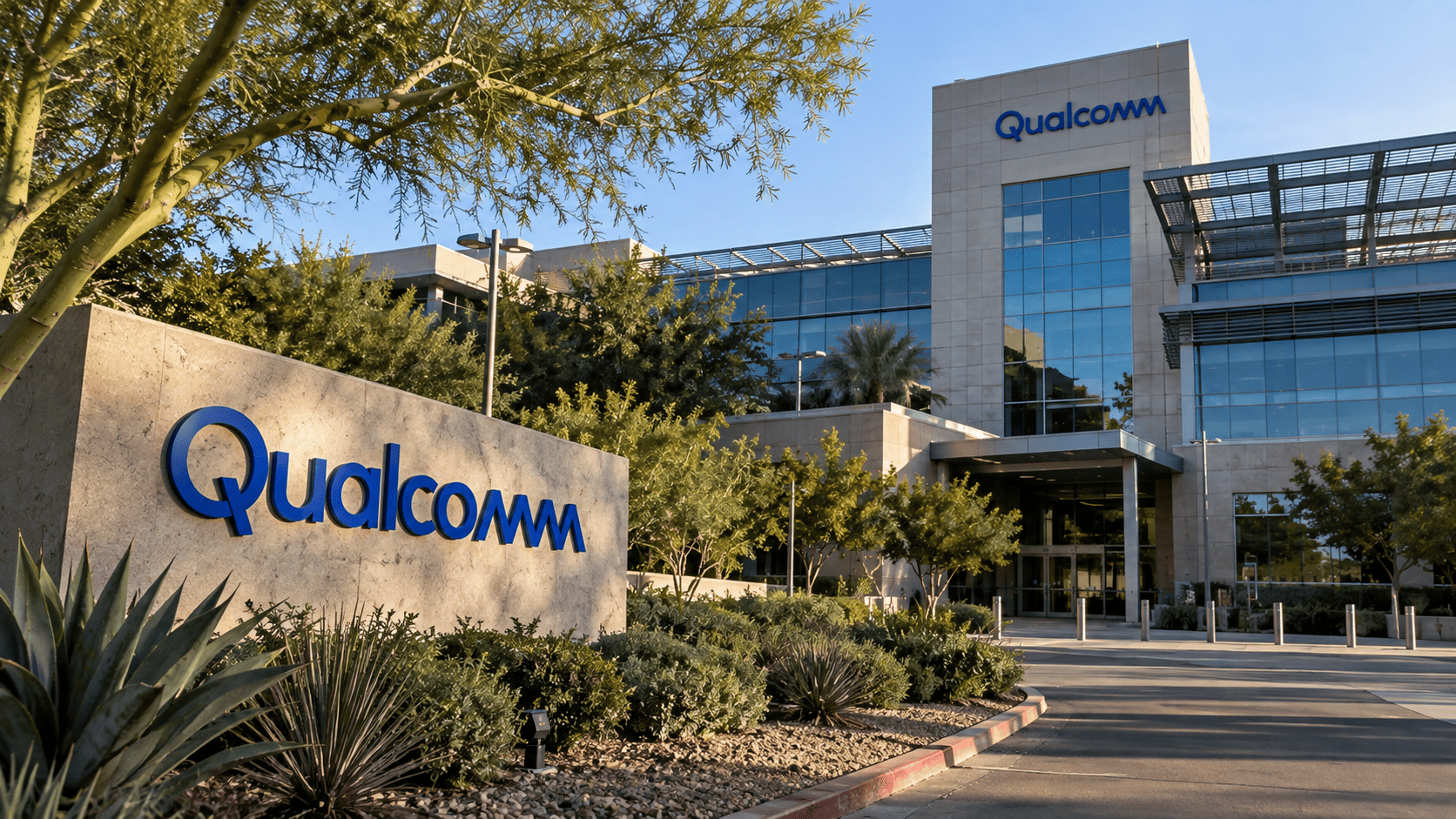
Qualcomm (NASDAQ: QCOM) saw its shares rise 3.9% in recent trading after StoneX reiterated a Buy rating with a $270 price target, underscoring the chipmaker's expanding data center ambitions and growing ties to hyperscale cloud providers. The move comes as Qualcomm works to reduce its reliance on the smartphone market, where demand has been uneven.
AWS deal underpins data center strategy
On September 8, Qualcomm announced a collaboration with Amazon Web Services (AWS) to supply custom silicon and advanced optical connectivity solutions. The agreement could generate up to $60 billion in payments over multiple product generations and the next decade. As part of the deal, Amazon received 25 million warrants at an exercise price of $161.26 per share. Of those, 3.75 million shares are already vesting, while the remaining warrants are tied to Amazon meeting certain payment milestones. Unlike some recent AI chip agreements that include customer warrants, Amazon would need to pay $4 billion to acquire all the shares, and Qualcomm's stock must stay above the exercise price for the warrants to be profitable for Amazon.

Qualcomm has set a target of $5 billion in data center revenue by fiscal 2027 and more than $15 billion by fiscal 2029. The AWS agreement provides a publicly identified hyperscaler customer as the company works toward those goals. At the Goldman Sachs Communacopia conference, Qualcomm's CFO reaffirmed the fiscal 2027 revenue target of $5 billion, with Amazon orders expected to begin in the December quarter.
Diversification beyond handsets
Stone Fox Capital noted that Qualcomm is executing a major pivot from handsets toward AI data centers, with the AWS deal being a key part of that strategy. The firm highlighted Qualcomm's $15 billion data center revenue target for fiscal 2029, while non-handset sales are projected to reach $40 billion. The AWS agreement could accelerate Qualcomm's data center revenue ramp, according to the analyst, who also pointed out that the stock trades at roughly 10 times its fiscal 2029 earnings target of $18 per share, suggesting the market may not fully reflect Qualcomm's AI-related growth potential.
This diversification push comes as Qualcomm faces the loss of business from Apple, which is increasingly shifting its iPhone modem operations toward internally developed technology. According to Counterpoint Research, this could eventually cost Qualcomm around $4 billion to $5 billion in handset revenue. The company's data center expansion is also happening against a backdrop of intense competition in its core smartphone market.
Competitive pressures in smartphones
Rival MediaTek recently launched its Dimensity 9600 Pro, described as the first 2nm smartphone chip to market. The launch comes just one week before Qualcomm's Snapdragon 8 Elite Gen 6 launch, scheduled for September 22–24. This adds pressure in the premium smartphone segment as Qualcomm prepares its next-generation mobile processor.
Investors have been closely watching Qualcomm's ability to offset smartphone weakness with data center growth. The AWS deal is seen as a significant validation of Qualcomm's technology and market position, especially as other chipmakers like AMD also target AI data center expansion. Meanwhile, broader market sentiment has been influenced by upcoming CPI data and its potential impact on rate expectations.
Qualcomm's move into data centers is part of a larger trend among semiconductor firms to capitalize on AI infrastructure spending. The company's ability to secure a major hyperscaler customer like AWS could provide a stable revenue stream for years to come. However, execution risks remain, including the ramp-up of custom silicon and the competitive landscape in both data centers and smartphones.
As Qualcomm continues to diversify, investors will be watching for updates on the AWS deal's progress and the company's ability to meet its ambitious revenue targets. The stock's recent gain reflects optimism that the data center opportunity could offset near-term headwinds in the handset business.
This article is for informational purposes only and does not constitute financial advice.

