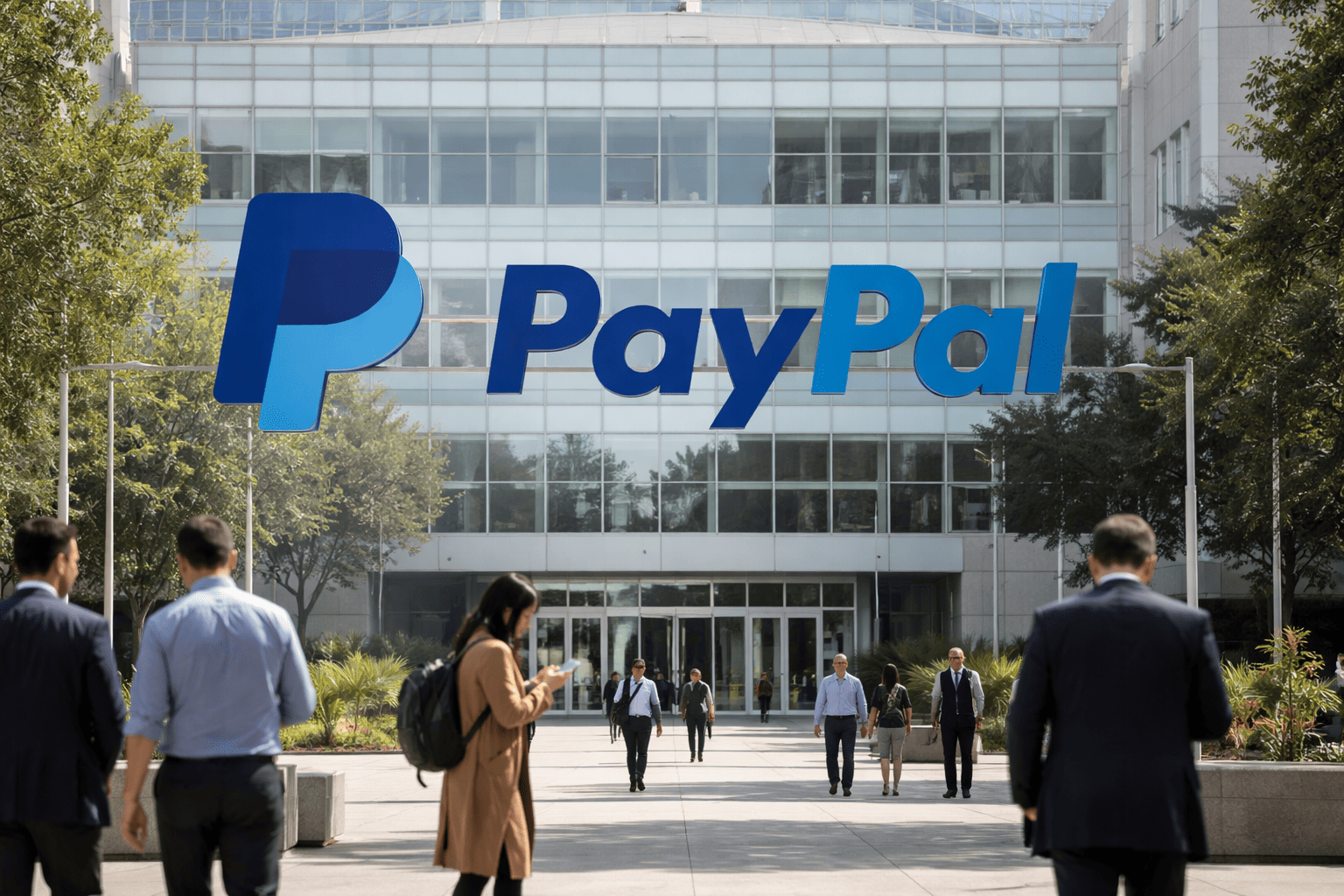
PayPal Holdings (NASDAQ: PYPL) experienced a sharp selloff in premarket trading on Tuesday after reports confirmed that Stripe and Advent International have abandoned their much-anticipated acquisition bid. The stock fell to $53, nearly 15% below its monthly high, as investors reassessed the company's standalone prospects.
Failed buyout leaves PayPal to fend for itself
The two firms had reportedly offered around $50 billion for the payments giant, a figure that would have represented a significant discount from PayPal's pandemic-era valuation of over $300 billion. The collapse of the deal means PayPal's management must now execute a turnaround strategy on its own, a challenge that has proven difficult in recent years.

PayPal's latest quarterly results underscored the stagnation. Revenue grew just 5% year-over-year to $8.7 billion in Q2, while earnings per share fell 3% to $1.25. In contrast, the average S&P 500 company saw earnings growth of 50.4% during the same period. Monthly active users edged up only 1% to 228 million, and transactions per active account rose a modest 3%.
Analysts expect the sluggishness to persist. Consensus estimates project annual revenue growth of 4.6% this year to $34 billion, with a slight acceleration to 4.38% growth next year, bringing revenue to $36.23 billion. EPS is forecast to reach $5.39 in 2025 and $5.79 in 2026, reflecting a subdued growth trajectory compared to PayPal's historical performance.
Turnaround strategy: cost cuts and Venmo focus
New CEO Enrique Lores, who took the helm earlier this year, faces the daunting task of revitalizing the company. His predecessor's efforts failed to reignite growth. Lores has outlined a plan that includes aggressive cost reduction, targeting $1.5 billion in savings by 2027 through streamlining organizational layers. He also intends to improve marketing efficiency and integrate artificial intelligence across PayPal's platforms.
One area of potential upside is Venmo, PayPal's peer-to-peer payment service, which has shown stronger momentum. In the latest quarter, Venmo Debit Card monthly active accounts surged over 50%, and Pay With Venmo transactions rose more than 30%. Some analysts suggest that spinning off Venmo could unlock value, allowing PayPal to generate cash for buybacks, dividends, or strategic acquisitions to reinvigorate growth.
However, the market remains skeptical. The failed buyout removes a potential catalyst, and the company's fundamentals do not support a premium valuation. The stock's technical picture also looks bearish.
Technical analysis: bearish signals persist
The daily chart shows PayPal had been forming a rising wedge pattern, characterized by two ascending and converging trendlines. The Relative Strength Index (RSI) and the MACD indicator both displayed bearish divergence, suggesting weakening momentum before the news broke. If the stock continues to decline, the next key support level is $40.45, the June low.
Investors are now left to weigh PayPal's turnaround potential against its persistent growth challenges. The company's ability to execute on cost savings and leverage Venmo's popularity will be critical in determining whether the stock can stabilize or face further downside.
For context, the broader payments sector has seen increased M&A activity, with Workday's buyout talks and Adobe's recent rally highlighting investor appetite for tech deals. PayPal's failed bid, however, leaves it without that support.
This article is for informational purposes only and does not constitute financial advice.