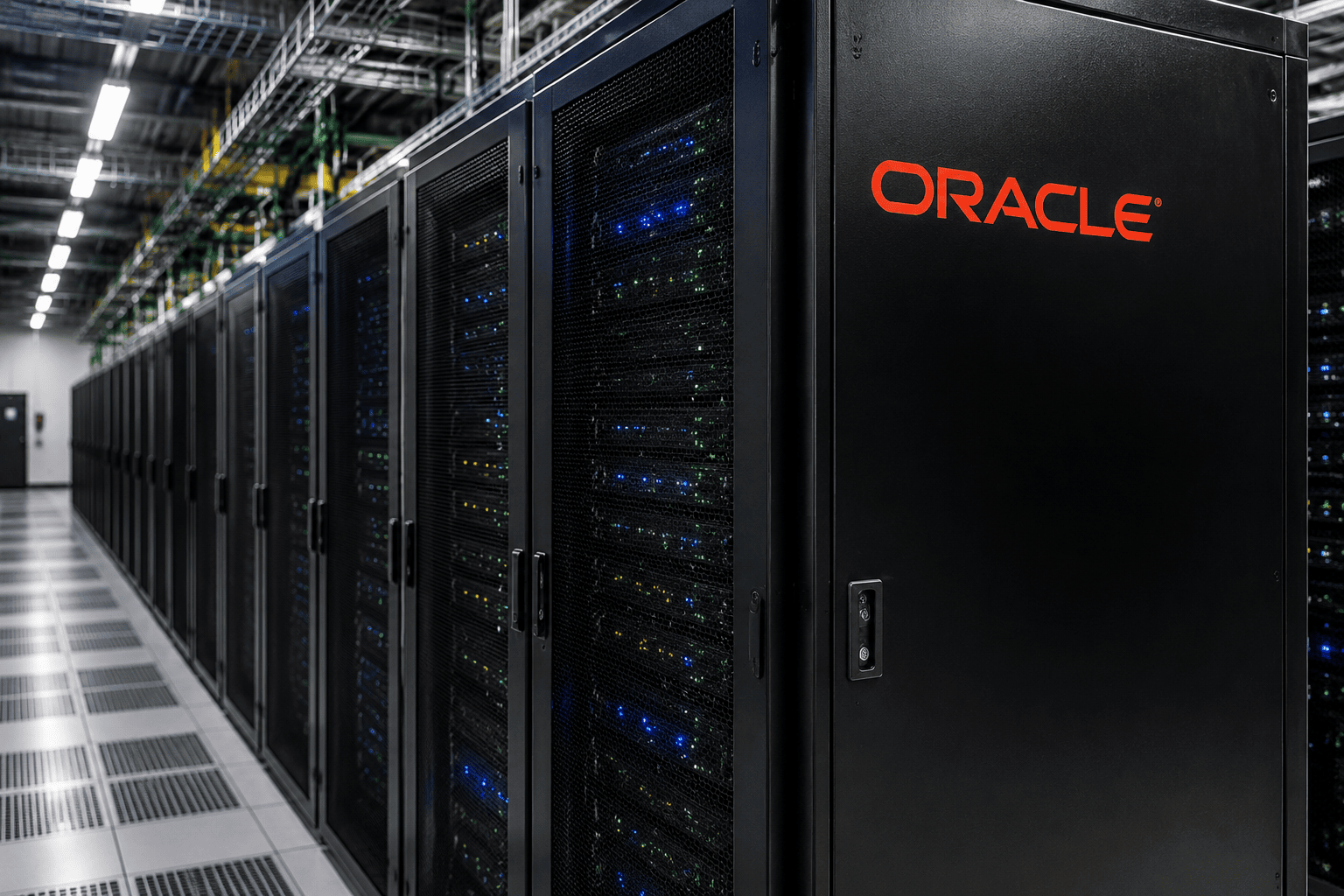
Oracle shares advanced almost 4% on Tuesday, lifted by a report that OpenAI's annualized revenue run rate has climbed to roughly $70 billion, driven by strength in enterprise sales. The gain came even as the artificial intelligence developer shelved release plans for its next-generation model, suggesting investors are prioritizing commercial traction over product timelines.
According to Axios, OpenAI's annualized revenue run rate has grown by more than 70% since the start of the third quarter. Business-to-business revenue more than doubled over the same stretch, a signal that corporate adoption of generative AI tools is accelerating rather than plateauing.

Why Oracle is levered to OpenAI
Oracle's fortunes are closely tied to OpenAI's trajectory. The software and cloud company holds a $300 billion cloud-computing agreement with OpenAI, a cornerstone of its AI infrastructure strategy. Gil Luria, managing director at equity research firm D.A. Davidson, noted in a Reuters report that OpenAI accounts for roughly half of Oracle's compute backlog, adding that faster growth at OpenAI reinforces its capacity to honor expected compute commitments.
That linkage means any evidence of OpenAI's revenue momentum tends to feed directly into sentiment toward Oracle. The reported figures also lifted other OpenAI-linked equities, offsetting disappointment over the delayed model release.
Record backlog underpins revenue visibility
Oracle's AI cloud contracts continue to expand. In the first quarter of fiscal 2027, the company booked more than $30 billion in additional AI cloud agreements, pushing remaining performance obligations, or RPO, to a record $664 billion. That figure rose by $209 billion compared with a year earlier.
Management expects approximately half of that RPO to convert into revenue over the next 36 months, providing a substantial multi-year pipeline. Combined with accelerating cloud infrastructure revenue, the backlog strengthens Oracle's revenue visibility at a time when investors are scrutinizing the durability of AI-related demand.
Hyperscaler spending keeps climbing
Oracle's expansion unfolds against a backdrop of surging capital expenditures across the largest technology platforms. Combined capex from Microsoft, Google, Amazon, Meta and Oracle is projected to reach $780 billion this year, nearly five times the level recorded in 2023.
Bain & Company estimates that AI-related computing demand would need to generate $6 trillion in annual revenue by 2031 to justify the scale of infrastructure being built. That gap between current spending and projected returns remains a central debate among investors assessing the sustainability of the AI build-out.
Data-center capacity and guidance
Oracle said it delivered 850 megawatts of additional data-center capacity and more than 300,000 GPUs since the end of its fiscal fourth quarter. AI infrastructure utilization stood at 97.9%, and GPUs up for renewal were renewed or resold at an average premium of 20%.
The company also raised its fiscal 2027 total revenue guidance to at least $90 billion, implying 34% year-over-year growth. The combination of a record backlog and higher guidance offers greater clarity on future sales, though the heavy capital requirements tied to AI infrastructure expansion remain a key consideration for shareholders.
This article is for informational purposes only and does not constitute financial advice.

