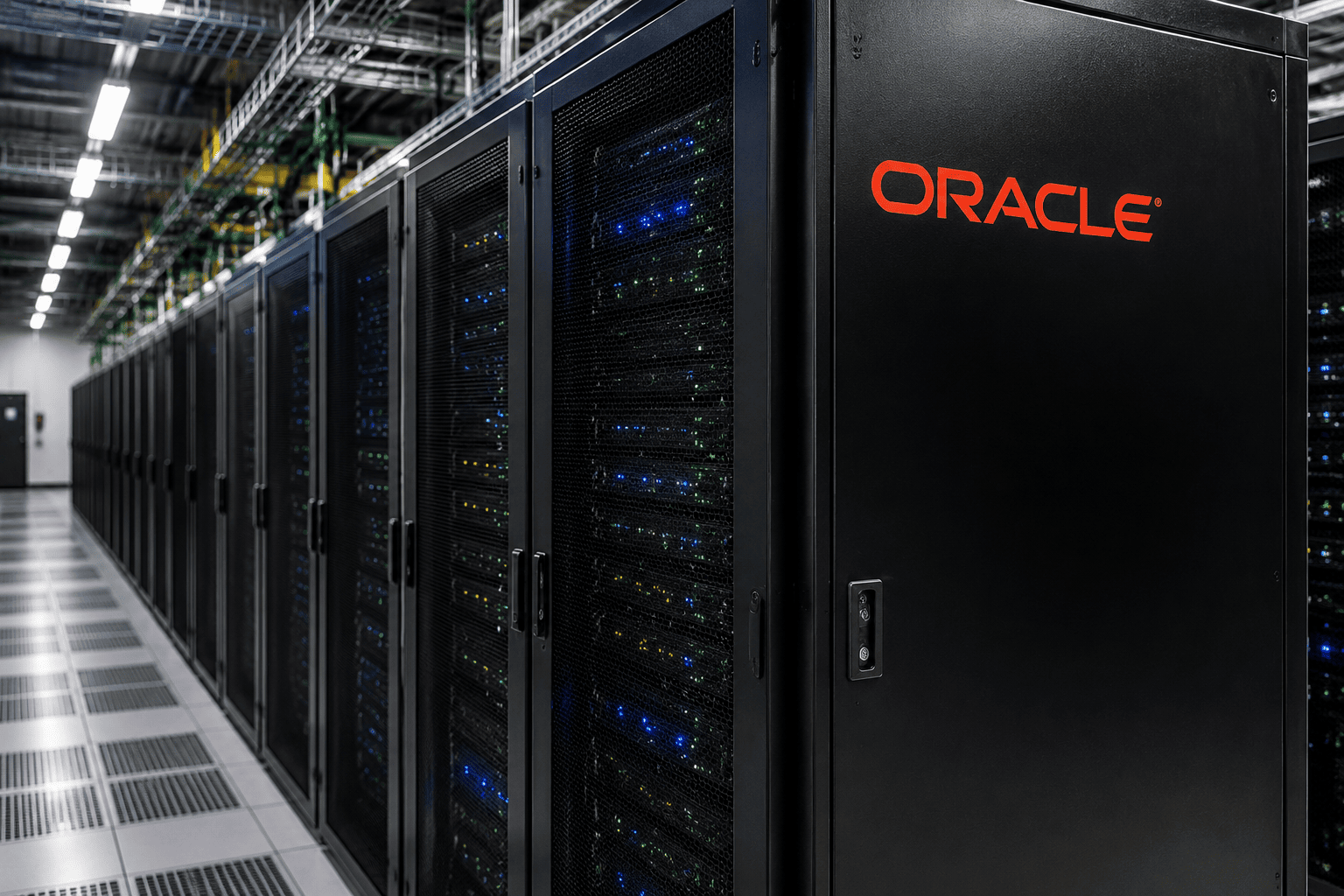
Oracle's shares have staged a notable recovery over the past week, climbing to around $145 on Tuesday—a 27% bounce from their lowest point this year. The rebound comes as investors rotate back into technology names during earnings season, but the company's credit metrics are flashing warning signs that merit close attention.
CDS spread at record high
Despite the stock's recent strength, Oracle's credit default swap (CDS) spread has surged to an all-time high, surpassing levels seen during the 2008 financial crisis. A CDS acts as insurance against default, and a rising spread indicates that investors are demanding a higher premium to protect against the risk of Oracle failing to meet its debt obligations.

Other credit indicators paint a similarly cautious picture. Oracle's bond yields remain elevated, with its 2046 issue yielding around 7.50% and the 2056 issue at 7.60%. Major rating agencies, including S&P Global, have assigned the company a junk rating, reflecting the deteriorating credit profile.
Debt surge tied to AI bet
Oracle's total debt has ballooned from $73.6 billion in 2019 to $167 billion today, with net debt jumping from $30.6 billion to $135 billion over the same period. The company plans to raise an additional $40 billion this year, largely to fund its aggressive expansion into artificial intelligence infrastructure.
Oracle is a key participant in the Stargate project, a multibillion-dollar initiative to build AI data centers in the United States. The company's remaining performance obligations (RPO) have surged to $638 billion, up $85 billion in the last quarter alone, driven by major contracts with OpenAI, xAI, and Meta Platforms.
While these commitments underscore strong demand, there are concerns that some of these AI customers may eventually scale back spending to focus on profitability. OpenAI, for instance, is reportedly considering delaying its IPO to next year, which could signal a more cautious approach to capital expenditures.
Fundamentals show growth, but valuation is mixed
Oracle's latest quarterly results were solid: revenue rose 20% year-over-year to $19.2 billion, and earnings per share climbed 21% to a record $1.45. Cloud segment revenue jumped 47% to $9.9 billion, with cloud infrastructure contributing $5.8 billion.
Analysts expect this momentum to continue, with projections for the current quarter showing revenue growth of 28% to $19.2 billion, and full-year revenue potentially reaching $89 billion. However, Wall Street's outlook on the stock is divided. Guggenheim has a price target of $400, while Bernstein and TD Cowen sit at $325 and $300, respectively. On the bearish side, Piper Sandler and JPMorgan remain cautious.
Technical picture: rebound or dead-cat bounce?
From a technical standpoint, Oracle has broken above the key resistance level of $134.80, which had capped the stock in February, March, and April. This move suggests that buyers are gaining control. However, the shares remain below their 100-day and 200-day moving averages, and some analysts warn that the rally could be a dead-cat bounce rather than a sustained turnaround.
Fundamentally, Oracle's forward price-to-earnings ratio stands at 17, which some investors view as attractive given the growth trajectory. Yet the elevated credit risk and mounting debt could offset that appeal.
For context, other tech names have faced similar pressures. For instance, AMD's stock dropped 9% despite a record quarter on margin concerns, and Reddit has slid 40% YTD despite a beat, highlighting the market's sensitivity to forward guidance.
Investors will need to weigh Oracle's strong AI-driven growth against the rising cost of its debt. The CDS spread at record highs is a clear signal that the market is pricing in meaningful default risk, even as the company's revenue and backlog expand.
This article is for informational purposes only and does not constitute financial advice.