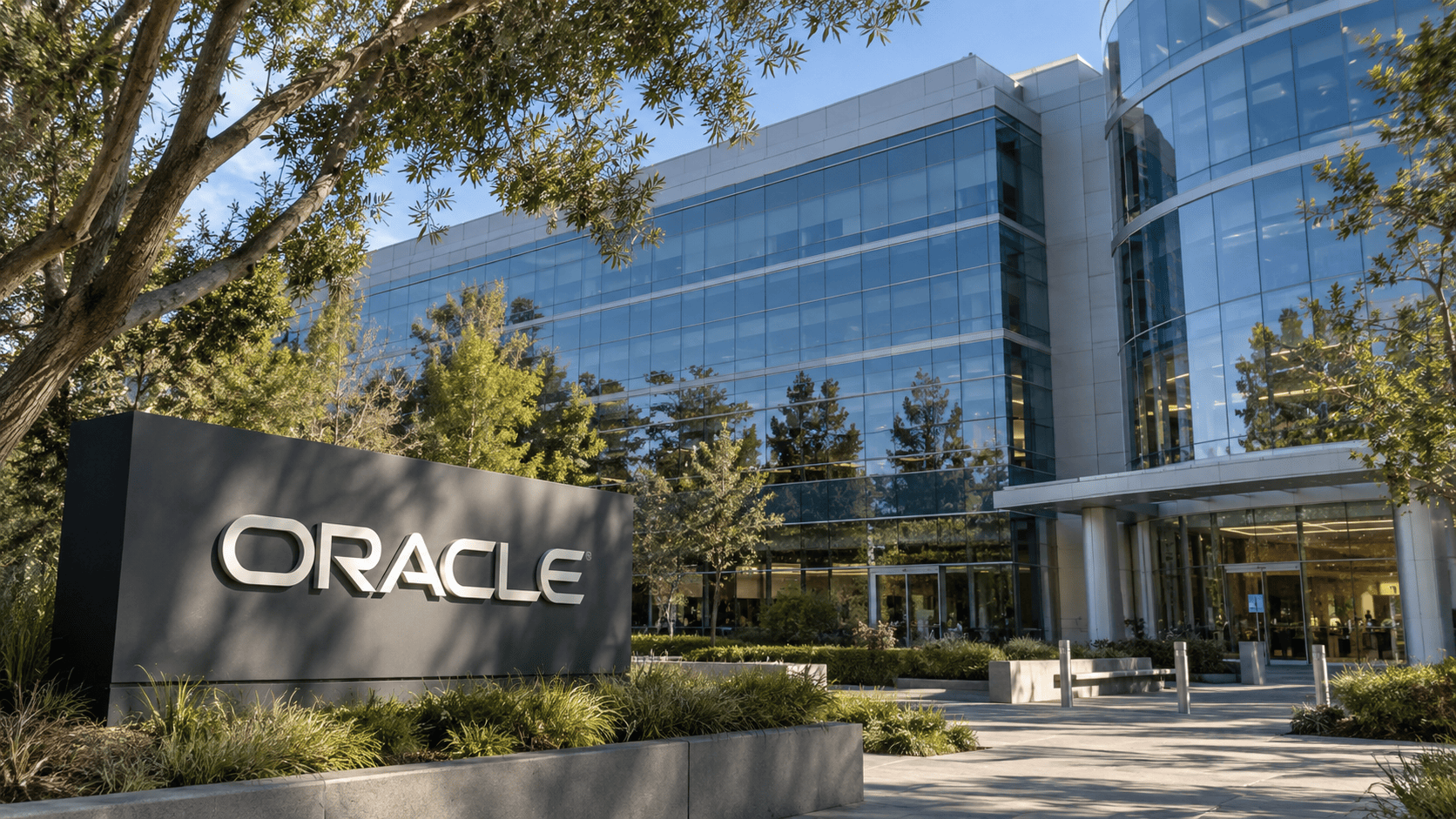
Oracle (NYSE: ORCL) shares fell 4.2% on Monday, pressured by a confluence of factors: co-founder Larry Ellison's decision to abandon a planned $7.5 billion stock sale, escalating debt tied to its artificial intelligence infrastructure buildout, and reports of another round of layoffs.
The decline extends a rough year for the stock, which has dropped more than 23% in 2026, even as the tech-heavy Nasdaq has gained over 13%. Investors are grappling with the company's aggressive capital spending and the uncertain payoff from its AI investments.

Ellison reverses planned share sale
Over the weekend, Oracle disclosed that Ellison had scrapped a plan, adopted on June 22, to sell up to 50 million shares—worth roughly $7.5 billion at recent prices. The company stated that no shares were sold under the plan and that Ellison has no other intentions to sell his Oracle stock.
Ellison, who has held a significant stake since the 1970s, remains one of Oracle's largest shareholders. However, a Wall Street Journal analysis noted that about 24% of his estimated $200 billion net worth is pledged as collateral. He has also committed more than $40 billion to support his son David Ellison's bid for Warner Bros., a deal valued at nearly $80 billion.
This is not the first time Ellison has reversed course on a sale. In January 2001, he sold nearly $900 million of Oracle stock just before shares fell almost 22% following disappointing earnings. He later settled an insider-trading lawsuit by paying $100 million to charity.
Rising debt from AI spending
Oracle is simultaneously ramping up its AI infrastructure business, planning to raise as much as $50 billion this year through stock and debt sales to fund data centers. Morgan Stanley credit analysts expect the company will need at least another $100 billion in financing during 2027 and the first half of 2028.
The company's first-quarter capital expenditures reached $28.5 billion, up sharply from $8.5 billion a year earlier. Oracle maintained its fiscal 2027 capex forecast at $90 billion to $95 billion. This heavy spending has increased the company's debt burden, contributing to the stock's underperformance.
Despite the concerns, some analysts see potential upside. For instance, a recent earnings preview highlighted a 51% upside case, and Oracle's AI backlog has reached $664 billion, with some analysts expecting further gains. However, the market remains wary of the balance between spending and returns.
Layoffs add to pressure
Oracle has also initiated another round of layoffs, according to a Business Insider report citing affected employees and an internal email. The company told staff that their positions were eliminated as part of a broader organizational change.
Oracle's workforce had already declined by 21,000 employees, or 13%, during the fiscal year ended May 31, leaving around 141,000 employees before the latest cuts. The layoffs come as the company continues to invest heavily in AI infrastructure, raising questions about cost management and operational efficiency.
While Wall Street remains split on whether Oracle's AI investments will generate sufficient returns, the company's latest earnings report showed positive cloud growth. A recent rally was fueled by OpenAI launch and analyst optimism, but the current selloff highlights the persistent risks.
Investors are also watching broader market conditions. Rising bond yields have previously pressured Oracle shares, and analysts remain divided on the stock's recovery prospects.
This article is for informational purposes only and does not constitute financial advice.

