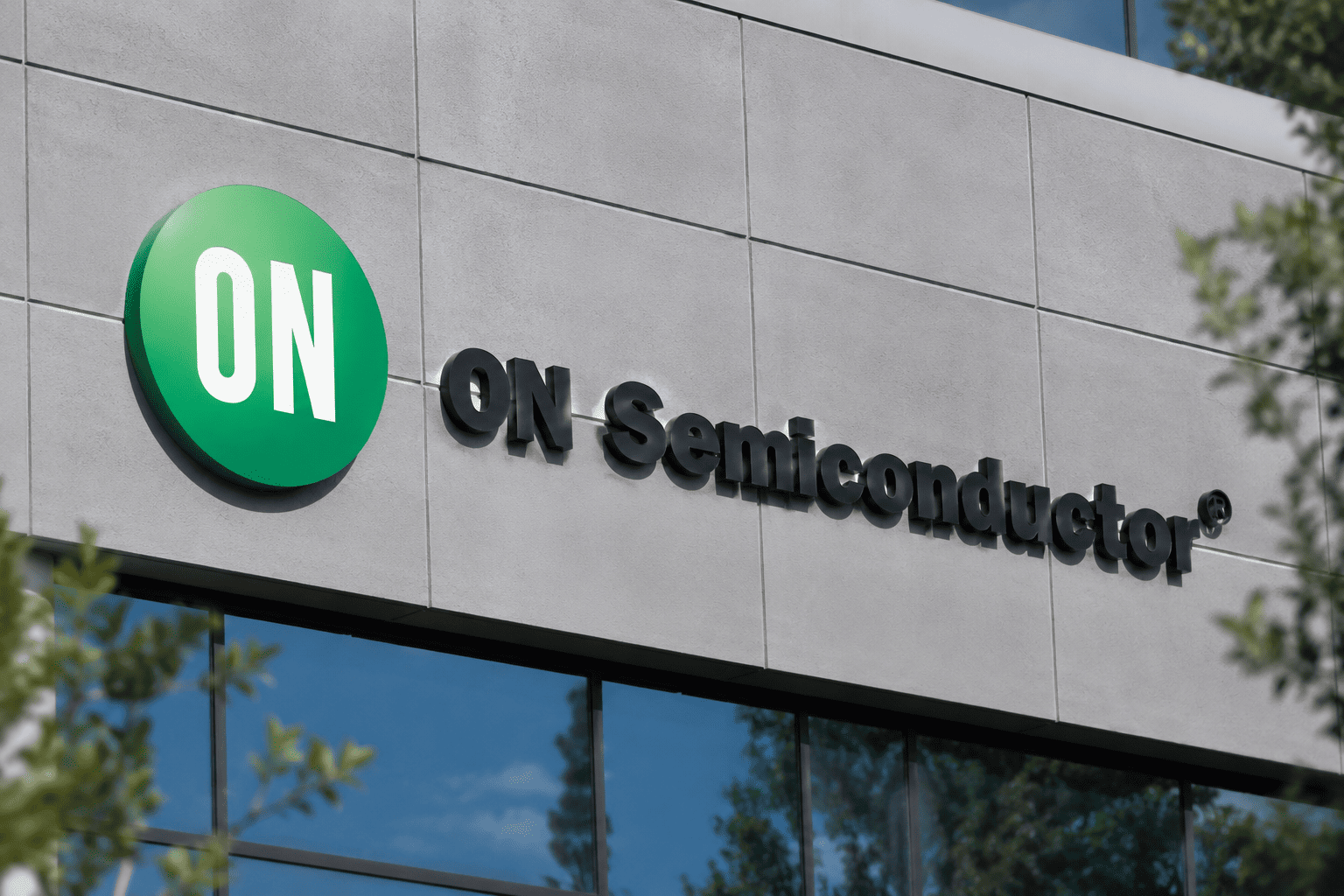
ON Semiconductor (ON) shares tumbled 19% on Friday following the announcement of a $7 billion all-stock acquisition of Synaptics (SYNA). The sharp sell-off reflects investor skepticism about the near-term financial benefits of the deal, despite management's bullish outlook on the combined company's position in the emerging physical AI market.
Deal Details and Strategic Rationale
Under the terms of the agreement, ON Semiconductor will issue 1.35 of its shares for each Synaptics share, representing a premium of approximately 19% based on the companies' volume-weighted average prices over the prior 10 trading sessions. The transaction is structured as an all-stock deal, meaning no cash outlay, but it dilutes existing ON shareholders.

CEO Hassane El-Khoury emphasized that the acquisition accelerates ON's expansion into physical AI—a segment focused on embedding artificial intelligence into devices that interact with the real world, such as autonomous vehicles, industrial robots, and smart edge devices. Synaptics brings an AI-native computing platform, human-machine interface technologies, and connectivity solutions that complement ON's strengths in power semiconductors, sensors, and automotive chips.
“This shift towards Physical AI will require Power, Sense, Connected Compute and Control to work together seamlessly,” El-Khoury said in a statement. “The addition of Synaptics helps position onsemi at the intersection of these four pillars, enabling us to capture a significantly larger AI opportunity that extends beyond AI data center and into edge applications.”
Market Reaction: Execution Risks Trump Long-Term Vision
Despite the strategic narrative, the market's immediate response was negative. Investors appear to be focusing on the near-term earnings dilution and the complexity of integrating Synaptics' operations. The company expects the deal to generate approximately $200 million in annual synergies and become accretive to adjusted earnings per share within 18 months after closing. However, analysts and traders are questioning whether those targets are achievable given the current macroeconomic headwinds and the cyclical nature of the semiconductor industry.
Jefferies analysts described the transaction as “incrementally positive rather than transformative,” noting that it does not provide an immediate earnings boost. They also pointed out that the acquisition increases ON's exposure to consumer-facing technologies, which typically command lower valuation multiples than industrial or automotive chips.
Mixed Analyst Reactions
Wall Street firms offered divergent views following the announcement. Mizuho reiterated an Outperform rating with a $150 price target, while Needham raised its target to $130 from $110 and maintained a Buy rating. Both firms see long-term strategic benefits from the physical AI push.
On the other hand, TD Cowen downgraded ON shares to Hold, citing concerns that the acquisition adds complexity to the company's earnings model. Cantor Fitzgerald kept a Neutral rating and $100 price target, acknowledging the strategic logic but questioning the timing and scale of potential revenue synergies.
“The deal expands ON's portfolio by adding AI-native computing, connectivity and sensor technologies—capabilities that are likely to become increasingly important as customers demand integrated system-level solutions,” Cantor Fitzgerald analysts wrote. However, they added that “meaningful revenue opportunities may take longer to materialize than management anticipates.”
Broader Context: Physical AI and the Semiconductor Landscape
The acquisition comes at a time when semiconductor companies are racing to position themselves for the next wave of AI-driven demand beyond data centers. Physical AI applications in automotive, industrial automation, and robotics are expected to grow rapidly, but the revenue ramp has been slower than many hoped. For ON Semiconductor, the deal is a bet that combining its power and sensing capabilities with Synaptics' compute and connectivity will create a one-stop shop for edge AI solutions.
Investors, however, are taking a wait-and-see approach. The 19% drop suggests that the market is pricing in a worst-case scenario where integration costs rise and synergy realization takes longer than 18 months. Until ON demonstrates clear, measurable revenue momentum from physical AI, the stock may remain under pressure.
For related coverage on AI-driven semiconductor demand, see Applied Materials Surges 7% as Meta's AI Chip Plans Boost Semiconductor Equipment Demand and Seagate Shares Surge After Wells Fargo Upgrade on AI-Driven HDD Demand.
This article is for informational purposes only and does not constitute financial advice.