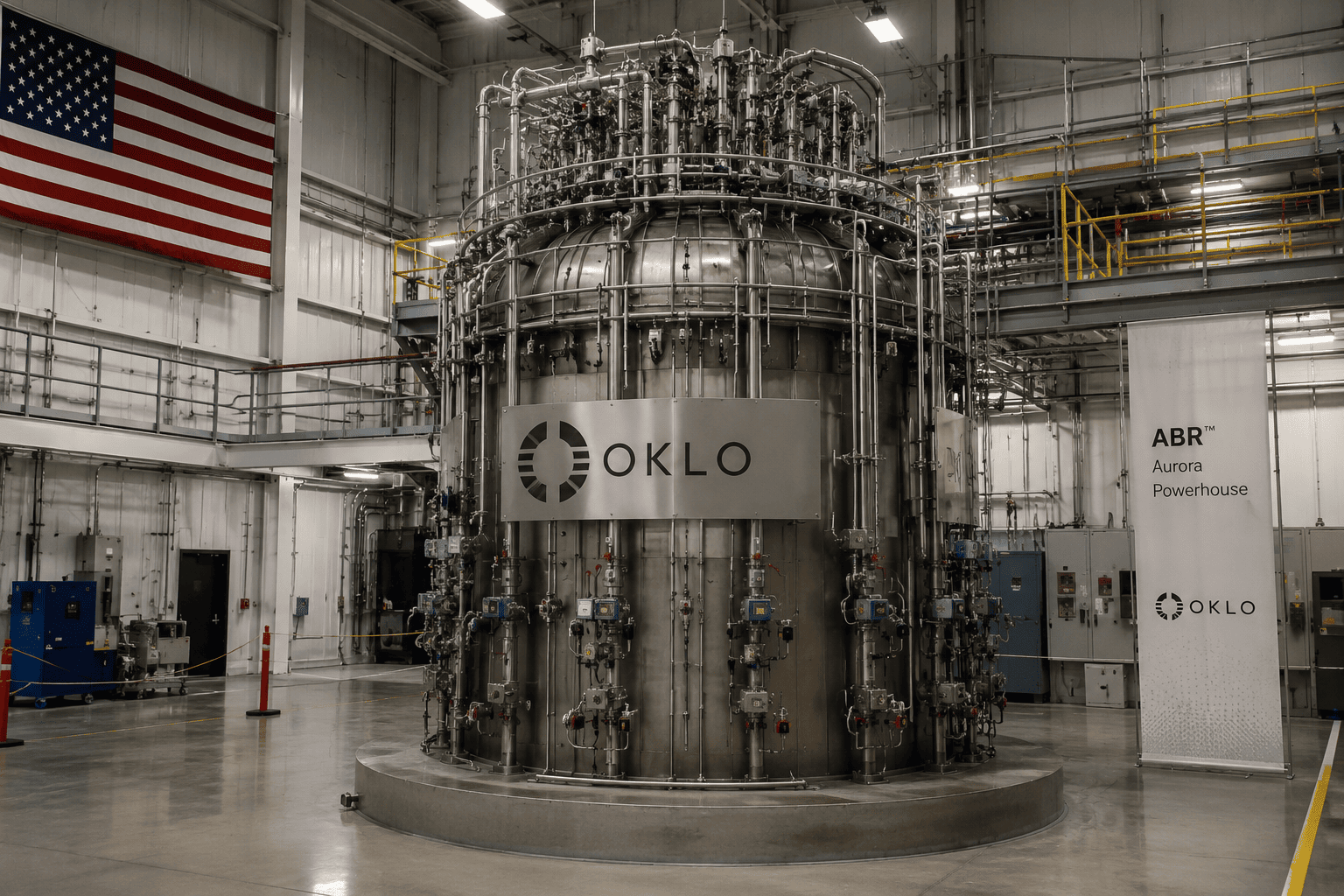
Oklo Inc. shares have extended their sharp decline, falling below a key technical support level and raising concerns that the bear market may persist. The stock, which peaked above $194 last year, now trades near $41, representing a drop of nearly 80% from its all-time high. The company's market capitalization has shrunk from over $24 billion to roughly $7.6 billion, reflecting growing skepticism about the small modular reactor (SMR) sector.
The recent breach of the $45.2 support level—the lowest point reached in March—has invalidated a double-bottom pattern that some traders had viewed as a potential reversal signal. This technical breakdown suggests that sellers remain in control, and the stock could target the psychological $30 level in the near term.

Fundamental challenges persist
Oklo, backed by Sam Altman, is developing SMR technology that could play a significant role in the future power grid. The company operates in three segments: power generation, fuel supply, and isotope production. While the U.S. Department of Energy has shown support for SMRs, selecting five states as potential hosts for Nuclear Lifecycle Innovation Campuses, Oklo remains in the pre-revenue stage.
The company continues to burn through cash, reporting a year-to-date loss of $81.6 million. Operating losses reached $124.2 million, partially offset by $44.5 million in net interest and dividend income. This cash burn is expected to continue until the company achieves profitability, which remains uncertain.
Shareholder dilution and short interest
To fund its operations, Oklo has turned to at-the-market (ATM) equity offerings, raising $1.9 billion in the last quarter. This has significantly increased the share count, from 51.5 million in 2022 to 185 million today. The dilution has weighed on the stock and attracted short sellers, with short interest now at 16.3% of the float. According to the Financial Times, short sellers in SMR companies have collectively made billions of dollars this year.
Several analysts have revised their price targets downward. Citigroup cut its target from $76 to $57, Truist lowered it from $55 to $51, and Canaccord Genuity slashed it from $125 to $100. These adjustments reflect growing caution about the company's near-term prospects.
From a technical perspective, the stock has fallen below all major moving averages and is now trading slightly under the 78.6% Fibonacci retracement level, a sign that bearish momentum remains strong. The next significant support is seen at $30, a level that could be tested if selling pressure continues.
While the long-term potential of SMR technology remains intact, Oklo's current financial position and technical weakness suggest that the bear market may not be over. Investors should monitor the company's ability to secure additional funding and progress toward commercialization.
This article is for informational purposes only and does not constitute financial advice.