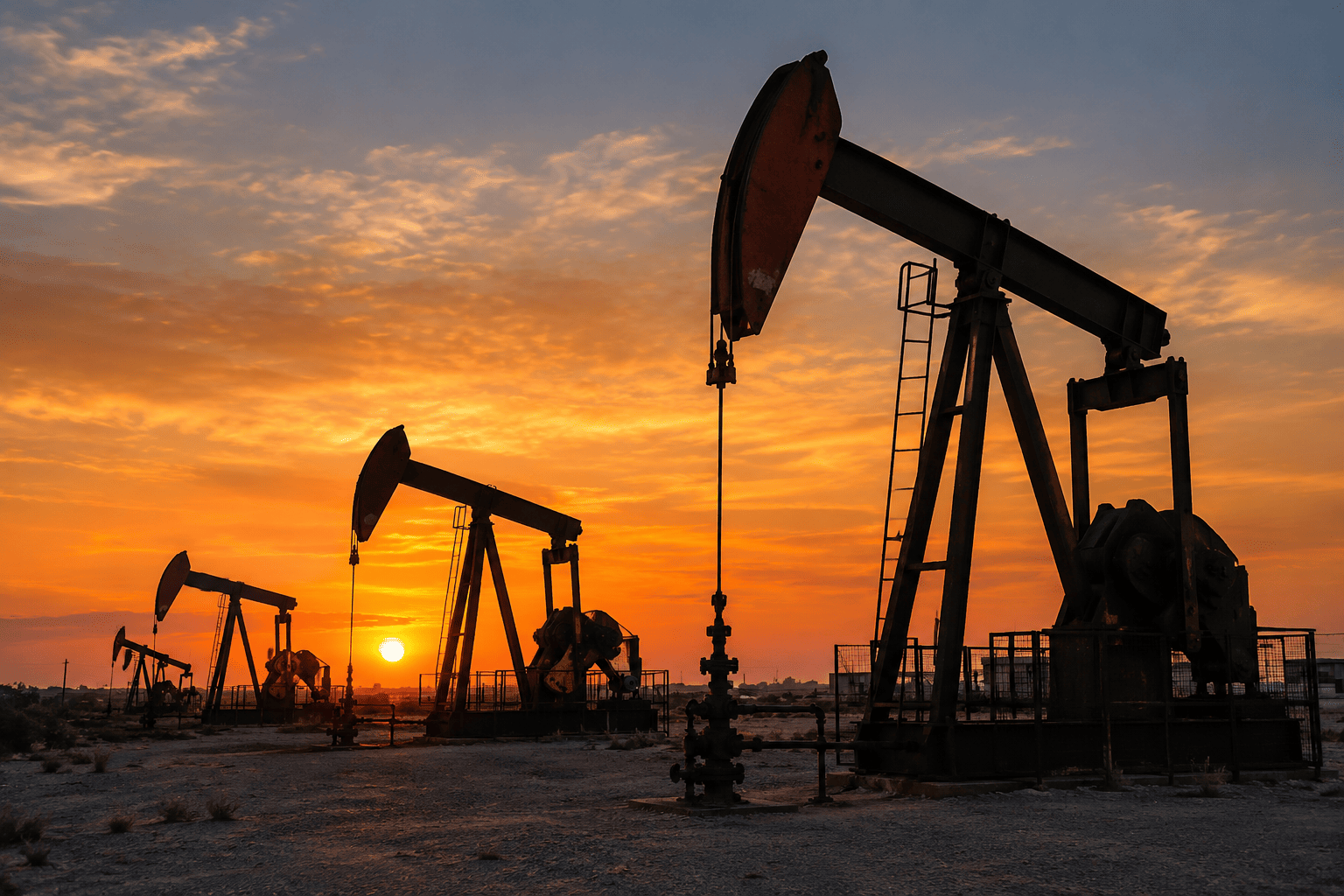
Crude oil prices are attempting to rebound on Tuesday after suffering their steepest one-day decline in over two months during the previous session. Brent crude, the international benchmark, rose to $105.22 per barrel, edging above Monday's low of $103.47. West Texas Intermediate (WTI) climbed to $97.10, recovering from its earlier dip to $95.
The near-term trajectory for both benchmarks hinges on whether the Trump administration escalates military action against Iran. The United States has conducted a series of limited strikes on Iranian targets, including an attack on Qeshm Island, but has notably refrained from officially confirming these operations—a departure from past practice that analysts interpret as an effort to avoid further inflaming oil markets.

President Trump is expected to decide in the coming days whether to launch more extensive attacks. His statements have hinted at a potential diplomatic deal with Iran, but some analysts caution that such overtures may be influenced by the upcoming midterm elections. If Democrats perform strongly, Trump might escalate military action to shift public attention away from domestic political losses. Conversely, a Republican victory could be seen as validation of his current strategy, potentially leading to intensified strikes.
Adding to the uncertainty, Tucker Carlson, a former ally of the president, warned that Trump could resort to a tactical nuclear weapon to destroy Iran's Fordow nuclear facility, buried deep beneath Pickaxe Mountain. Carlson argued that conventional bunker-busting munitions, including the MOAB and the Massive Ordnance Penetrator, would be ineffective against the deeply fortified site. Such a strike would mark the first use of a nuclear weapon in conflict since World War II.
Iran has threatened severe retaliation, including potential attacks on Israel's Dimona nuclear site and strikes on civilian infrastructure such as oil and gas terminals. These threats have heightened concerns about supply disruptions in the region, a key factor behind Goldman Sachs' decision to raise its price forecasts.
Goldman Sachs now expects Brent to reach $105 per barrel, up from its previous target of $90, and WTI to climb to $94 from $90. The bank's analysts noted, "With the timing and location of disruptions nearly impossible to predict, our base case now includes a 1mb/d global supply disruption allowance in 2027." This adjustment reflects the elevated risk of supply shocks stemming from the conflict.
Technical Outlook
From a technical perspective, Brent has shown resilience despite Monday's sharp pullback. The price remains above its 50-day exponential moving average (EMA), and the recent decline may represent a temporary correction within a broader uptrend. If the rebound continues, the next key resistance level to watch is $110 per barrel.
However, the market remains highly sensitive to geopolitical headlines, and any signs of de-escalation could trigger further downside. Conversely, an escalation could push prices toward recent highs near $117.
This article is for informational purposes only and does not constitute financial advice.