Nvidia has announced plans to invest $3 billion in Meta Platforms, as the social media giant accelerates its artificial intelligence infrastructure spending. The move comes as Meta raised its planned equity fundraising to $97.5 billion, up from the $95 billion disclosed a day earlier.
The increased capital raise reflects Meta's aggressive investment in data centers, advanced processors, and AI models to compete with rivals such as OpenAI and Anthropic. The company has launched public offerings of approximately $35 billion in common and preferred stock and intends to raise up to an additional $60 billion through an at-the-market program, which allows gradual share sales at prevailing market prices.

Meta increased its common stock offering from $22.5 billion to $25 billion, with shares priced at $625 each. The at-the-market program will be tied to the launch of its new Class C shares, expected to debut in the first quarter of next year. According to the announcement, Nvidia, Advanced Micro Devices, and Broadcom have expressed interest in purchasing up to $5 billion in shares.
Expanded AI Partnership
The investment accompanies a broader collaboration between Nvidia and Meta covering AI models, computing infrastructure, and software optimization. The companies plan to enhance their work on Meta's Muse family of models, focusing on improving training and inference performance as demand for AI agents grows.
Meta will expand its deployment of Nvidia infrastructure, including Vera Rubin systems and Vera CPUs for next-generation AI agents. The partnership also includes work on Nvidia's Spectrum-X Ethernet networking and BlueField-4 technology, with optimizations aimed at improving performance and total cost of ownership.
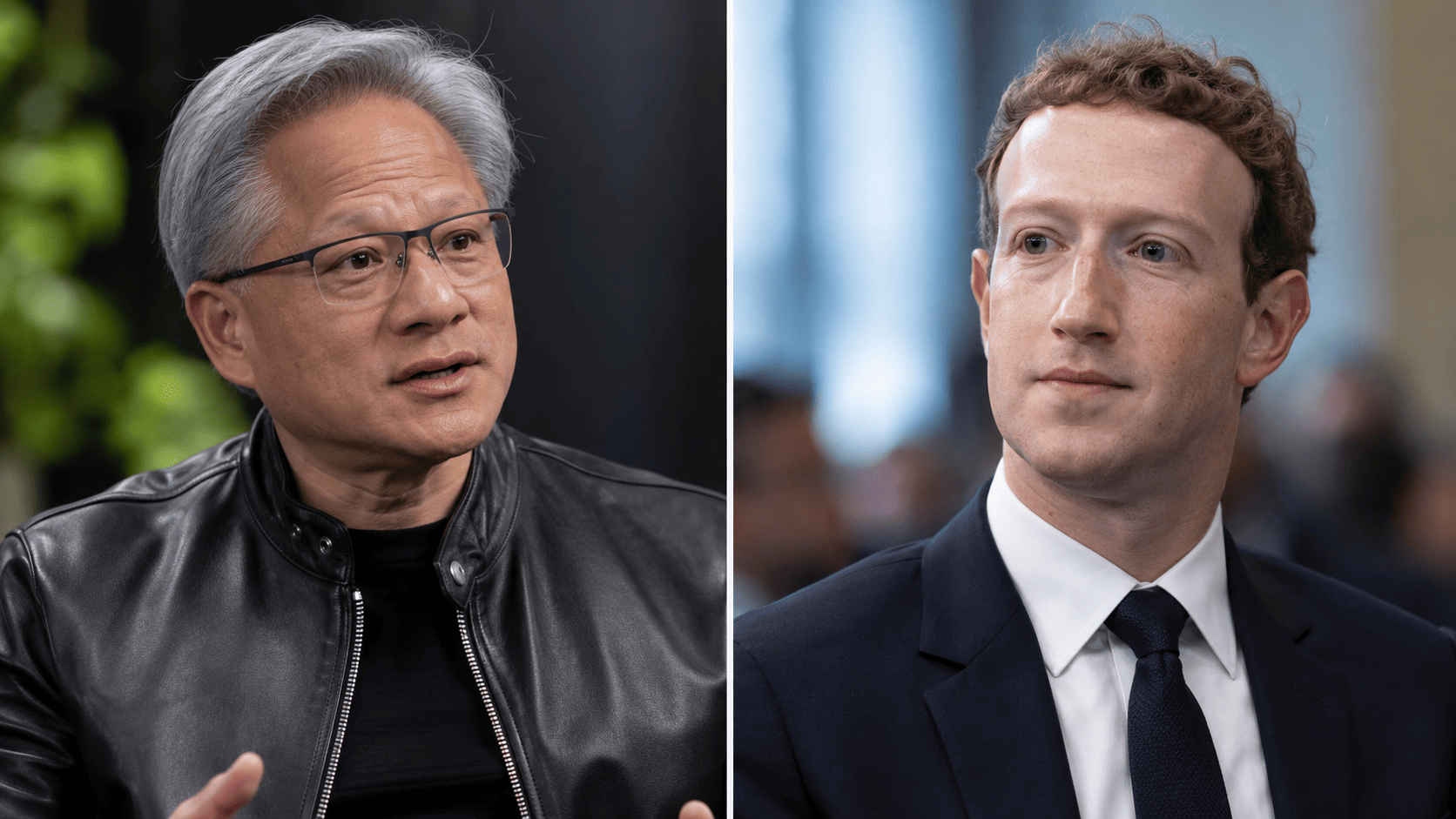
Nvidia CEO Jensen Huang highlighted the significance of AI agents, stating, "AI agents represent a new computing paradigm—software that understands our goals, reasons, uses tools and gets work done on our behalf." He added that the expanded partnership aims to optimize computing infrastructure for capable, efficient, and secure AI agents.
Meta CEO Mark Zuckerberg echoed the sentiment, saying, "Muse is how we bring personal superintelligence to everyone. We're excited to keep working with NVIDIA to deliver the best personal agents and frontier models for billions of people."
Circular Financing Concerns Intensify
Nvidia's planned investment adds to its growing portfolio of stakes in AI-driven companies, including OpenAI, Anthropic, Intel, and xAI. According to Dealroom, Nvidia has participated in 121 investment rounds this year, compared with just 13 in 2022.
This trend has heightened scrutiny of financial relationships within the AI industry. Chipmakers are increasingly investing in companies that purchase their processors, potentially helping customers finance infrastructure that generates revenue for suppliers. Analysts warn that investors will question the sustainability of demand when suppliers provide capital to their customers.
William Blair analysts noted, "We expect investors to continue to question the financing and potential for future capital raises." They added that the financing reinforces Meta's confidence in long-term AI returns but also highlights the capital-intensive nature of the opportunity.
Ryan Lee, senior vice president at Direxion, said it was unsurprising that chipmakers are supporting Meta's equity offering, as semiconductor companies depend on major cloud providers and tech firms continuing to invest in AI infrastructure. However, he noted that the AI industry has reached a point where the capital required for infrastructure buildout is not widely available, making financing a new bottleneck alongside computing power.
Meta must compete with other AI developers not only for hardware but also for the funding needed to secure it. The scale of the fundraising underscores the financial demands of AI development, and investors will need to assess whether revenue growth can justify the costs.
This article is for informational purposes only and does not constitute financial advice.