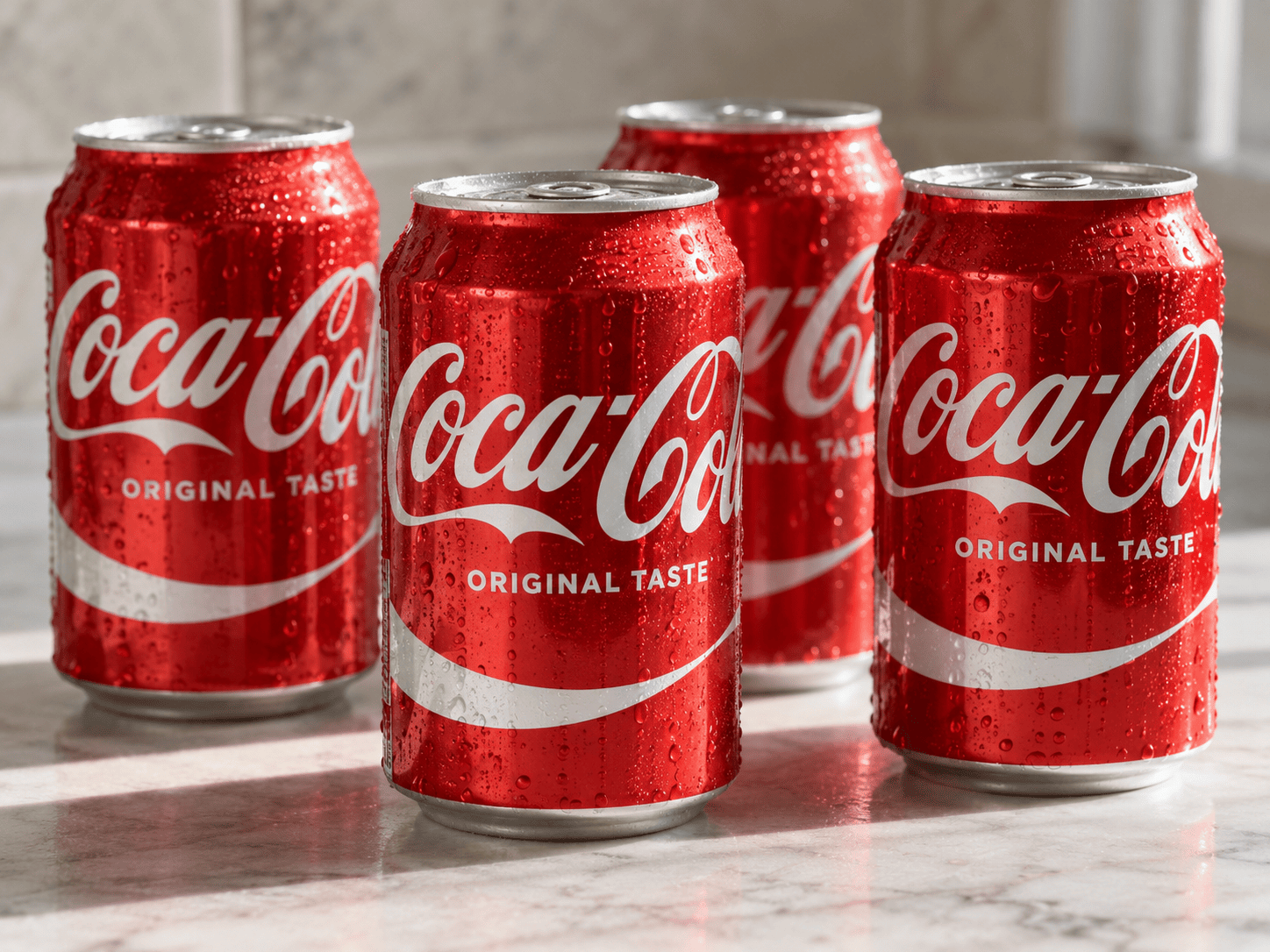
Coca-Cola on Tuesday lifted its full-year adjusted earnings growth forecast for the third consecutive quarter, citing resilient demand for zero-sugar sodas and premium beverages. The company now expects comparable earnings per share to rise at least 11% in 2026, up from its prior guidance of 9% to 10%.
The beverage giant also raised its organic revenue growth outlook to at least 5%, from approximately 5% previously. Shares ticked up about 1% in premarket trading following the announcement.
The updated guidance came alongside third-quarter results that topped Wall Street expectations. Adjusted earnings per share came in at 91 cents, beating the 88 cents analysts had projected, according to LSEG data. Revenue reached $13.4 billion, ahead of the $12.92 billion consensus estimate.
International demand offsets US softness
Net income attributable to shareholders was $4.01 billion, or 93 cents per share, compared with $3.7 billion, or 86 cents per share, a year earlier. Excluding transaction gains and other items, earnings were 91 cents per share.
Net sales increased 7% to $13.4 billion, while organic revenue—which excludes the effects of acquisitions, divestitures, and currency movements—also grew 7%. Unit case volume rose 5%, supported by stronger demand outside North America, with India, China, Mexico, and Brazil among the key growth markets.
However, volume in North America was unchanged. Growth in Trademark Coca-Cola was offset by declines in water, sports drinks, coffee, and tea. Coca-Cola has previously noted that US consumers are facing pressure from inflation and economic uncertainty, prompting the company to offer smaller, more affordable packs while also introducing higher-priced products such as Coca-Cola Cherry Float.
Zero-sugar and premium brands drive growth
Coca-Cola's sparkling soft drinks business recorded 5% volume growth in the quarter. Trademark Coca-Cola grew 5%, while Coca-Cola Zero Sugar volume jumped 16%, with both brands gaining across all geographic operating segments. Diet Coke and Coca-Cola Light grew 6%, supported by North America and Asia Pacific.
Other sparkling flavours increased 3%, driven by Asia Pacific, Latin America, and Europe, the Middle East and Africa. The water, sports, coffee, and tea division reported 5% volume growth, fuelled by an 8% jump in water. Tea and coffee volumes were flat, while sports drinks fell 3%. The juice, value-added dairy, and plant-based beverages business was unchanged overall, despite growth in brands such as Fairlife and Minute Maid.
Coca-Cola also benefited from demand associated with the soccer World Cup in July, which provided a brief boost to sales of its energy drink brands.
Contrast with PepsiCo
Coca-Cola's performance contrasts with that of rival PepsiCo, which lowered its annual targets earlier this month and stepped up cost-cutting measures amid weak demand for snacks in North America. Coca-Cola has also secured a deal to supply beverages to thousands of KFC restaurants in the US, replacing longtime supplier PepsiCo. The switch is scheduled to begin in January, as restaurants reassess beverage offerings to attract younger consumers and improve profitability.
This article is for informational purposes only and does not constitute financial advice.