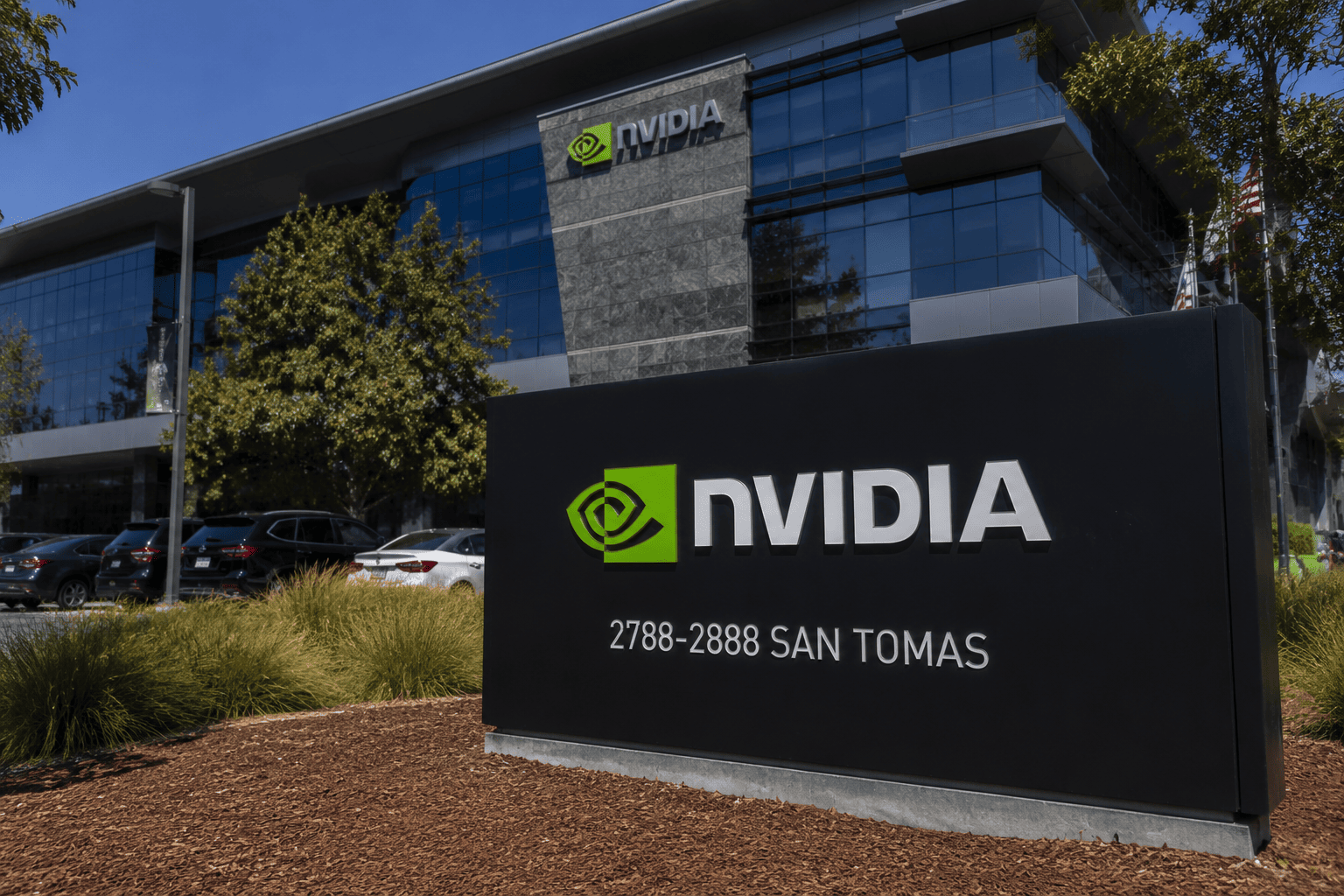
Nvidia shares have declined for four consecutive trading sessions, retreating from an all-time high of $243 to around $230 as investors grow more cautious about the artificial intelligence trade. The pullback comes as several companies in which Nvidia holds stakes have stumbled, raising questions about whether the chipmaker's investment strategy is starting to weigh on sentiment.
Portfolio holdings under pressure
Nvidia has emerged as one of the most active corporate investors this year, deploying capital across both private and public markets. Recently, however, a number of those positions have lost ground. SoundHound AI has fallen to its lowest level since 2014, while Marvell Technologies has slid to $275 from a peak of $329. Arm Holdings has dropped more than 46% from its record high, and several neocloud operators, including IREN, CoreWeave, and Nebius, have also sold off.

The weakness extends to the private side. OpenAI, in which Nvidia has invested billions, is generating annualized revenue of roughly $50 billion — about $20 billion below analyst expectations. Meanwhile, Australian firm Firmus postponed its IPO last week after investors pushed back on its valuation.
Not every holding is a drag. Lumentum shares climbed to a record $1,140 after management issued a bullish outlook and said its products are sold out through 2029, showing that demand in some segments of the AI supply chain remains robust.
Reflection AI acquisition speculation
Separately, reports suggest Nvidia is exploring what could become its largest acquisition to date. According to the Financial Times, the company is in talks to buy Reflection AI, a developer of open-weight models that was last valued at more than $25 billion in March. Any deal would likely carry a premium well above that figure.
Nvidia could structure the transaction in several ways. One option is an acqui-hire, similar to its approach with Groq, in which it absorbs employees and licenses the technology — a move that has already drawn litigation from Groq staff. Another possibility is a fresh funding round that would preserve a significant stake ahead of a potential public listing. The talks follow Nvidia's agreement to acquire Hugging Face in a deal valued at over $13 billion.
What to watch next
The coming weeks will be closely watched as Nvidia's largest customers and suppliers report earnings. Results from Microsoft, Alphabet, Meta Platforms, and Amazon will offer clues about the durability of AI-related capital spending, which underpins demand for Nvidia's chips.
Technical picture
Chart signals are mixed. The stock remains above its 50-day and 100-day exponential moving averages, as well as the Ichimoku and Supertrend indicators. However, a rising wedge pattern has formed, defined by two converging ascending trendlines that often precede a bearish breakout. A breakdown could put $210 — the September 14 low — in focus, while a move above $243 would suggest renewed upside momentum.
This article is for informational purposes only and does not constitute financial advice.

