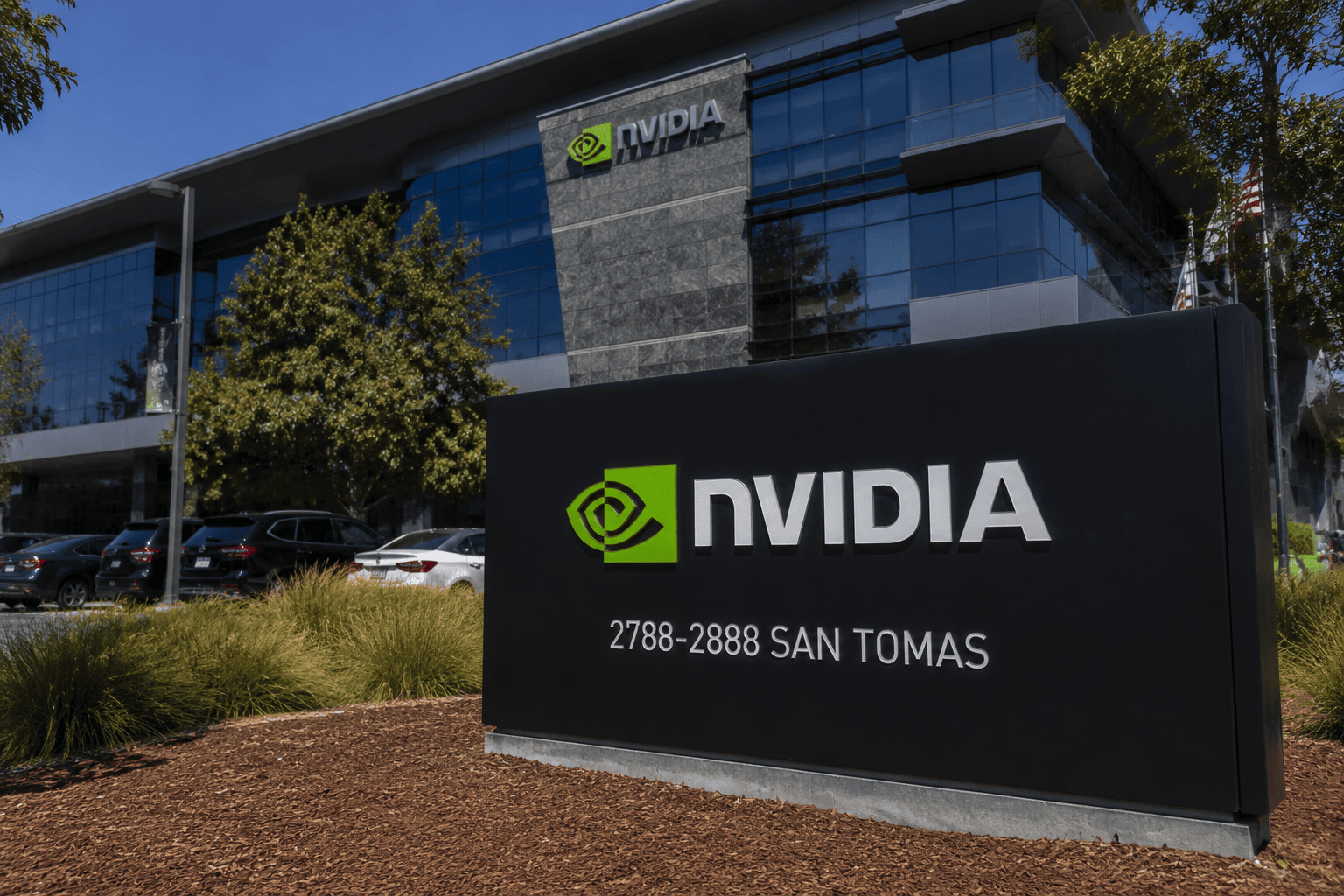
Nvidia has introduced a revenue-sharing initiative aimed at supporting AI startups by granting them access to computing power in exchange for a portion of future revenue. The program, announced this week, provides token credits to cloud-based AI companies, model developers, and other enterprises, enabling them to leverage Nvidia's full-stack computing infrastructure powered by its graphics processing units (GPUs).
Partnerships Expand Infrastructure Access
As part of the rollout, Nvidia named two Australian firms to supply compute capacity. Sharon AI will deploy up to 40,000 Nvidia GPUs under the program, while Firmus Technologies is developing a data center in Batam, Indonesia, expected to scale to 360 megawatts and accommodate up to 170,000 Nvidia GPUs. These partnerships aim to address the growing demand for computing resources among AI startups seeking to build and scale operations.

GPU Access Remains a Key Challenge
The initiative underscores the strategic importance of GPUs, often compared to oil due to their scarcity and pricing volatility. AI companies have increasingly turned to revenue-sharing and equity-sharing agreements with chipmakers to manage liquidity constraints. For instance, OpenAI previously entered into agreements with Amazon and AMD involving investments or share purchases, as reported by CNBC in January. Nvidia's program positions the company as an intermediary, helping startups bypass traditional barriers to GPU access.
Separately, Nvidia announced plans earlier this month to raise at least $20 billion in debt, with proceeds intended for general corporate purposes, including debt repayment and refinancing.
Stock Declines Amid Sector Rotation
Nvidia shares edged lower on Thursday, extending a recent pullback. After briefly reclaiming the $200 level, the stock reversed course and was down about 1% in early trading, following a close below $200 on Wednesday. The stock has struggled to maintain that level in recent weeks, even as Nvidia remains a primary beneficiary of AI investment.
The weakness comes after a strong first half for semiconductor stocks, with the VanEck Semiconductor ETF gaining over 70% in the first six months of 2026—its best first-half performance since 2000. However, investor attention has shifted to other parts of the AI supply chain. Memory chip manufacturers have benefited from supply constraints, while CPU-focused companies like Advanced Micro Devices and Intel have attracted interest amid expectations that next-generation agentic AI systems will require more computing resources than GPUs alone. Micron has been a notable beneficiary of the memory cycle.
This rotation has created a more competitive investment environment for Nvidia, even as demand for its products remains robust. For more on Nvidia's strategic moves, see Nvidia Signals Robotics as AI's Next Frontier: Industrial Suppliers May Lead and Nvidia Faces H2 2026 Test: Can Vera Rubin, Software Edge Offset Competition?.
This article is for informational purposes only and does not constitute financial advice.

