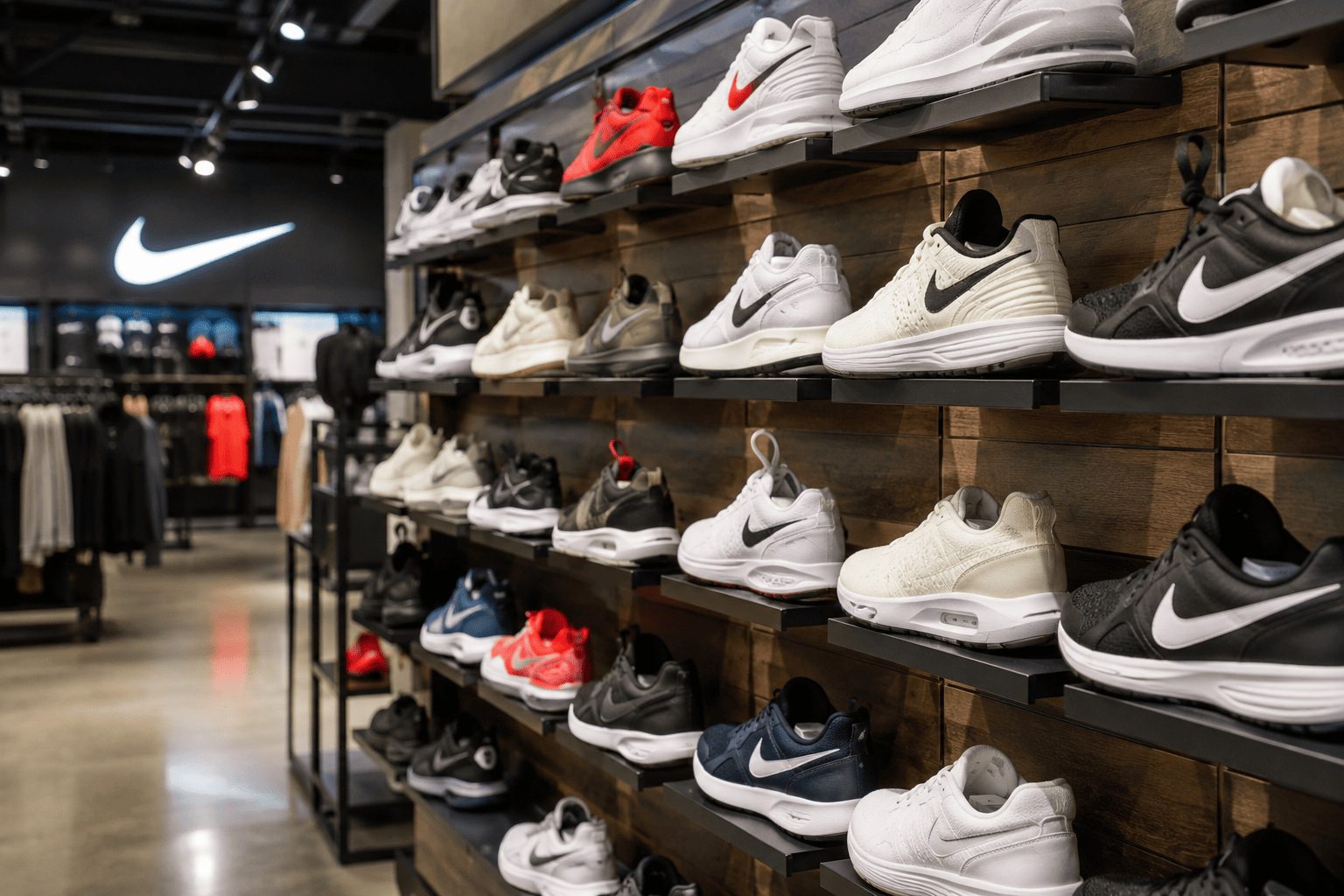
Nike's turnaround efforts are proving more painful than Wall Street anticipated. The sportswear giant's shares dropped 8.5% in extended trading on Thursday after reporting weaker-than-expected quarterly sales and a downbeat full-year outlook, alongside a new restructuring plan that will result in additional job cuts.
CEO Elliott Hill, who has spent nearly two years trying to revitalize the company around sport, innovation, and stronger wholesale partnerships, faces mounting challenges. Greater China sales fell 26% on a currency-neutral basis, several lifestyle franchises remain under pressure, and the company now expects fiscal 2027 revenue to decline by a high single-digit percentage.

Quarterly Results Miss Estimates
For the fiscal first quarter, Nike reported revenue of $11.21 billion, down 4% year-over-year and below the $11.32 billion analysts had expected. Diluted earnings came in at $0.48 per share, while gross margin improved 60 basis points to 42.8%, helped by lower warehousing and logistics costs.
The bigger shock was the guidance. Nike projects fiscal 2027 revenue to decline by a high single-digit percentage, compared with analysts' previous expectation of roughly a 2% fall. Adjusted earnings are forecast at $1.15 to $1.35 per share.
CFRA analyst Zach Warring told Yahoo Finance that this was "a quarter you'd expect from a new CEO three or four quarters in, but not two years in." That sentiment captures the frustration surrounding the stock. Hill inherited significant problems, but nearly two years into his tenure, expectations are being reset lower rather than the business returning to growth.
Pace Restructuring Brings More Layoffs
Nike unveiled Pace, an operating-model overhaul designed to extend its Sport Offence strategy across the company. The program includes supply-chain modernization, a new campus in India, consolidation from four geographic divisions to three, and organizational streamlining. Nike expects Pace to generate about $2.5 billion in cumulative savings through fiscal 2031.
Those savings come at a cost. Nike anticipates roughly $1 billion in pre-tax charges, primarily employee-related, over the same period. Hill told staff the changes would mean "fewer roles across Nike," with decisions on affected positions beginning in calendar 2027. This follows the elimination of nearly 2,200 jobs earlier in 2026.
China and Aging Classics Remain Key Challenges
Greater China revenue fell 26% on a currency-neutral basis, marking the ninth consecutive quarter of decline in the region. North America was a brighter spot, rising 2%, helped by growth in performance categories. Hill acknowledged that Nike's performance business is not large enough to offset weakness in Sportswear, Jordan Brand, and Greater China.
Needham analyst Tom Nikic had warned before earnings that "demand trends remain soft, inventory levels remain high, promotional activity remains intense, and competitive dynamics remain unfavourable." That diagnosis appears more relevant after the latest guidance. Nike still needs fresh products to create enough demand to reduce promotions and restore pricing power.
The classics problem remains central. Bank of America recently downgraded Nike to Underperform and cut its price target to $30 from $47, arguing that innovation is being overshadowed by pressure in older lifestyle franchises and that the sales recovery may not arrive until fiscal 2028.
Nike is finding pockets of success in running and other performance categories, and margins improved during the quarter. But the new forecast suggests those gains are still being overwhelmed elsewhere.
This article is for informational purposes only and does not constitute financial advice.

