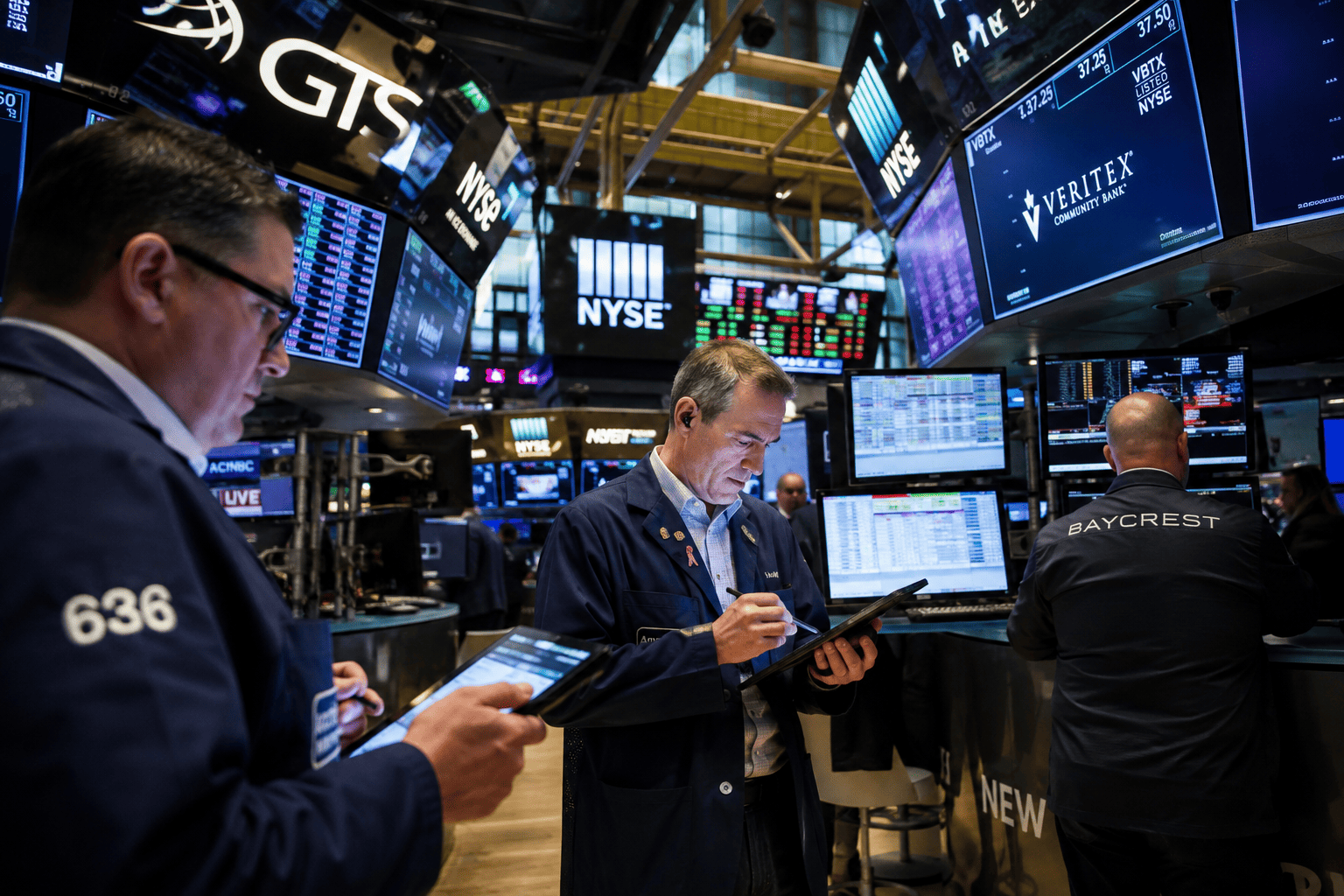
US stock futures took a sharp hit on Monday as a global selloff in artificial-intelligence shares collided with a fresh jump in oil prices, setting a tense tone ahead of this week's Federal Reserve policy decision. Nasdaq 100 futures tumbled roughly 542 points, or 1.8%, while S&P 500 contracts lost 0.7% and Dow futures slipped 0.2%.
The decline was led by semiconductor stocks, with Nvidia falling more than 2% before the bell, while Intel and Marvell dropped around 5%. The moves came after prominent AI executives, including Anthropic's Dario Amodei, Sam Altman, and Elon Musk, called for a slower pace of frontier-model development, raising questions about the sustainability of the AI capital-spending boom.

According to Sean Johnstone, a TMT sales strategist at Goldman Sachs, investors are effectively pricing in a "safety discount" on AI hardware, anticipating possible delays in chip purchases and data-center spending, even though no major company has formally announced cuts. This has created a notable divergence within the tech sector, as software names like ServiceNow and Atlassian gained about 3.5% premarket, while Workday and Adobe rose close to 3%. Analysts describe this as a rotation toward enterprise software and away from AI hardware, as slower frontier-model investment could hurt chip demand while giving software firms more time to monetize AI within existing workflows.
Meanwhile, oil prices added another layer of pressure. Brent crude traded near $108, and WTI hovered around $103, after Saudi Arabia shut a key East-West pipeline following a drone attack. The pipeline had become an important route to bypass the Strait of Hormuz, and Gulf states also postponed talks with Iran over temporary shipping arrangements. Patrick Munnelly, a strategist at Tickmill, noted that the combination of an AI valuation reset and an oil-driven inflation shock is creating an unusually difficult backdrop across asset classes.
The 10-year Treasury yield eased slightly to about 4.97%, but remains close to the psychologically important 5% level. Last week's rise in yields helped push the S&P 500 and Nasdaq lower, and the 30-year yield has moved above 5.3%. Higher risk-free rates make richly valued technology stocks harder to justify and raise borrowing costs across the economy.
Markets are pricing in roughly an 87% chance of a 25-basis-point rate hike on Wednesday. This creates an unusual asymmetry: a hike is largely expected, while a pause could unsettle bond investors by raising questions about the Fed's inflation resolve. Goldman Sachs economists believe policymakers will be wary of disappointing a market that has already priced tightening so aggressively.
The current market environment echoes recent episodes of volatility, such as when Dow futures dropped 400 points as crude topped $100 and rate hike bets climbed. Similarly, futures were mixed last month as PPI data, the ECB decision, and $100 oil kept markets on edge. Investors are now watching whether the AI trade can regain its footing or if the safety debate marks a turning point.
As the week unfolds, all eyes will be on the Fed's decision and any signals about the path of rates. The interplay between AI sentiment, oil prices, and Treasury yields will likely dictate market direction in the near term.
This article is for informational purposes only and does not constitute financial advice.

