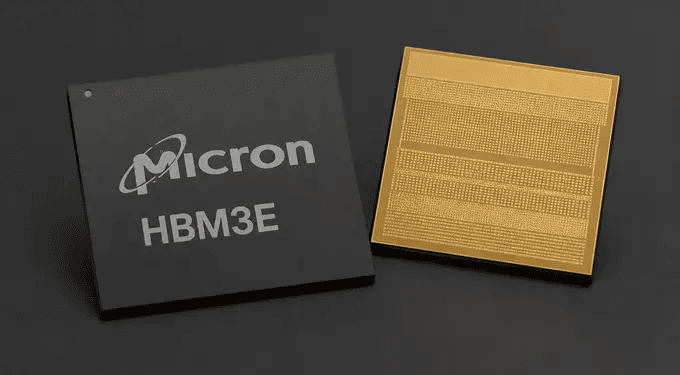
Micron Technology (MU) shares declined approximately 5% in premarket trading on Friday, giving back a portion of the gains from earlier in the week, even after the memory chipmaker delivered stronger-than-expected quarterly results. The sell-off was part of a broader weakness across the semiconductor sector, with Intel down over 3%, Sandisk falling 5%, Arm losing 4%, and Marvell declining 3.7%.
The decline reflects growing investor caution over rising costs associated with artificial intelligence infrastructure, which triggered a global sell-off in semiconductor stocks. In Europe, ASML fell 2.2%, Infineon dropped 3.7%, and ST Microelectronics declined 3.3%. In Asia, SoftBank led regional losses, plunging more than 12%.

Record Revenue and Margin Strength
Micron reported third-quarter revenue of $41.46 billion, compared with $9.3 billion in the same period a year earlier, exceeding analysts' expectations. Adjusted earnings reached $25.11 per share on revenue of $41.5 billion, representing a 346% year-on-year increase. Adjusted gross margin stood at 85%, while adjusted operating margin reached 81%.
The company also guided for current-quarter revenue of approximately $50 billion, up from $11.3 billion in the corresponding period last year. Micron noted that customers have committed $22 billion to secure future memory chip supply, and the company now expects the memory shortage to persist beyond 2027, a shift from earlier expectations of an earlier easing of supply constraints.
Market Cap Milestone and Rally
Following the earnings announcement on Wednesday, Micron's shares surged more than 15% in a single session, briefly pushing its market capitalization ahead of Meta Platforms and close to Tesla. Micron's market value peaked at $1.398 trillion on Thursday, compared with Meta Platforms at $1.392 trillion and Tesla at approximately $1.4 trillion. The stock has gained roughly 863% over the past year.
Micron first crossed the $1 trillion market valuation mark on May 26, joining a group of semiconductor companies benefiting from investor enthusiasm surrounding AI infrastructure. The company's growth has been primarily driven by its two data-center business segments, which together generated $25 billion in revenue, up 415% from a year earlier.
Broader Context and Investor Sentiment
The pullback in Micron and other chip stocks comes amid a broader reassessment of AI-related spending. While demand for data-center memory chips remains exceptionally strong, investors are weighing the rising costs of AI infrastructure against potential returns. This dynamic has led to a divergence between strong earnings reports and market reactions, as seen in the recent AI-driven stock rally diverging from a sluggish US economy.
Micron's sell-off appears to be driven by AI capex cost anxiety affecting the entire semiconductor complex, rather than company-specific deterioration. The company now has 16 long-term chip supply agreements in place, underscoring the sustained demand for memory chips.
Meanwhile, other chip-related names have also faced pressure. For instance, Seagate shares surged after a Wells Fargo upgrade on AI-driven HDD demand, highlighting the mixed sentiment across the sector.
As the market digests Micron's blowout earnings and the broader implications of AI infrastructure costs, investors will be watching for further signals from the company and the sector. The key risk remains whether AI spending could be delayed or cut, potentially normalizing memory demand faster than Micron's beyond-2027 shortage outlook.
This article is for informational purposes only and does not constitute financial advice.