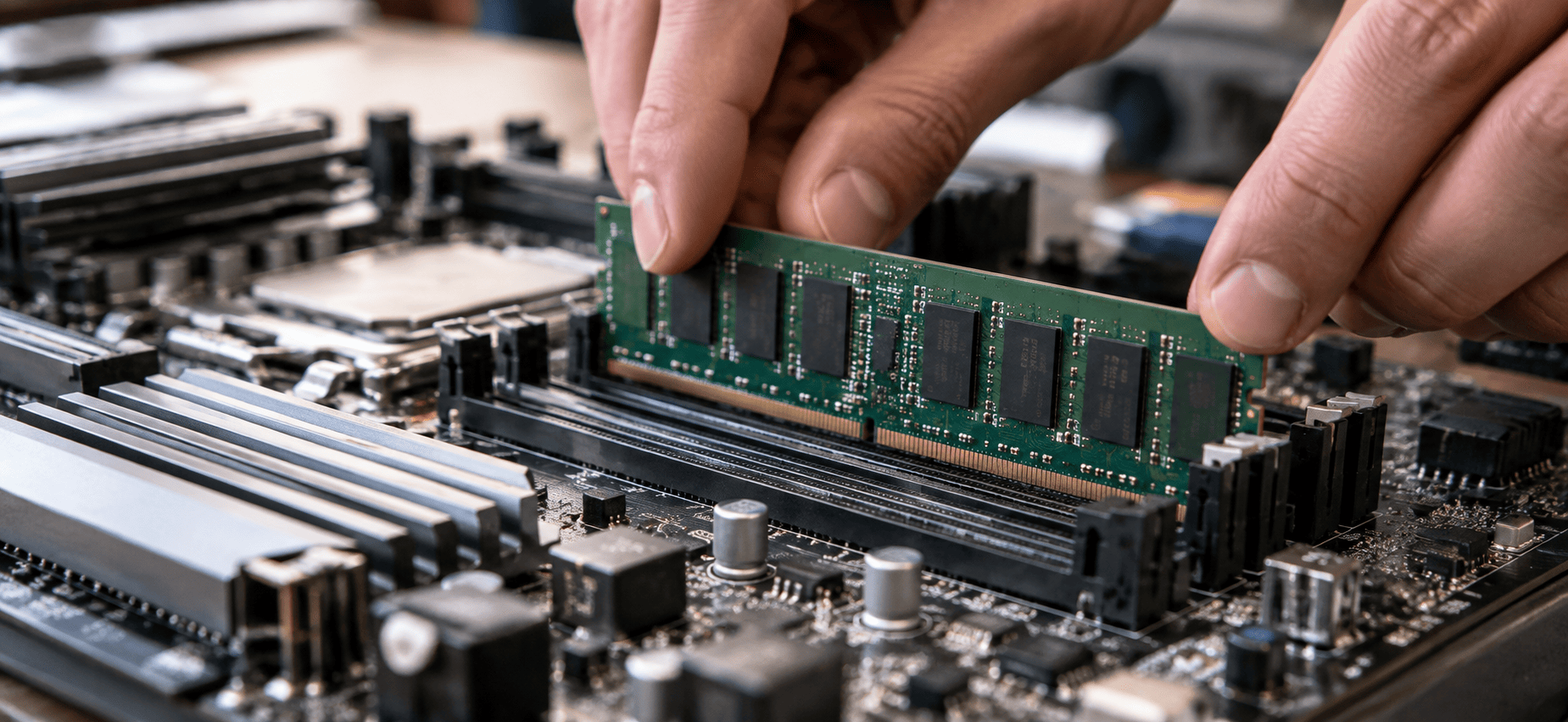
Micron Technology reported fiscal fourth-quarter results that shattered Wall Street expectations, with revenue reaching a record $54.23 billion—a nearly fivefold increase from the $11.32 billion posted in the same period last year. The surge was fueled by relentless demand for high-bandwidth memory (HBM) used in AI data centers, where sales jumped 11-fold year over year.
Despite the stellar numbers, Micron's stock fell after the earnings release. The decline came even as management issued exceptionally strong guidance for the current quarter, projecting revenue of $61.5 billion (plus or minus $1.5 billion) and GAAP diluted earnings per share of $37.84. Investors may have been reacting to the stock's massive run-up—shares have more than tripled since the start of the year—and concerns about potential profit-taking.

Record profitability and pricing power
Micron's non-GAAP gross margins surpassed the company's aggressive target of 86%, a level previously unheard of in the cyclical memory market. This pricing power stems from strategic long-term customer agreements that insulate the firm from broader macroeconomic volatility. HBM3E memory modules, which power next-generation GPUs for enterprise deep learning, remain fully sold out well into next year.
Operating cash flow swelled to $89.68 billion for fiscal 2026, allowing Micron to fund $27.37 billion in capital expenditures while maintaining robust liquidity reserves. The company also benefited from a 14-week quarter, which provided additional operational tailwinds.
Broad-based strength across the portfolio
Beyond HBM, Micron demonstrated strength across its broader product lineup. Data center storage demand surged, led by high-capacity enterprise SSDs (eSSDs) that complement AI training and inference servers. High-density server DRAM modules (DDR5) and LPDDR5X for AI-enabled edge devices also saw accelerated enterprise adoption.
In the fourth quarter, DRAM revenue rose to $38.26 billion, representing about 70.5% of total revenue, while NAND revenue surged to $12.32 billion, or 22.7% of the total. High-capacity eSSDs—specifically 30TB+ and 60TB class drives—crossed the $1.5 billion quarterly run rate mark.
Long-term contracts provide visibility
Micron confirmed over $100 billion in total cumulative long-term "take-or-pay" contract value locked in across top hyperscale cloud providers and AI GPU customers. These binding contracts guarantee pricing floors and volume commitments, shielding Micron from typical cyclical spot price dips.
This order visibility supports the view that server memory tightness will persist, despite rising competition from Chinese mainstream DRAM producers. The guidance suggests that Micron's transition from a commoditized chip maker into an irreplaceable AI infrastructure player is well underway.
Investor considerations
Following the post-earnings breakout, investors should approach Micron shares with a strategic balance of momentum participation and risk management. With shares up over 200% year-to-date, chasing extended gains could expose investors to short-term pullback volatility.
A prudent approach might involve writing cash-secured puts below key technical support levels to establish entries on dips, or holding core long equity while selling out-of-the-money covered calls to harvest elevated option premiums. Given Micron's long-term order visibility and structural gross margin expansion, dollar-cost averaging on temporary macro consolidations allows long-term investors to participate in the multi-year AI memory super-cycle without overextending capital at local peaks.
This article is for informational purposes only and does not constitute financial advice.

