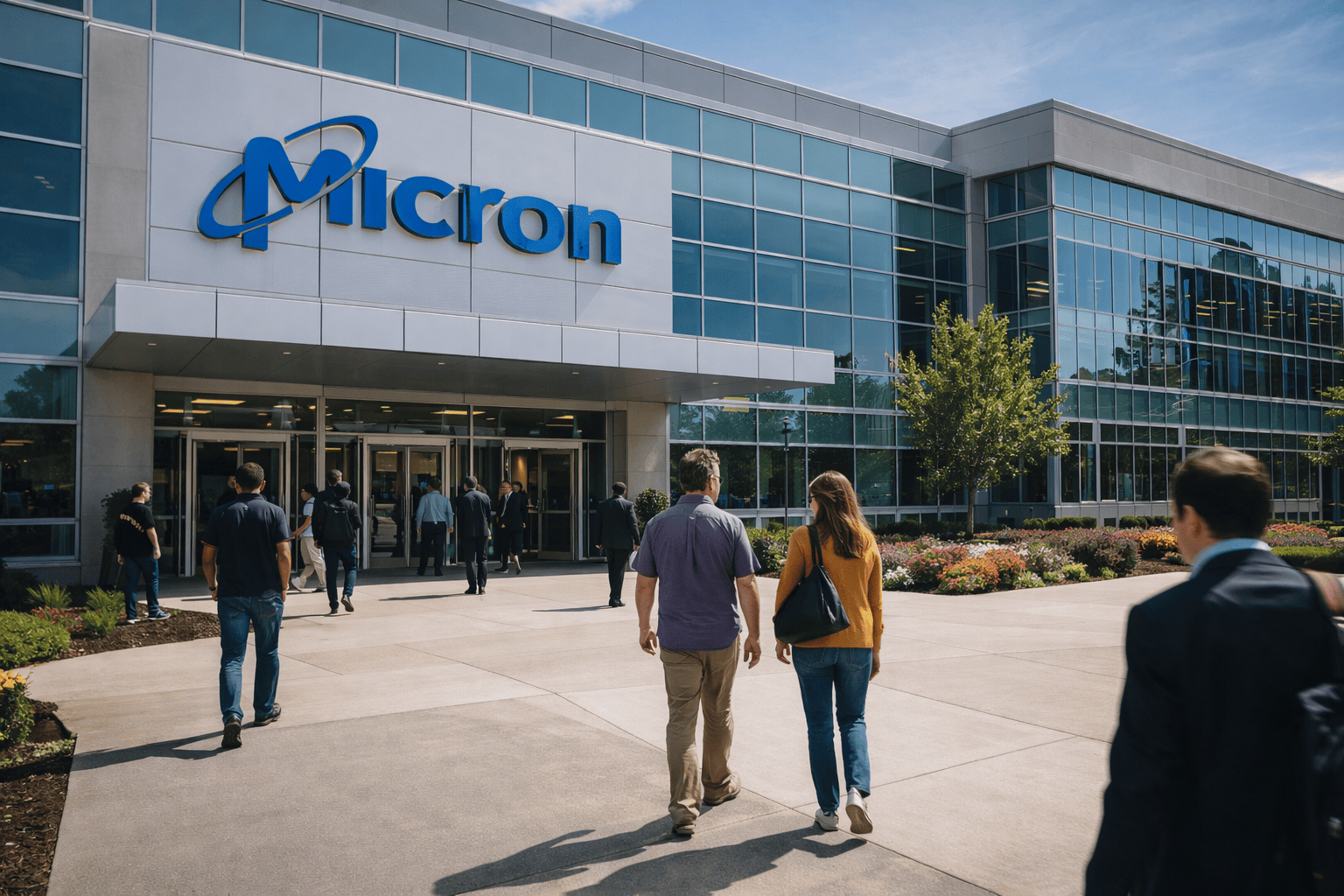
Micron Technology (NASDAQ: MU) CEO Sanjay Mehrotra sold approximately $37.3 million worth of company stock on Friday, July 24, as the memory-chip maker experiences its steepest monthly decline in years. The transaction, involving 40,000 shares, preceded a further 8.9% drop in MU shares on Tuesday to $820.53.
The stock has fallen more than 29% in July and is down 32% from its June peak, driven by concerns over Chinese competition, AI infrastructure financing, and the sustainability of the memory boom. However, the sale was executed through a Rule 10b5-1 plan adopted on January 30, meaning the trading instructions were established months before the semiconductor downturn began. This makes the sale weaker evidence of a sudden change in Mehrotra's outlook.

The $37 Million Sale in Context
Micron confirmed that the plan allows the Mehrotra Family Trust to sell up to 200,000 shares between May 1, 2026, and May 1, 2027. Such plans are designed to reduce concerns that insiders are acting on non-public information. While they don't make a transaction irrelevant, they distinguish a scheduled sale from a spontaneous decision during a market decline.
This latest sale follows several large planned disposals in May and June. Mehrotra sold about $21.5 million on May 1, roughly $36 million in late May, and approximately $46.3 million in late June. Including Friday's trade, gross proceeds have exceeded $140 million since early May. That scale merits scrutiny, especially after Micron's extraordinary rally earlier this year. However, “cashes out” should not be confused with a complete exit. According to TipRanks, Mehrotra continues to hold a significant economic interest in the company, leaving his wealth tied to Micron's performance.
Bad Timing as the AI-Memory Trade Unravels
The filing landed during a sector-wide retreat rather than an isolated Micron problem. Investors are reassessing China's progress in memory production and chipmaking equipment, the possibility of cheaper conventional DRAM supply, and whether hyperscalers can sustain AI capital-expenditure programs. Mizuho managing director Daniel O'Regan noted on July 24 that the most common question he was hearing was why the semiconductor complex was lagging so badly. He saw no single “smoking gun,” pointing instead to several factors weighing on sentiment.
Micron has become unusually important to that debate. Trivariate Research called it “the most important stock in the market” in a July 16 report, describing the shares as a proxy for the AI cycle and investors' willingness to take risk. That role magnifies the optics of an insider sale. When traders treat Micron as a barometer for AI infrastructure, a large disposal by its chief executive can reinforce anxiety even when the transaction was planned. For more on the broader sector headwinds, see our coverage of Micron, Nvidia, AMD sliding on China chip fears.
Is Mehrotra's Sale Really a Red Flag?
The bearish interpretation centers on scale and timing. Mehrotra has realized more than $140 million while investors debate whether memory prices, hyperscaler spending, and the sector's valuation have approached unsustainable levels. Additional sales could deepen the impression that executives are monetizing an exceptional rally.
The bullish counterargument is rooted in Micron's changing business structure. UBS analyst Timothy Arcuri has argued that longer customer agreements, committed volumes, and partially fixed pricing could give the company better visibility and a smoother earnings profile than in previous memory cycles. Arcuri said the market could eventually place a more “normal” multiple on Micron as evidence emerges that AI has structurally changed the memory industry. Micron has also disclosed 16 multiyear strategic customer agreements intended to improve predictability. For more on the long-term demand picture, see our analysis of China's Kimi K3 AI model straining capacity.
Those fundamentals matter more than one filing. Genuine warning signs would include weakening HBM orders, falling contract prices, cuts to hyperscaler spending, or faster-than-expected Chinese capacity additions. For now, the scheduled nature of the sale and Mehrotra's remaining stake suggest the transaction is not a definitive red flag, but it does add to the noise around a stock already under pressure. Investors should also consider the potential long-term risks from Chinese competitors, as discussed in our piece on CXMT's $8.6B IPO posing risks to Micron's DRAM business.
This article is for informational purposes only and does not constitute financial advice.