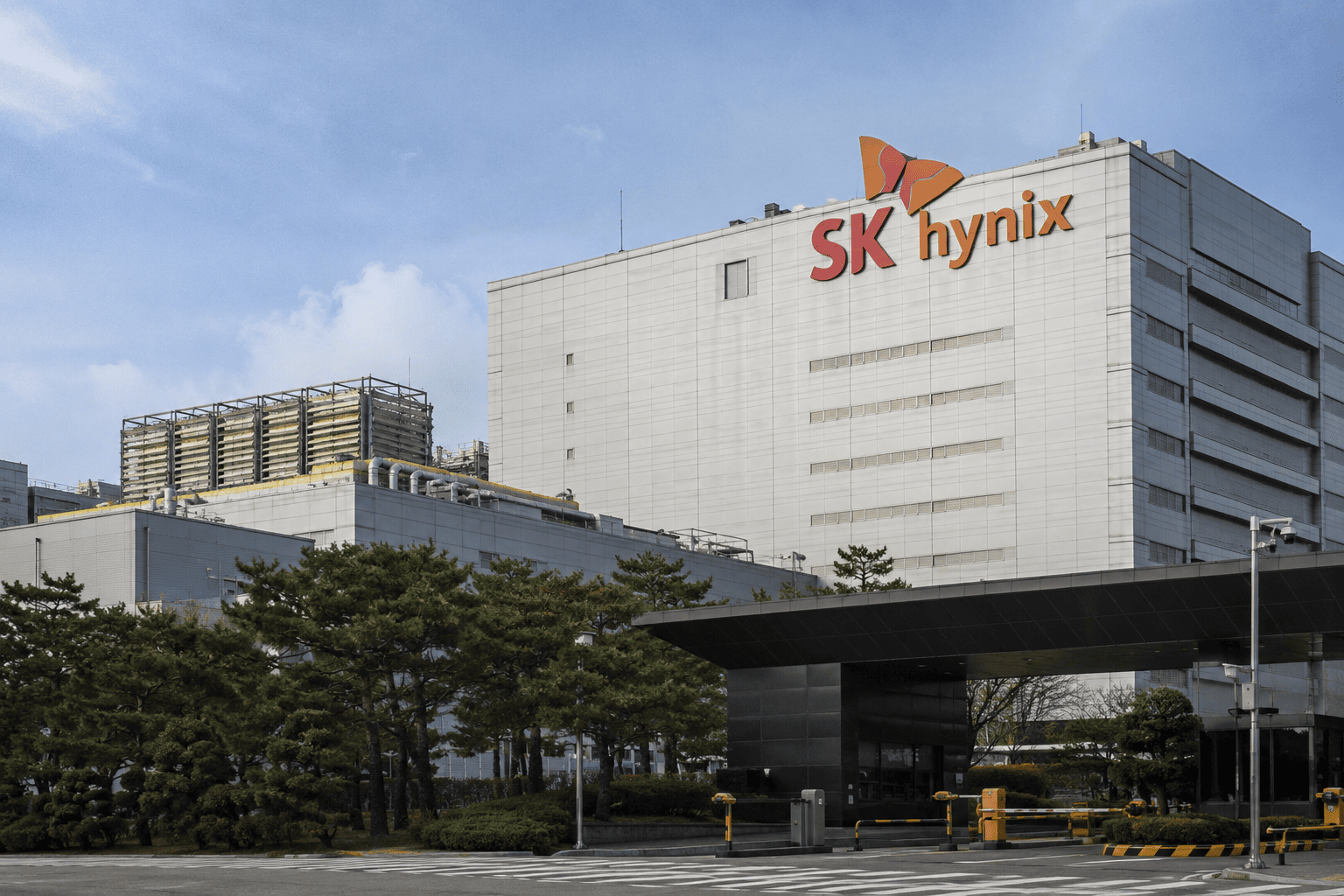
Shares of major Asian memory chipmakers—Samsung, SK Hynix, and Kioxia—suffered steep declines on July 2, as a wave of profit-taking swept through the sector. Kioxia dropped 33% from its year-to-date high to ¥75,160, while SK Hynix fell 22% to 2,333,000 KRW, its lowest since June 17. Samsung also slid 22% to KRW 292,500. The combined losses erased billions of dollars in market value.
Profit-Taking After Massive Rallies
The primary driver of the sell-off is investors locking in gains after an extraordinary run. Over the past 12 months, Samsung stock surged 350%, SK Hynix soared over 730%, and Kioxia jumped 555% from its 2024 low. Such parabolic moves often trigger pullbacks as traders rebalance portfolios.

The retreat mirrored weakness in U.S. memory and semiconductor stocks. The PHLX Semiconductor Index fell 8.87% from its monthly high, and the Roundhill Memory ETF (DRAM) dropped 19% from its year-to-date peak. Micron Technology, despite reporting a 300% revenue surge last quarter, slid 17% from its July high.
Legal Headwinds and Meta's Cloud Ambitions
Beyond profit-taking, three specific factors amplified the sell-off. First, Samsung, SK Hynix, and Kioxia were named in a class-action lawsuit filed in the U.S. District Court for the Northern District of California, alleging they conspired to inflate DRAM prices by restricting supply. While the case is in early stages, it signals growing pushback from customers.
Second, a Bloomberg report revealed that Meta Platforms is exploring a cloud computing business to sell excess capacity. This raised fears that additional compute supply could slow data center expansion, dampening demand for AI infrastructure and memory chips.
Third, a sector rotation is underway, with capital flowing from memory and semiconductor stocks into large-cap technology names like Microsoft, Meta, Google, and Amazon. Microsoft rose 10% from its 2024 low, Meta jumped 17% from its June low, and Amazon gained ground. Such rotations are common in mature bull markets.
Context and Outlook
The current pullback does not necessarily signal the end of the memory chip bull run. Many analysts view it as a healthy consolidation after extreme gains. However, investors should monitor the DRAM lawsuit and Meta's cloud plans for further impact. For related coverage, see SanDisk Plunges 14% as AI Hardware Rotation Hits Memory Stocks Despite Analyst Upgrades and Asia Tech Rout Deepens: SoftBank Tanks 12%, SK Hynix and Samsung Slide 8% on Apple Cost Warning.
Meanwhile, broader market dynamics remain in play. European Stocks Hit New Highs: STOXX 600, DAX Record Weekly Gains on Rate Optimism shows that not all regions are retreating. And the Magnificent 7 Shed $2.3 Trillion: Profit-Taking, Rotation to Memory Stocks, and ROI Fears highlights the fluid nature of capital flows in today's market.
This article is for informational purposes only and does not constitute financial advice.