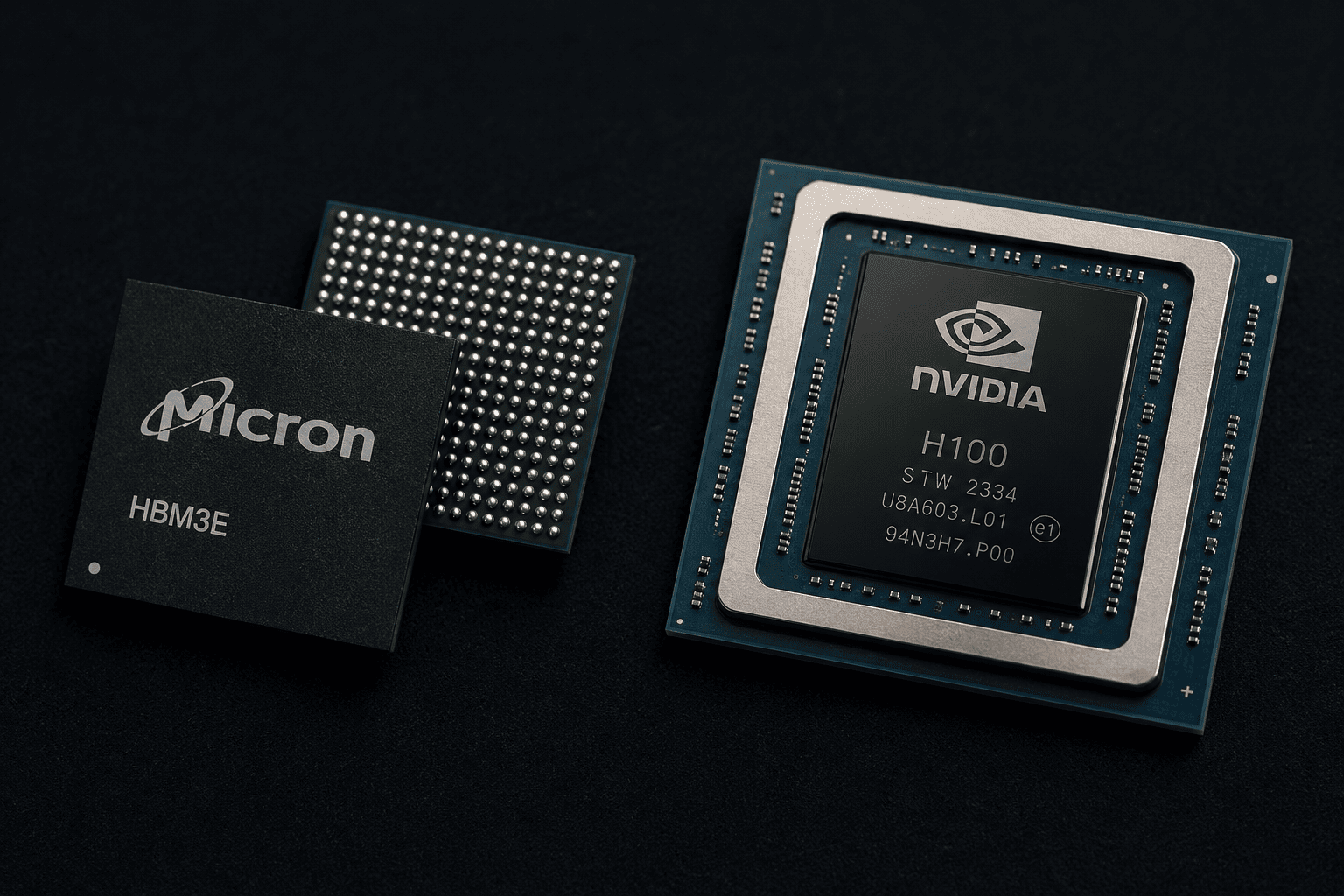
Micron Technology, a company that began operations in a Boise, Idaho dental office basement in 1978, has emerged as a pivotal player in the artificial intelligence buildout. Over the past year, its shares have surged roughly 700%, with the company crossing a $1 trillion market capitalization for the first time last month. This dramatic ascent has led investors to ask whether Micron is becoming the new Nvidia—a stock whose earnings reports move markets and serve as a barometer for the entire AI sector.
From Commodity to Strategic Supplier
For most of its history, Micron was a stock serious investors avoided. Its core product—dynamic random-access memory (DRAM)—was a commodity subject to brutal boom-and-bust cycles. Shortages would lift prices and profits, manufacturers would add capacity, supply would overshoot demand, prices would collapse, and the cycle would repeat. Wall Street treated Micron as a trade, not an investment. That narrative is being rewritten at speed.

The catalyst is high-bandwidth memory (HBM), a critical component in AI servers that positions data directly alongside processors. Modern AI systems require enormous amounts of HBM to function efficiently; without enough of it, even the fastest GPU becomes a bottleneck. Only three companies—Micron, Samsung, and SK Hynix—can manufacture HBM at scale. This oligopoly, combined with surging AI demand, has given Micron sustained pricing power for the first time in its history.
Earnings That Rival Nvidia
Micron's latest quarterly results underscore its transformation. Revenue surged 346% year-over-year, while gross margins hit 84.9%—surpassing even Nvidia's margins. The company expects the HBM market to grow to approximately $100 billion by 2028. Where large technology companies once faced an 'Nvidia tax' for indispensable chips, some now speak of a 'Micron tax,' a memory toll that hyperscalers and AI infrastructure builders simply must absorb. Apple, for example, recently raised device prices due to surging memory costs.
Micron's earnings have also taken on a market-moving role previously reserved for Nvidia. Earlier this month, when AI and technology stocks were nursing heavy losses amid concerns over bubble-territory valuations, it was Micron's blowout results that steadied nerves and reignited confidence that the AI trade still has runway. Two years ago, that role belonged to Nvidia.
Nvidia's Diminishing Drama
Nvidia remains a powerhouse. In its latest first-quarter results, it posted revenue of $81.6 billion, up 85% year-over-year, while net income more than tripled to $58.3 billion. But its shares fell 1.6% in after-hours trading following the release. The market has become accustomed to Nvidia delivering stellar figures and was pricing in something closer to perfection. Year to date, Nvidia's shares have risen a modest 3%; over the past 12 months, the gain is approximately 22%—respectable for most companies but underwhelming by recent standards.
As Nvidia signals robotics as AI's next frontier, its earnings have become less dramatic. Meanwhile, Micron's scarcity-driven pricing power and strategic importance have made it a new bellwether. Investors now read Micron's earnings reports the way they once read Nvidia's—not just for what they say about one company, but for what they imply about the pace and health of the entire AI buildout.
Risks and Skepticism
Not everyone is convinced. Michael Burry has shorted Micron, warning that the AI chip rally is overdone. The memory industry's history of cyclical downturns remains a risk, and any slowdown in AI infrastructure spending could reverse Micron's fortunes. Still, the structural shift in demand for HBM suggests that Micron's new role as a strategic supplier may be more durable than its commodity past.
As markets rotate from mega-cap tech into memory plays, the question is whether Micron can sustain its momentum. For now, it has become the stock that investors watch to gauge the health of the AI trade—a role that once belonged exclusively to Nvidia.
This article is for informational purposes only and does not constitute financial advice.