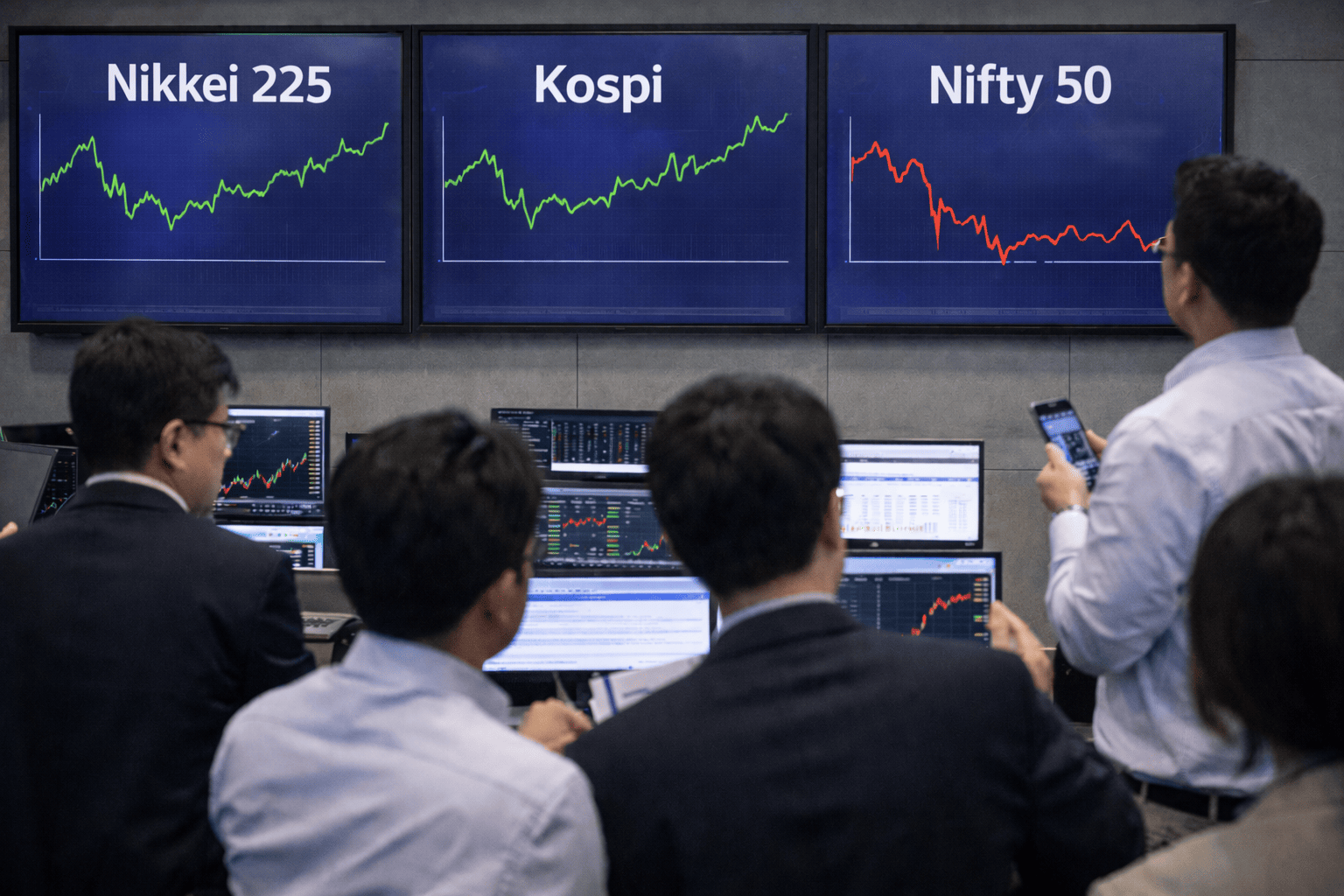
South Korea's benchmark KOSPI managed a modest gain on Wednesday, snapping a four-session losing streak as heavyweight chipmakers recovered, yet persistent foreign selling underscored lingering concerns about the market's vulnerability to global rate and energy pressures.
The index opened 0.24% lower before reversing course to trade up 0.2% at 6,640.47 by late morning in Seoul. Samsung Electronics advanced 0.6%, while SK Hynix climbed 1.45%, providing crucial support after a rough patch for global semiconductor shares.

Chip rebound provides a floor, but breadth is thin
The bounce in Korea's two largest chipmakers is significant because the KOSPI has been absorbing pressure from elevated US borrowing costs, oil prices above $100, and renewed doubts about the pace of AI investment. According to Kiwoom Securities analyst Han Ji-young, the 6,600 level is emerging as a key short-term support. He noted that a sustained recovery would require greater stability in the won and clearer evidence that US interest rates are near their peak.
Other gainers included LG Energy Solution, up 0.68%, and POSCO International, which rose 2.55%. However, the advance was not broad-based: Hyundai Motor fell 2.04% and Korean Air dropped 1.7%, indicating that the rebound remains concentrated in a few large tech names.
Foreign selling persists
The most concerning signal is capital flow. Foreign investors sold a net 922.8 billion won of KOSPI shares by late morning, extending their selling streak to a sixth session. Domestic institutions bought roughly 389 billion won, helping to absorb some of that pressure, but the persistent outflow reflects caution about Korea's exposure to global rates, energy imports, and tech sentiment.
The won weakened to about 1,369.75 per dollar. OCBC strategist Christopher Wong told The Wall Street Journal that elevated US Treasury yields, expensive oil, and cautious risk sentiment are pressuring Asian currencies, with the won particularly sensitive to equity flow changes.
That makes Wednesday's KOSPI move more fragile than the headline gain suggests. While chip stocks are supporting the index, foreign positioning still signals concern about the broader macro environment.
Asia awaits Fed decision
Across the region, markets were mixed before the Federal Reserve's rate announcement. The MSCI Asia-Pacific index excluding Japan hovered near flat, supported by Taiwanese shares even as Chinese equities weakened—the CSI 300 slipped about 0.35%. Japan's Nikkei 225 fell about 0.2%, dragged by SoftBank Group and Kioxia, while the broader Topix gained 0.5%. S&P 500 futures edged higher.
The US 10-year Treasury yield eased back toward 5% after breaching that level on Tuesday, while markets priced in roughly a 95% probability of a quarter-point Fed increase. Brent crude slipped below $108 after Tuesday's surge but remained historically elevated as Middle East supply disruptions persisted.
For investors, the combination of a chip-led rebound and persistent foreign selling suggests that the KOSPI's near-term direction hinges on the Fed's tone and any signals on the path of US rates. As KOSPI and Nikkei diverge ahead of the Fed, the market's ability to hold above 6,600 will be closely watched.
Meanwhile, the broader risk backdrop remains challenging, with oil at $110 and yields near 5% having triggered earlier selloffs. A Dow rebound on Tuesday offered some relief, but Asian markets remain sensitive to these macro headwinds.
This article is for informational purposes only and does not constitute financial advice.

