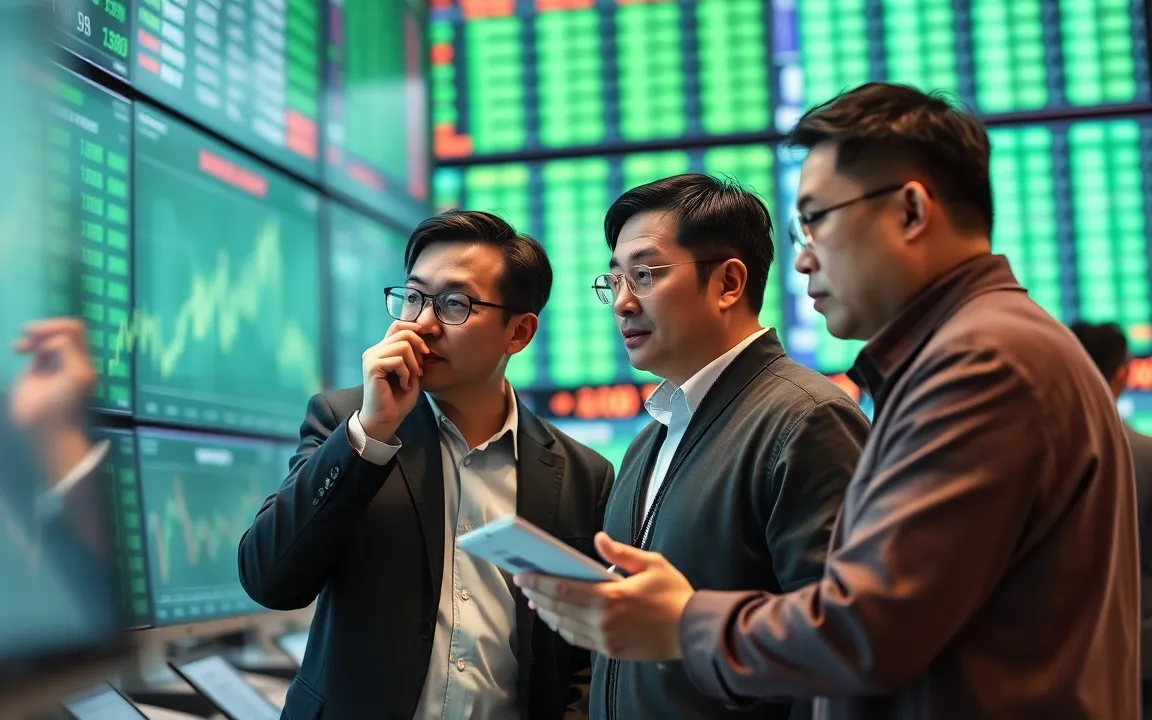
South Korea's benchmark KOSPI index climbed more than 4% in Thursday morning trading, as investors returned to heavyweight chipmakers Samsung Electronics and SK Hynix, extending a sharp recovery from July's AI-driven selloff. The index rose 4.4% after U.S. inflation data matched expectations, reducing the likelihood of another Federal Reserve rate hike in September.
Overnight gains in U.S. AI-related stocks, including Micron, Super Micro Computer, and CoreWeave, reinforced appetite for semiconductor shares. Samsung and SK Hynix are attracting buyers with depressed valuations, cleaner positioning, and a memory cycle that remains unusually tight.

Valuations and positioning support the rebound
Samsung ended Wednesday up 6.7%, and SK Hynix gained 5.5%, before both advanced further early Thursday. Their recovery follows a brutal July selloff that pushed each stock down more than 20%. A report that Singapore's Temasek was considering fresh direct investment in the pair added to sentiment, though Temasek did not confirm a new transaction, noting it had first invested in both companies over two years ago.
Samsung trades at roughly 4.2 times forward earnings, and SK Hynix at about 3.6 times, compared with more than 21 times for the Philadelphia Semiconductor Index. Albert Yong, managing partner at Petra Capital Management, told Bloomberg that the two stocks had become "technically oversold despite still-strong fundamentals," and that the Temasek report was a confidence signal rather than the main driver.
Foreign money returns to the memory trade
Global funds bought nearly $2 billion of KOSPI shares on Wednesday while retail investors sold, highlighting how quickly overseas appetite has returned. Ha Seok-keun, chief investment officer at Eugene Asset Management, told Bloomberg that a confirmed Temasek investment would represent strong foreign confidence in Korea's AI and memory cycle. The bank said in commentary that the memory cycle is likely to prove stronger and longer than previous upswings, with accelerating AI-compute demand and persistent shortages potentially supporting chip prices and profits for longer than current valuations imply.
Positioning has also become less dangerous. Goldman estimates that assets in Korean leveraged ETFs have fallen from a June peak of $53 billion to $25 billion, while retail margin-loan balances dropped from $25 billion to $19 billion. This reduction in leverage reduces the risk of forced selling.
One AI risk still hangs over the KOSPI
The rebound still rests on one crucial assumption: that Big Tech keeps spending. Goldman acknowledged that concerns around hyperscaler capital expenditure, financing capacity, and rising competition remain valid. That matters because Samsung and SK Hynix ultimately depend on Microsoft, Amazon, Meta, Alphabet, and other large customers continuing to pour enormous sums into AI infrastructure. That remains the central risk.
The concentration makes that risk more dangerous for Korea. Samsung and SK Hynix together account for about half of the KOSPI, so a sharp change in sentiment toward the two companies can overwhelm the index. July showed how violent that feedback loop can become: the KOSPI fell 22% during the month as AI concerns collided with leveraged-position unwinds.
For investors, the current rebound offers a potential entry point, but the sustainability of the rally hinges on continued AI capital expenditure. As memory demand remains a key driver, and with AI server demand boosting profits, the sector's fortunes are closely tied to hyperscaler budgets. The broader market also watches inflation data for clues on Fed policy, which could influence risk appetite.
This article is for informational purposes only and does not constitute financial advice.

