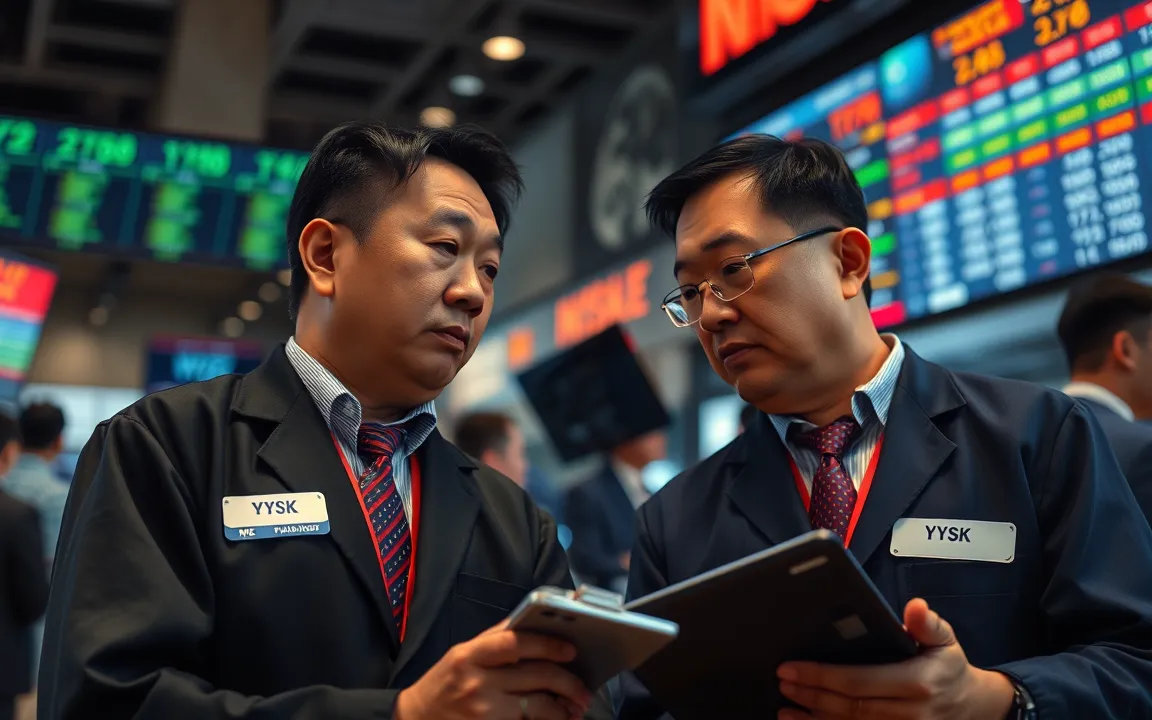
Asian equities advanced on Friday, with South Korea's KOSPI leading gains and Japan's Nikkei 225 climbing even after the Bank of Japan raised interest rates to a 31-year high. The moves were driven by a retreat in oil prices and US Treasury yields, which revived demand for technology shares across the region.
The KOSPI surged approximately 2%, outperforming other regional benchmarks, as heavyweight chipmakers Samsung Electronics and SK Hynix rallied. Foreign investors returned to the market, turning net buyers for the first time in eight sessions, with purchases of about 231 billion won by late morning. Samsung gained 2.6%, while SK Hynix jumped roughly 4.5%, extending the rebound in memory and AI-linked stocks after a strong session for US semiconductors overnight.

The Nikkei 225 added around 0.8% even after the BOJ lifted its policy rate by 25 basis points to 1.25%, the highest level since 1995. The yen weakened toward 157 per dollar following the decision, providing additional support to exporters. Chip-related shares such as Advantest and Lasertec also benefited from the overnight rebound in US technology stocks.
Investors appeared to look past the BOJ's move, focusing instead on the broader macro backdrop. The central bank's decision was widely expected, and two board members dissented, softening expectations for another imminent hike. Commonwealth Bank of Australia strategist Sarah Hammoud noted before the decision that the hike alone was unlikely to strengthen the yen, arguing that Governor Kazuo Ueda would need to convince investors that another increase, potentially in December, remains realistic.
A common tailwind for both markets was the decline in energy prices. Brent crude fell toward $103-$104 a barrel on hopes that Saudi Arabia could restore part of its damaged East-West pipeline capacity and use alternative shipment routes. Both Japan and South Korea rely heavily on imported energy, so lower crude is supportive for corporate margins, currencies, and inflation expectations.
US Treasury yields also eased, with the 10-year note around 4.94% after moving above 5% earlier in the week. This helped lift MSCI's broad Asia-Pacific index excluding Japan by about 1%, with Hong Kong, mainland Chinese, and Australian shares also moving higher.
The recent foreign selling in Korean equities appeared more consistent with short-term risk management around macro uncertainty than a deterioration in the country's underlying equity story, according to Kiwoom Securities analyst Han Ji-young. The return of foreign buyers suggests confidence in the chip trade remains intact, even as global rate risks persist.
For investors, the key takeaway is that Asian markets are finding support from easing energy costs and bond yields, even as central banks tighten policy. The BOJ's hike, while significant, was largely priced in, and the weaker yen is a boon for exporters. Meanwhile, the KOSPI's rebound underscores the continued strength of the AI and semiconductor cycle, which remains a central driver for regional equities.
This article is for informational purposes only and does not constitute financial advice.

