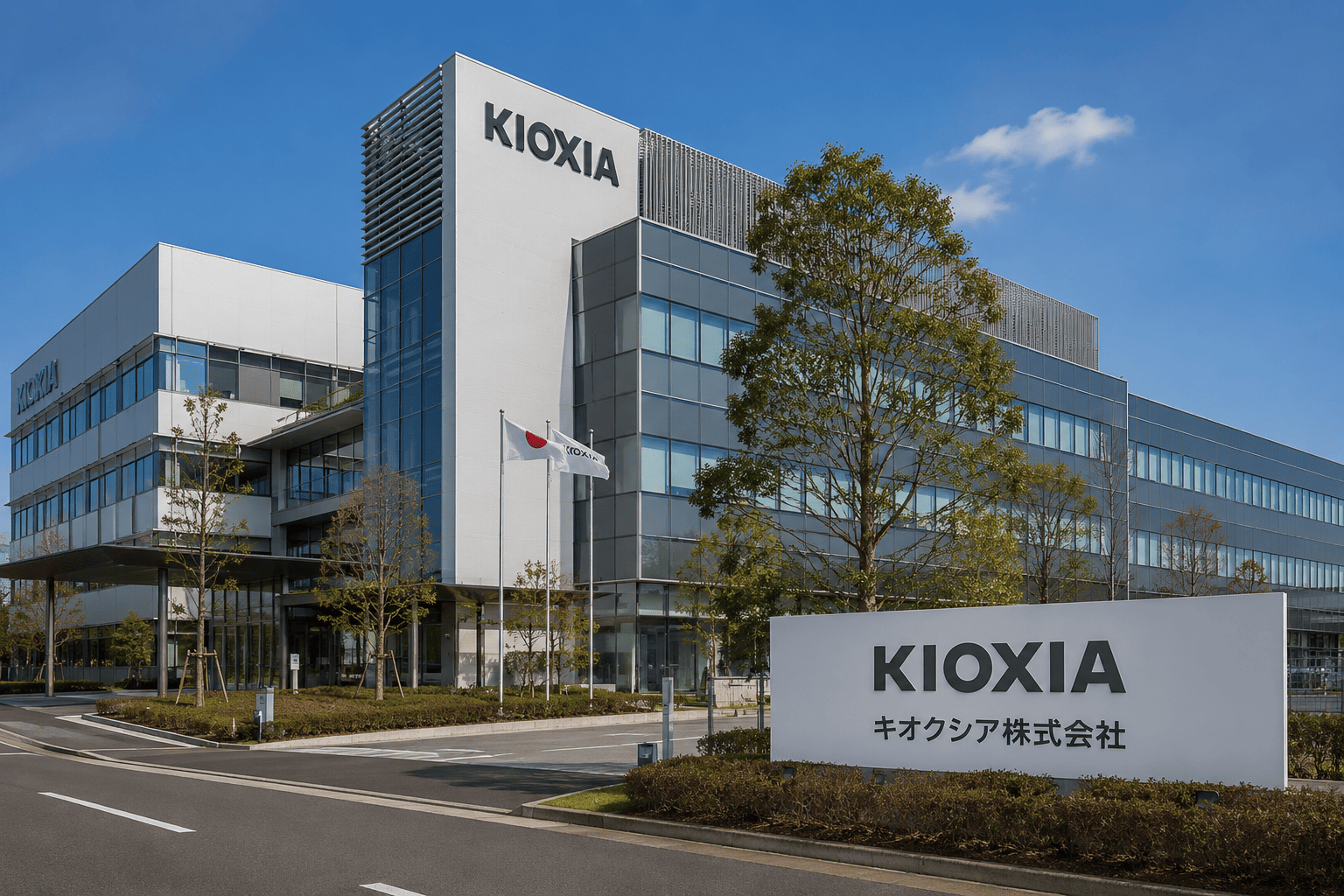
Kioxia Holdings shares have entered bear market territory, tumbling from a June high of ¥112,750 to the current ¥49,280. The 56% decline comes despite the company reporting explosive revenue and profit growth, a divergence that highlights the market's deep-seated concerns about the cyclical nature of the memory chip industry.
The sell-off is not isolated to Kioxia. Other memory makers, including Western Digital and SanDisk, have also seen their stocks retreat from recent peaks despite strong fundamentals. This pattern suggests a broader reassessment of the sector's outlook.

Record results, yet shares fall
Kioxia's latest quarterly results were nothing short of stellar. Revenue surged 78% quarter-over-quarter and 415% year-over-year to ¥1.76 trillion. Operating profit jumped 121% from the previous quarter and an astonishing 2,833% from the same period last year, reaching ¥1.32 trillion. Non-GAAP net income soared 4,692% to ¥887 billion.
The growth was driven primarily by its SSD and storage solutions segment, with data center revenue booming. This helped offset softness in the PC market. Management expects the momentum to continue, projecting revenue of ¥2.39 trillion for the next quarter and a 45.6% sequential rise in profit before tax to ¥1.88 trillion.
The company has also taken steps to support its share price, including a 3-for-1 stock split effective October 1 and a buyback program targeting 30 million shares.
Why the market is wary
Despite these positive developments, investors are focused on the industry's historical boom-and-bust cycles. The memory chip market has a track record of sharp downturns following periods of strong demand and high prices. The 2023 downturn saw most memory companies report revenue declines of more than 50% due to oversupply and weak demand.
To mitigate this risk, Kioxia and its peers have adopted long-term agreements (LTAs) that set price floors and ceilings. However, the market remains skeptical about whether these agreements can fully shield companies from a cyclical downturn.
Adding to the concern is the sheer magnitude of the recent rally. Kioxia's stock had more than tripled from its 2024 lows before the current correction. Some investors may be taking profits, fearing that the stock has run ahead of fundamentals.
Technical outlook
From a technical perspective, Kioxia's stock has found support at the 200-day moving average and the Major S/R pivot point of the Murrey Math Lines. This could signal a potential bounce in the near term. If the stock recovers, the next resistance level is around ¥75,000. However, a drop below the support at ¥35,970 would invalidate the bullish outlook and could lead to further downside.
Investors are now weighing whether the current pullback represents a buying opportunity or the beginning of a more prolonged decline. The answer may depend on whether the AI-driven demand for memory chips proves sustainable or fades as it did in previous cycles.
This article is for informational purposes only and does not constitute financial advice.