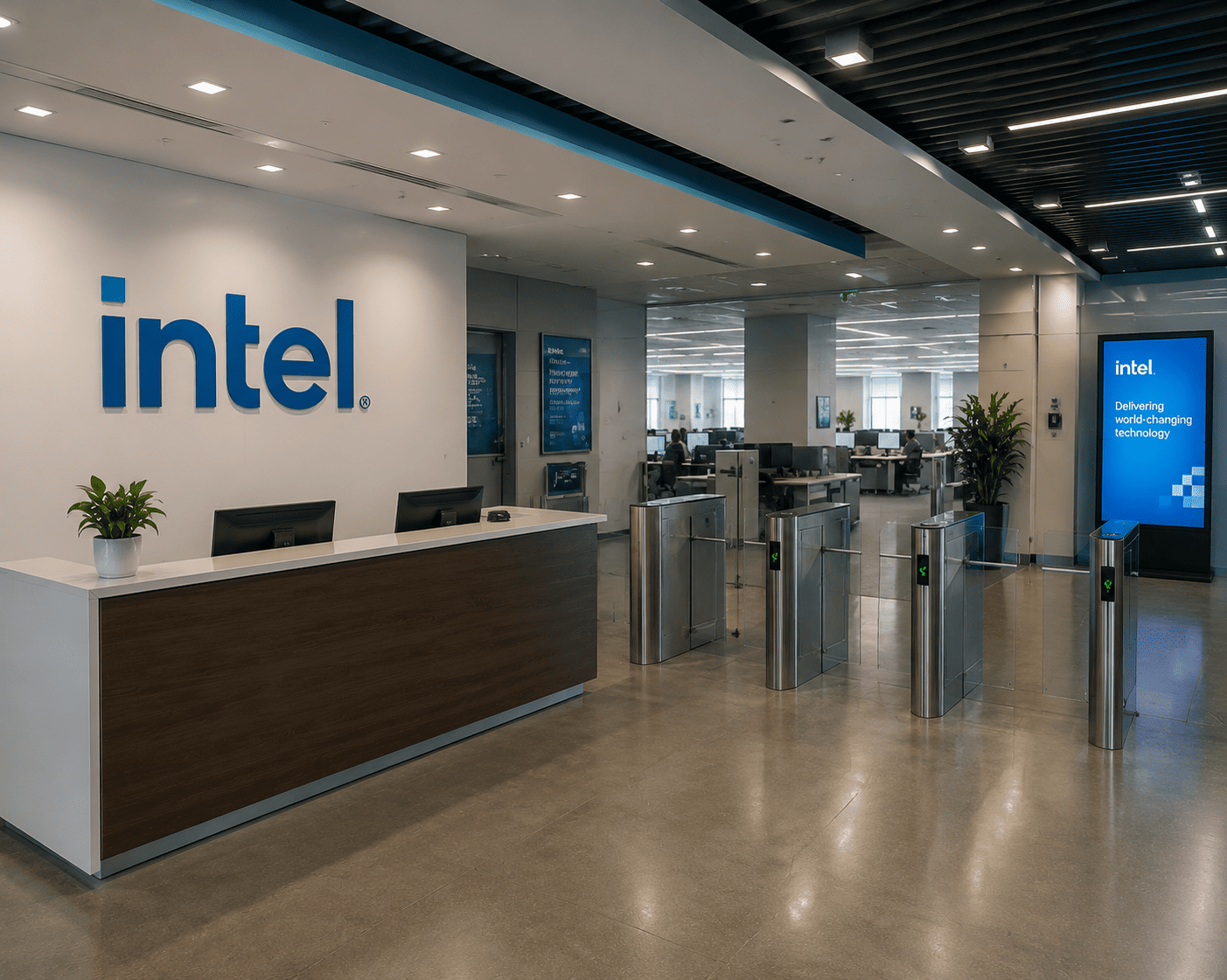
Intel has increased its planned stock offering to $20 billion, up from the $15 billion initially announced, as the chipmaker accelerates investments in artificial intelligence and semiconductor manufacturing. The move, disclosed late Monday, comes as the company's shares continue to slide amid concerns about shareholder dilution.
The company will issue 210.5 million new shares at $95 each, a 2.6% discount to Monday's closing price. Intel's stock fell 4.1% on Monday following the announcement and slipped another 0.62% on Tuesday. Despite the recent pullback, shares are still up more than 160% this year, buoyed by optimism around its AI strategy and foundry ambitions. However, the stock has declined 19% over the past three months.

Capital raise targets AI expansion and foundry growth
The expanded offering comes as Intel significantly boosts spending on manufacturing capacity and AI-related infrastructure. During its latest earnings call, management raised its 2026 capital expenditure forecast to over $20 billion, up from approximately $18 billion, reflecting stronger demand for its products and long-term manufacturing strategy. Proceeds from the stock sale are expected to support general corporate purposes, including continued investments in chip manufacturing and foundry operations.
KeyBanc analyst Matt Bryson noted in a research report that the raise is consistent with Intel funding an expansion to support current increased CPU requirements and future custom ASIC, foundry, and packaging demand. While the dilution is a negative for current investors, the demand signal is positive for Intel, its peers, and capital equipment suppliers.
According to FactSet, Intel is expected to generate modestly negative free cash flow this year after posting cumulative negative free cash flow of $44 billion between 2022 and 2025. The capital raise strengthens the company's financial flexibility but also increases dilution for existing shareholders.
Investors weigh dilution against long-term strategy
The issuance of 210.5 million shares represents roughly 4.9% dilution based on approximately 4.3 billion shares outstanding. Underwriters also have a 30-day option to purchase an additional 31.6 million shares, potentially increasing dilution to around 5.6% if exercised. Bloomberg reported that demand for the offering was multiple times oversubscribed, suggesting strong investor interest despite the discount.
Intel continues to invest heavily in its foundry business as it seeks to attract external customers to its 18A and future 14A manufacturing technologies. The company is also making progress in advanced packaging technologies, with EMIB-T packaging reportedly achieving around 90% yields and targeting mass production in 2027. Intel says the technology could deliver packaging at roughly half the cost of Taiwan Semiconductor Manufacturing Co.'s CoWoS-L platform.
Additionally, Intel is advancing construction of its Ohio manufacturing campus, targeting full operations by 2031, while expanding opportunities to monetize its technology through licensing initiatives such as its Atom IP agreement with RosaicLabs. These moves are part of a broader strategy to position Intel as a leading player in the AI and semiconductor space, even as investors weigh the near-term impact of dilution.
For more context on the market reaction, see our earlier coverage on Intel's initial $15B offering and the broader dilution vs. AI upside debate. The company's path to profitability is also a key focus, as discussed in Intel's GAAP profit outlook.
This article is for informational purposes only and does not constitute financial advice.