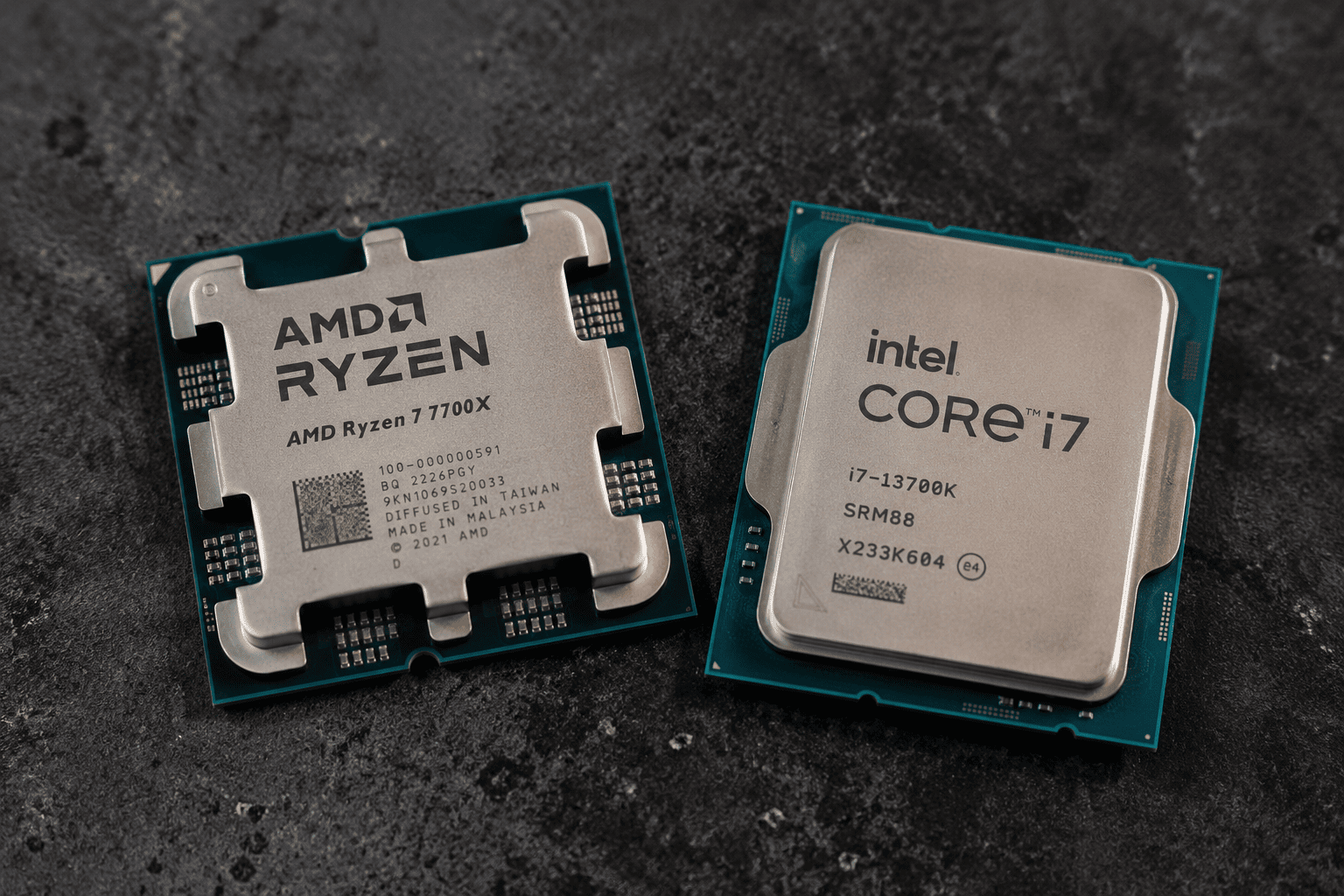
Semiconductor stocks faced renewed selling pressure on Tuesday as U.S. equities kicked off September with a broad decline. The S&P 500 slipped 0.4%, the Nasdaq Composite dropped 0.8%, and the Dow Jones Industrial Average shed 38 points, or 0.1%. Among the hardest hit were Intel and AMD, which both traded lower in a risk-off session.
AMD shares fell 2.4%, while Intel recovered from earlier losses to trade down just 0.45% at the time of writing. The moves come as investors rotate out of high-flying tech names and reassess valuations amid lingering concerns about interest rates and economic growth.

Intel's technical picture remains fragile
Intel's decline appears to be driven more by broad market weakness than any company-specific news. The stock is currently trading 5.7% below its 200-day simple moving average of $94.54, a sign that the longer-term trend remains bearish. It sits 0.85% below its 20-day SMA of $89.83 but is marginally above its 50-day SMA of $88.97.
After reaching a 52-week high of $142.35 in June, Intel recorded a swing low and broke below key support in July. That breakdown has turned prior support levels into potential resistance zones, which could cap any recovery attempts. The current pullback still resembles a consolidation phase following a strong rally rather than a confirmed trend reversal, but holding nearby support will be critical for the stock's technical outlook.
Wall Street remains cautious on Intel. The stock carries a consensus Hold rating with an average price target of $110. On August 12, Bank of America Securities maintained a Buy rating but cut its price target to $145 from $160, while UBS kept a Neutral rating and lowered its forecast to $112. These adjustments reflect tempered expectations for near-term growth.
AMD faces ARK selling despite AI expansion
AMD is also under pressure after ARK Invest reduced its stake in the chipmaker. ARK sold 156,286 AMD shares, valued at roughly $74.5 million, across several of its ETFs. This follows a sale of 37,977 shares worth about $18.3 million the previous day. The selling comes even as AMD continues to expand its AI infrastructure footprint.
In a notable development, AMD announced an AI infrastructure platform in Saudi Arabia in collaboration with Cisco and sovereign technology firm HUMAIN. The initiative will combine AMD's Instinct MI355X GPUs and EPYC CPUs with Cisco's Silicon One AI networking architecture to deliver GPU-as-a-Service infrastructure across the kingdom.
The platform will connect AMD's MI355X chips using Cisco's 800G optics and N9000 Series fabric, designed to support AI model training and real-time inference workloads. Initial operations are expected to lay the groundwork for 250 megawatts of AI deployment starting in 2027, with the potential to scale to 1 gigawatt by the end of the decade.
Despite these growth initiatives, AMD's valuation remains a concern. The stock trades at roughly 74 times forward earnings, making it more expensive than Nvidia. However, analysts remain optimistic, with a consensus Strong Buy rating and a mean price target of nearly $622, implying more than 30% upside from current levels.
The broader chip sector has been volatile recently, as investors weigh strong AI demand against concerns about elevated valuations and potential supply chain issues. Chip stocks slid premarket earlier this week as investors locked in gains ahead of the Jackson Hole symposium. Meanwhile, memory stocks have also struggled despite Nvidia's AI boom, highlighting the uneven nature of the sector's rally.
For investors, the key question is whether the current pullback in Intel and AMD represents a buying opportunity or a warning sign. BofA sees another 10% drop for chip stocks before a rebound, suggesting that further downside may be ahead. As always, AMD and Intel's rivalry continues to evolve, with Nvidia's recent AWS deal reshaping the competitive landscape.
This article is for informational purposes only and does not constitute financial advice.