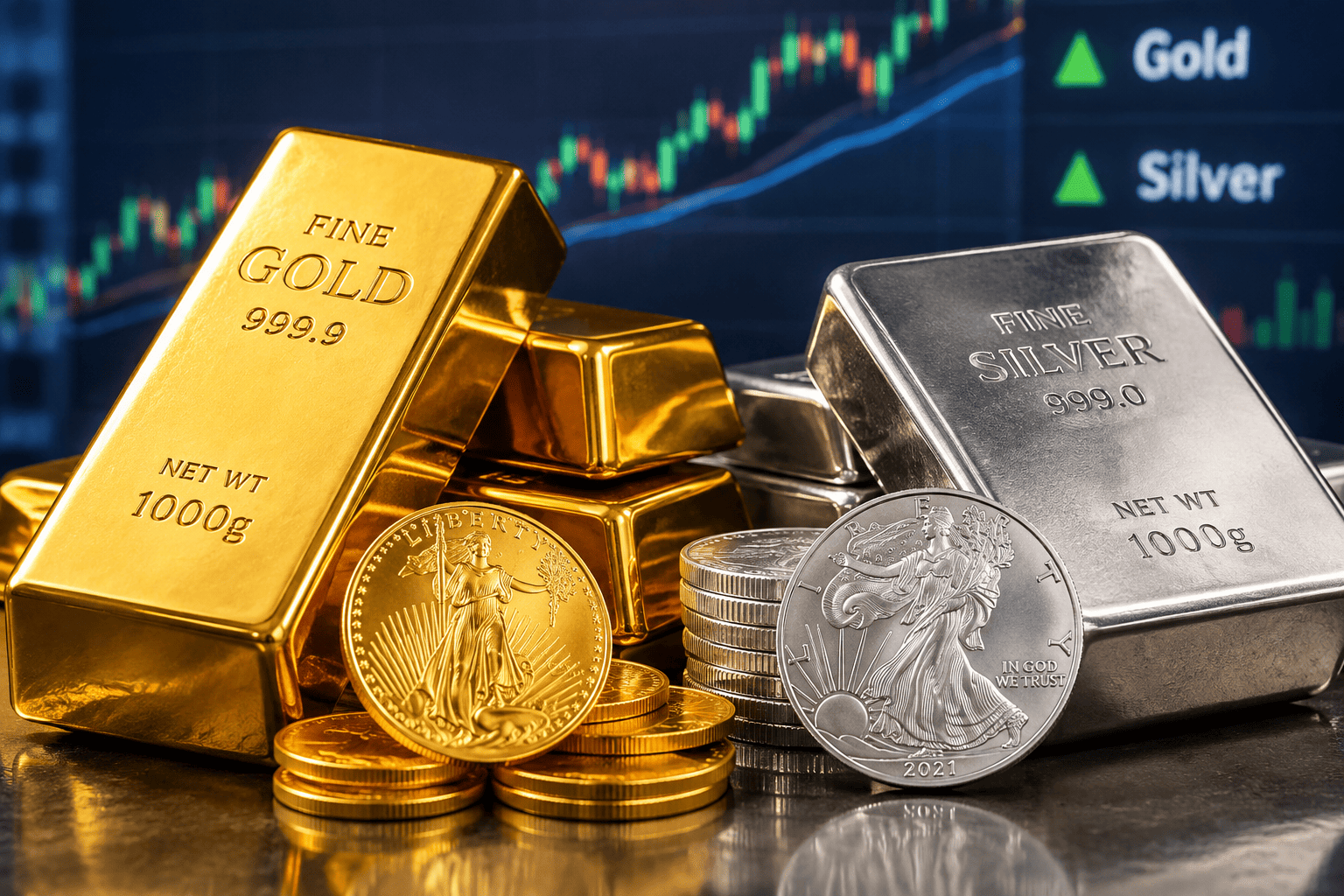
Gold remains pinned below the $4,000 threshold, extending its slide into a fourth consecutive weekly decline as a resurgent dollar and shifting Federal Reserve rate expectations dominate the precious metals landscape. Spot gold fell 0.9% to $3,991.49 an ounce on Friday, while August futures dropped 1% to $4,007.30, putting the metal on track for a weekly loss of roughly 4%.
The break below $4,000 has evolved from a technical breach into a broader signal that investor patience with bullion is wearing thin. The metal now sits about 29% below its January 29 record high of $5,594.82, with the rally in the dollar and rising rate expectations eroding its appeal.

Dollar Strength Tightens the Squeeze
The immediate pressure comes from the greenback. The US Dollar Index held near its strongest level since May 2025 and was heading for a second consecutive weekly gain. A stronger dollar makes gold more expensive for buyers using other currencies, dampening physical demand at the margin.
The dollar's rally has been fueled by a rapid repricing of Fed policy. According to the CME FedWatch Tool, traders now anticipate three rate increases this year and see roughly a 64% probability of a hike in September. That hawkish shift has changed gold's investment case: while the metal can still serve as an inflation hedge, it struggles when investors can earn higher returns from cash and bonds.
Inflation Hedge Loses to Rate Reality
Ironically, inflation remains elevated. US data released Thursday showed price growth rose above 4% in May for the first time in three years, broadly matching forecasts. Under normal conditions, such data would support gold. But in the current environment, investors are interpreting stronger inflation as a reason for tighter policy rather than a reason to buy bullion. That has pushed yields and the dollar higher, leaving non-yielding assets like gold exposed.
Some analysts see the correction extending further if the dollar rally continues, with long-term downside levels around $3,400 coming back into market discussion. The broader market context also includes significant outflows from equities, as US stock funds saw $17.2 billion in weekly outflows, the largest since March, signaling a shift in risk appetite.
Wider Metals Complex Feels the Strain
The pressure is not limited to gold. Silver fell 3.2% to $56.01 an ounce, platinum lost 2.4% to $1,563.20, and palladium slipped 1.6% to $1,165.93. All three were also heading for weekly losses, suggesting investors are reducing exposure across the precious metals complex rather than reacting solely to gold's break below $4,000.
For bullion, the next move depends on whether incoming data softens the Fed narrative. Until then, the market remains trapped in a difficult trade: inflation is high, but the dollar is stronger and rates are expected to rise faster. Meanwhile, other assets like Solana surged past $80 on institutional inflows, highlighting the divergence in investor sentiment across asset classes.
This article is for informational purposes only and does not constitute financial advice.