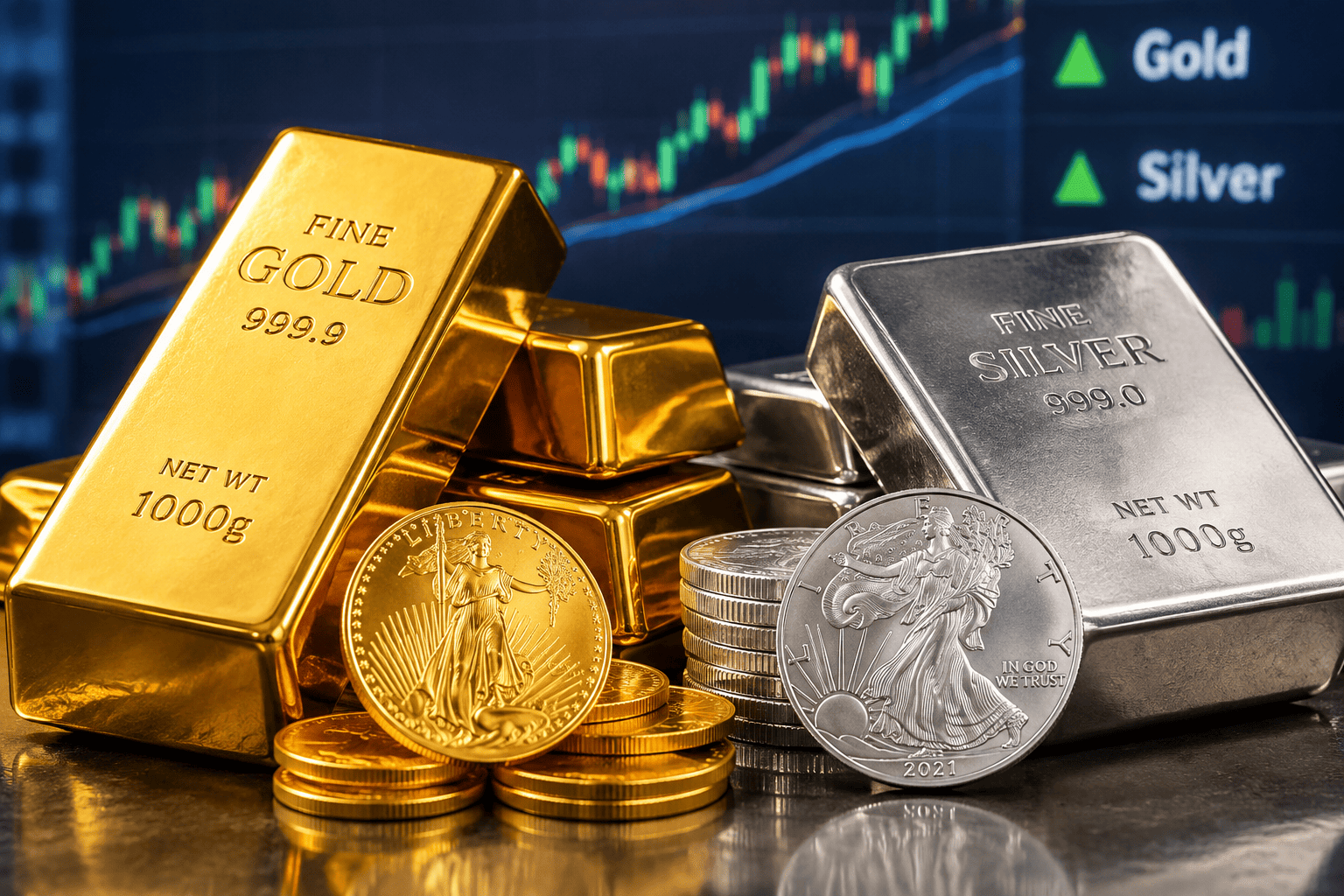
Gold prices remained above the $4,100 an ounce threshold on Wednesday, buoyed by a softer U.S. dollar, declining bond yields, and lower oil prices. Spot gold climbed 1.4% to a two-week high of $4,133.83 by 4:55 a.m. GMT, while U.S. gold futures gained 1% to $4,191.90.
Traders have trimmed the probability of a September Federal Reserve rate increase to 59%, down from 67% a day earlier. This shift reflects growing uncertainty about the central bank's next move, especially as the market digests mixed economic signals.

The metal's resilience suggests it has absorbed a hawkish Fed stance and fading geopolitical tensions better than many anticipated. However, this stability is not synonymous with renewed momentum. Gold remains confined within the $4,000-to-$4,200 range that has contained trading for roughly a month, and the real test may still lie ahead.
September rate decision: the pivotal moment
The Fed's decision in July to hold rates steady provided some relief for gold, but it did not resolve the policy debate. Three regional Fed presidents favored an increase, while officials continued to stress the need to bring inflation sustainably back to the 2% target. According to Natixis economists Christopher Hodge, John Briggs, and Selin Aker, the uncertainty from July has effectively been deferred to September.
Two more inflation reports are scheduled before the September 15-16 meeting, offering policymakers additional data on price pressures and the economic impact of oil. This makes September more than just another date on the calendar. A rate hike would raise the opportunity cost of holding non-yielding bullion and could strengthen the dollar, while a reduction in hike expectations would remove one of gold's biggest headwinds.
ING commodities strategist Ewa Manthey has cautioned that elevated yields, a stronger dollar, and weaker exchange-traded-fund demand could weigh on gold for longer than previously expected. Nevertheless, ING remains constructive over the medium term, citing central-bank buying and reserve diversification as ongoing supports.
Jobs and inflation data could break the deadlock
The immediate focus is on the U.S. labor market. Investors are awaiting the ADP employment report, weekly jobless claims, and Friday's nonfarm-payroll figures for clues on whether the economy can withstand tighter policy. Tuesday's JOLTS report showed little change in job openings, which Petros Pantzari of Monaxa told The Wall Street Journal did not signal a recession but indicated employers are becoming more cautious as factory demand weakens.
Weak employment data could pull short-dated Treasury yields lower and force traders to unwind expectations of another increase. State Street's Aakash Doshi told Kitco News that disappointing data could rapidly reprice the rate outlook. He has suggested that lower two-year yields could help gold advance toward $4,500 to $4,750 before year-end.
The reverse risk is equally clear: strong hiring or sticky inflation could lift yields, strengthen the dollar, and send bullion back toward $4,000. This dual scenario underscores the fragility of the current rally.
Technical outlook: $4,200 is the key hurdle
Gold has crossed $4,100, but the technical breakout remains incomplete. IG senior market analyst Tony Sycamore told Investing.com that bullion needs a daily close above downtrend resistance near $4,080, followed by a break over the early-July high around $4,202, to confirm a sustained recovery. Without that follow-through, Sycamore sees a risk of another test of the late-June low near $3,942.
His framework makes $4,200 the more important hurdle than Wednesday's move above the psychologically significant $4,100 mark. As the market awaits the jobs data and the Fed's decision, gold's path will likely hinge on whether it can decisively clear that level.
This article is for informational purposes only and does not constitute financial advice.