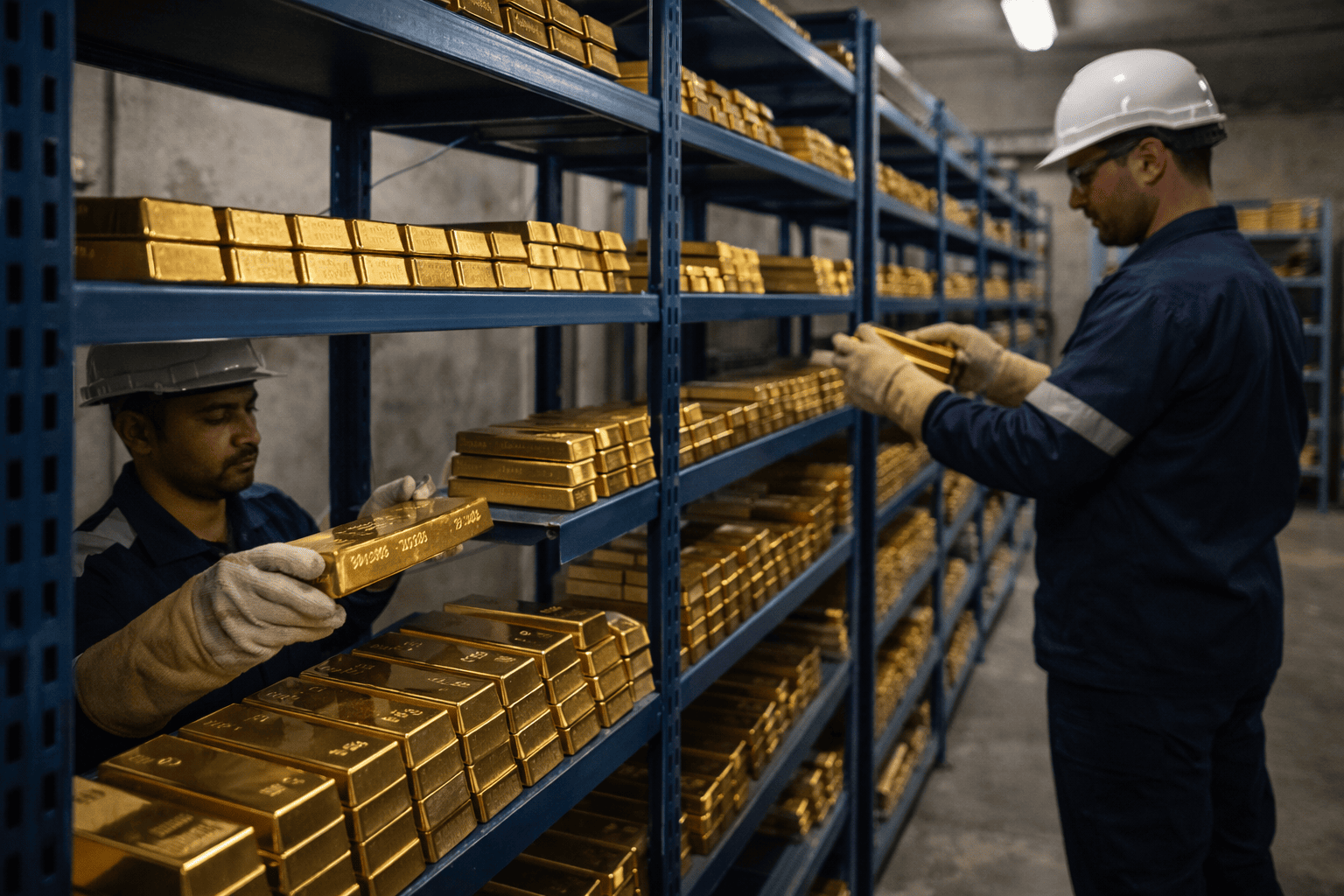
The gold market regained upward momentum on Wednesday after weaker-than-expected U.S. wholesale inflation data bolstered investor sentiment and tempered expectations for aggressive monetary tightening. Spot gold rose to around $4,070 per ounce, recovering from earlier losses, following the release of the June Producer Price Index (PPI).
The U.S. Labor Department reported that the PPI declined 0.3% in June, reversing May's downwardly revised 0.6% increase. This reading fell short of economists' forecasts, who had anticipated producer prices to remain unchanged. The softer data provided a fresh tailwind for bullion, as it suggested that inflationary pressures at the wholesale level are cooling faster than anticipated.

Earlier in the session, gold had traded lower as investors reassessed the broader inflation outlook. Initial optimism from Tuesday's softer consumer inflation data gave way to concerns that renewed geopolitical tensions in the Middle East could drive energy prices higher, potentially reigniting inflationary pressures. Spot bullion fell 0.5% to $4,035.67 an ounce by 0300 GMT, while August gold futures declined 0.7% to $4,042.20. Those losses partially reversed Tuesday's strong rally of more than 2%, during which spot gold climbed to $4,100.49 after June consumer inflation data came in below expectations.
The PPI report also showed that core producer prices, which exclude volatile food and energy costs, increased 0.2% in June following May's downwardly revised 0.1% gain. On an annual basis, core PPI advanced 5.1%, while headline wholesale inflation rose 5.5% over the past 12 months, below consensus estimates of 6.2%. These softer readings encouraged buying interest in the precious metals market, as they prompted markets to scale back expectations for an aggressive U.S. monetary policy path.
The gold market is now balancing two competing themes. On one hand, softer-than-expected inflation data has eased immediate concerns over higher interest rates, improving sentiment toward bullion. On the other hand, investors remain cautious that renewed fighting in the Middle East could push oil prices higher, potentially reigniting inflationary pressures. This combination has created mixed trading conditions for gold, with investors weighing the supportive impact of cooling inflation against the possibility of another energy-driven price shock.
Silver prices also moved lower on Wednesday. The decline came as escalating geopolitical tensions in the Middle East weighed on investor sentiment, offsetting support from a weaker U.S. dollar following the softer-than-expected inflation data. While weaker inflation generally provided support to precious metals by reducing expectations for aggressive monetary policy, geopolitical uncertainty continued to influence broader market positioning, leaving both gold and silver caught between improving inflation trends and renewed concerns over energy-driven price pressures.
For context, the recent inflation relief has also boosted other assets. For instance, Ethereum surged 5% on cooling U.S. inflation, while Asian markets rallied sharply on the data. However, the lingering geopolitical risks have kept gold's gains in check, as investors monitor developments in the Middle East for potential oil supply disruptions.
Looking ahead, the market will continue to parse incoming economic data and geopolitical developments. The softer PPI reading reinforces the narrative that inflation is moderating, which could support further gains in gold if the Federal Reserve signals a less aggressive stance. However, any escalation in Middle East tensions that drives oil prices higher could quickly reverse these gains, underscoring the delicate balance the precious metals market currently faces.
This article is for informational purposes only and does not constitute financial advice.