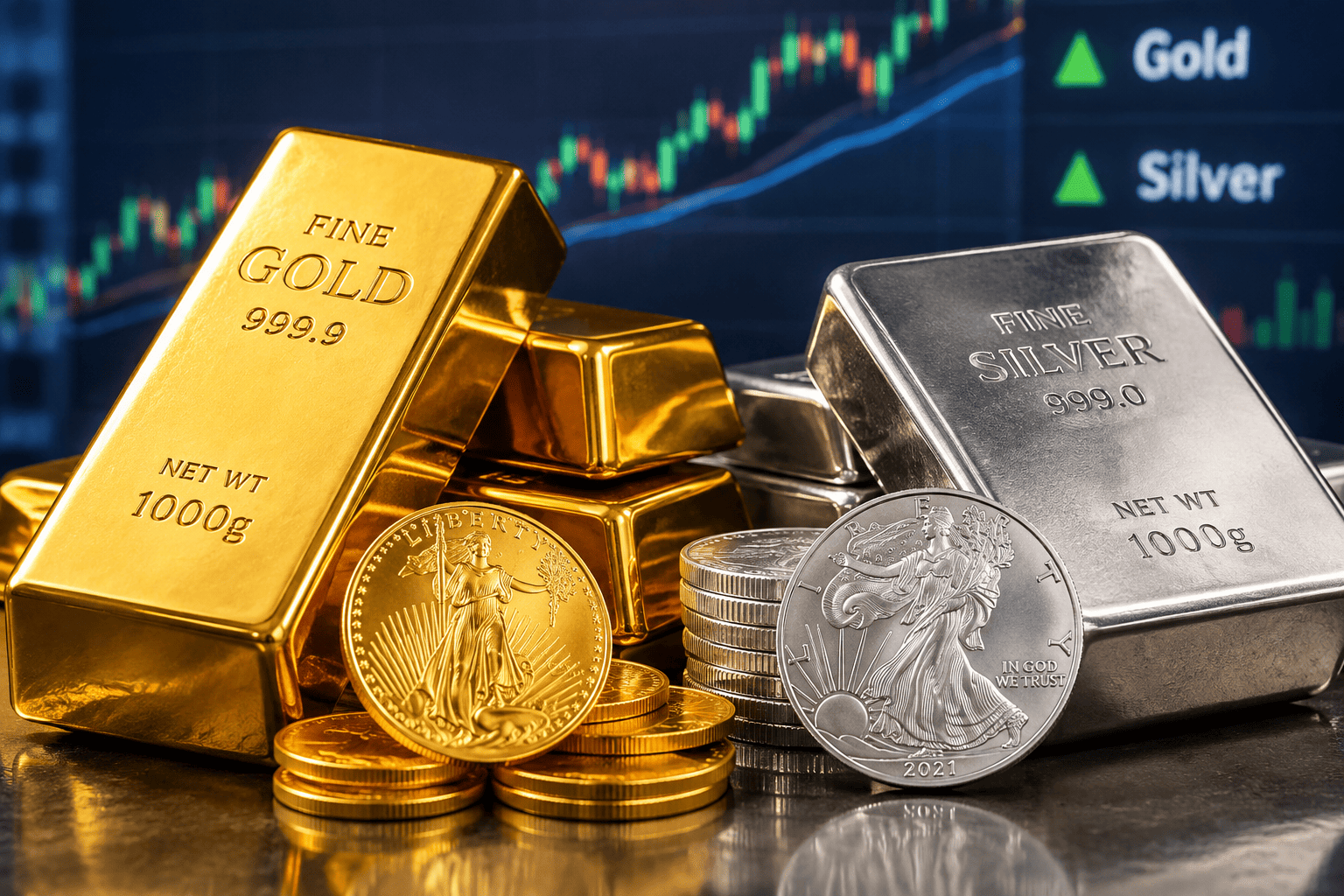
Gold prices rose on Thursday, supported by a softer U.S. dollar and easing oil prices, as investors weighed renewed hopes for a resolution to the U.S.-Israeli conflict with Iran. Spot gold gained 0.7% to $4,461.09 per ounce, while U.S. August gold futures climbed 0.5% to $4,487.90.
The dollar's decline made gold cheaper for holders of other currencies, while lower oil prices tempered inflation concerns that could otherwise pressure non-yielding assets. The metal's move was closely tied to these two factors rather than a broad shift in investor positioning, according to market analysts.

Dollar and Oil Dynamics Drive Gold
Gold's latest advance was heavily dependent on the interplay between the dollar and oil markets. Tim Waterer, chief market analyst at KCM Trade, noted that gold's gains remain at the mercy of these two drivers, rising only when they pull back. This leaves bullion sensitive to every shift in geopolitical headlines.
Oil prices eased in early trading as geopolitical tensions appeared to cool, helping to reduce inflation expectations. Lower oil prices can support gold by easing pressure on real yields, which often weigh on the metal since it pays no interest.
Ceasefire Hopes Lift Sentiment
The geopolitical backdrop remained central to market sentiment. The Trump administration announced that Israel and Lebanon had agreed to implement a ceasefire, raising hopes that a broader deal could eventually help end the Iran conflict. This development reduced the immediate risk premium attached to oil while keeping demand for gold intact amid lingering uncertainty.
In Washington, the Republican-led House of Representatives approved a resolution to block President Trump from continuing the war against Iran, underscoring the political pressure building around the conflict. Investors are watching whether this resolution will have any practical impact on U.S. policy.
Fed Signals Steady Policy
Monetary policy also remained in focus after New York Federal Reserve President John Williams said he does not expect war-related inflation risks to be long-lasting and reiterated that there is no need to change U.S. monetary policy at this time. This message helped frame the market's view of gold, as the metal is often treated as an inflation hedge but can struggle when interest rates rise.
If the Fed remains patient and avoids signaling a fresh tightening bias, gold could retain support. However, any sign that inflation risks are becoming more persistent may revive expectations of tighter policy and put pressure on bullion.
Analysts Expect Choppy Trade
Some analysts believe gold's broader uptrend may not be over, but warn that the market could remain volatile. Matt Simpson, senior analyst at StoneX, told Reuters that while the bull run likely hasn't ended, a shakeout is due, and he anticipates choppy trade with a slight upward bias toward $5,000.
That view reflects the competing forces currently shaping the market: geopolitical uncertainty, a softer dollar, and lower oil prices on one side, versus steady Fed policy and the risk of higher real yields on the other.
For broader market context, see our coverage of how energy security and geopolitics are reshaping currency rankings and oil price movements tied to Iran deal progress.
This article is for informational purposes only and does not constitute financial advice.