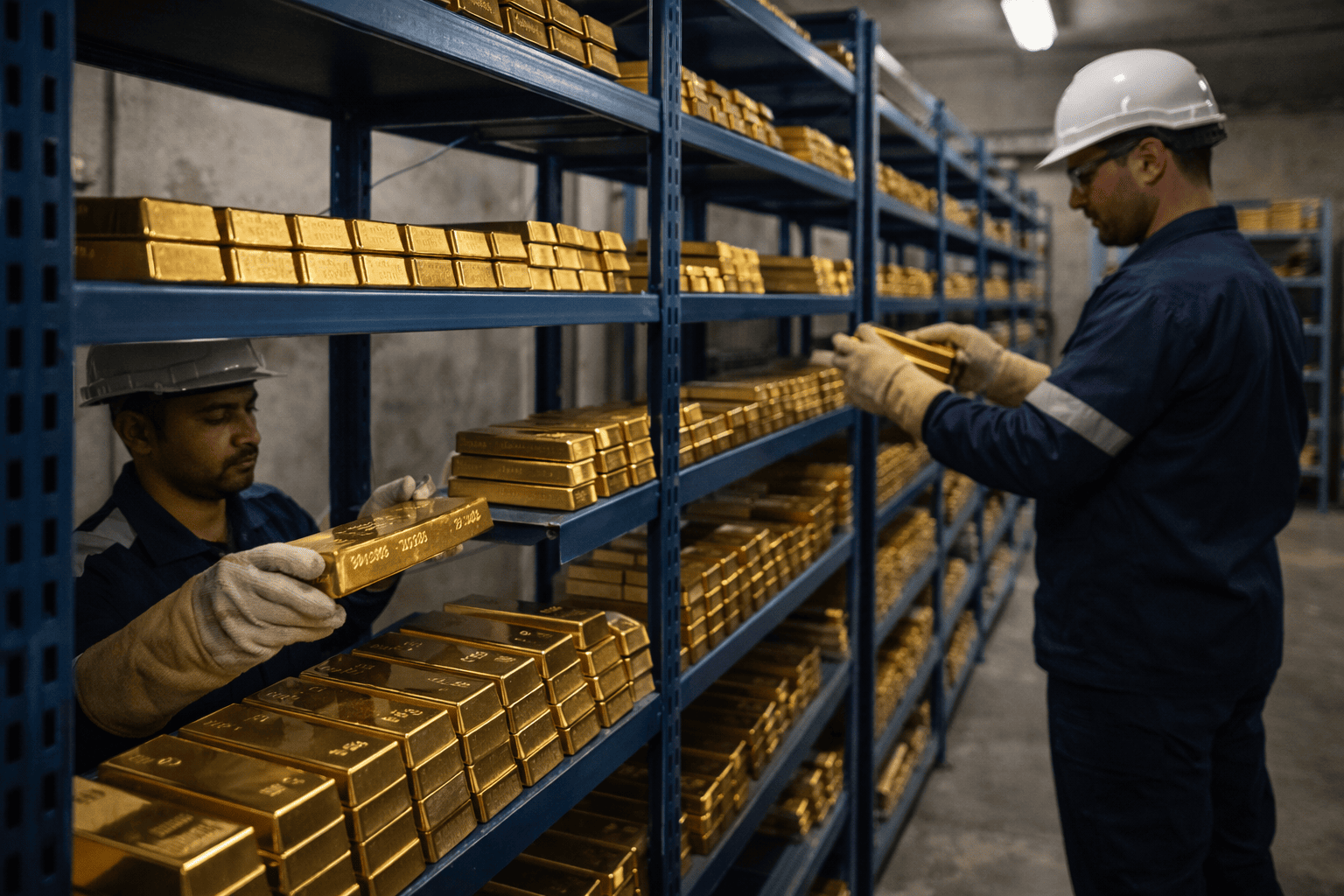
Gold prices edged lower on Wednesday, pulling back from a sharp rally as investors shifted their focus from a surprisingly soft US inflation report to the risk that rising energy costs could keep price pressures alive. Spot bullion declined 0.5% to $4,035.67 an ounce by 0300 GMT, while August futures slipped 0.7% to $4,042.20, partially reversing Tuesday's jump of more than 2% that pushed gold to $4,100.49.
Oil Shock Clouds CPI Relief
The June consumer price index showed US consumer prices falling 0.4% month-over-month, the first decline since April 2020, with annual inflation slowing to 3.5%. Core inflation eased to 2.6%, prompting traders to dial back expectations for an immediate Federal Reserve rate increase. However, the data captured energy prices before the latest escalation in Middle East hostilities, and oil markets have since reacted sharply.

Brent crude rose for a third consecutive session on Wednesday, gaining 1.2% to $85.72 a barrel, after the US reimposed a naval blockade on Iranian ports and both sides exchanged fresh strikes. Analysts at OANDA noted that the oil rally makes the CPI reading appear increasingly backward-looking. Higher crude prices can feed through to transport and production costs, raising the risk that the Fed maintains a restrictive policy stance even as headline inflation cools.
Fed Repricing Offers Only Partial Support
While rate markets have become less hawkish, they have not abandoned the prospect of further tightening. Traders now assign about a 58% probability to a September rate increase, down from 76% before the CPI report, while the chance of a move by December remains near 80%. Fed Chair Kevin Warsh and Chicago Fed President Austan Goolsbee welcomed the improvement in inflation but signaled that one favorable month is insufficient. Warsh stated that policymakers still have work to do, and Goolsbee wants several more months of easing before drawing firm conclusions.
This caution limits the benefit for gold. Lower rate expectations reduce the opportunity cost of holding non-yielding bullion, but persistent inflation risks can lift Treasury yields and support the dollar, offsetting demand for defensive assets. The interplay between easing rate fears and renewed inflation concerns keeps gold in a tight range.
$4,000 Level Becomes Key Test
The immediate technical battle centers on the $4,000 threshold, which held during Monday's sell-off and underpinned Tuesday's rebound. A decisive break below that level could expose late-June lows, while renewed buying would need to clear $4,100 to restore upward momentum. The June Producer Price Index, due at 8:30 am in Washington, will offer the next reading on pipeline inflation. A softer report could steady bullion, although traders may continue to treat older price data cautiously while oil remains elevated.
In related markets, silver fell 0.3% to $58.48 an ounce. Platinum gained 0.2% to $1,635.56, while palladium edged 0.2% higher to $1,307.11. For broader context, the cooling CPI data also fueled a rally in risk assets, with Bitcoin surging past $64,000 and Asian markets like the Kospi jumping 7% as investors priced in a potential Fed pivot.
This article is for informational purposes only and does not constitute financial advice.