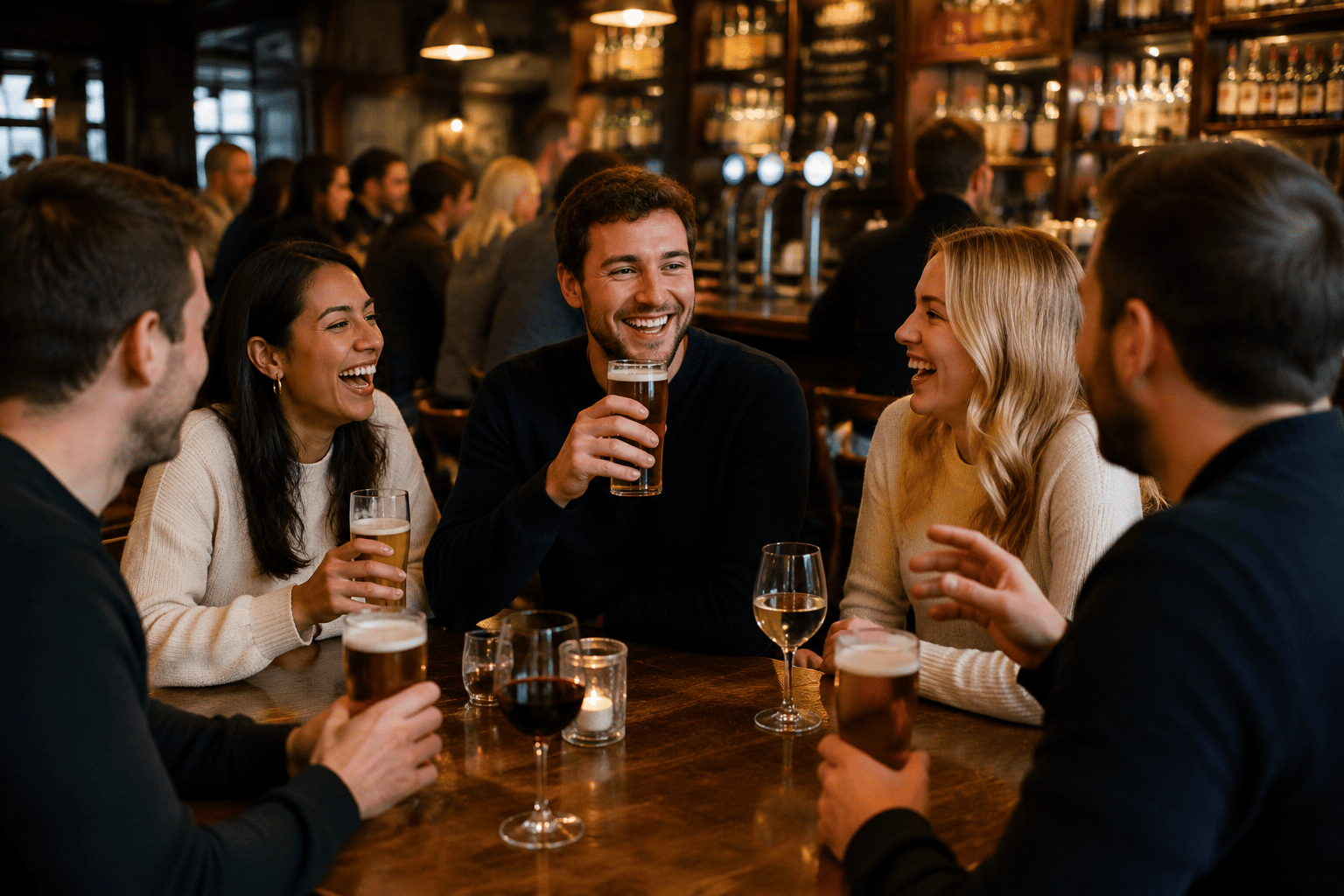
Major alcohol producers including Diageo, Heineken, and Anheuser-Busch InBev are confronting a sustained decline in alcohol consumption, driven by a generational shift among younger consumers, rising health consciousness, and persistent inflationary pressures. The structural challenges have weighed on share prices and forced companies to rely on premiumization strategies to offset falling volumes.
Younger Generations Drinking Less
Data from the National Institute on Drug Abuse shows that lifetime, past-year, and past-month alcohol consumption among young people has been declining since around 2000. Stephan Kemper, Chief Investment Strategist at BNP Paribas SA, notes that approximately 36% of Gen Z identify as non-drinkers. He adds that individuals who do not start drinking in early adulthood are unlikely to adopt the habit later, signaling a long-term shift rather than a temporary downturn.

Millennials are approaching their peak consumption years, but Kemper argues the broader decline reflects a deeper generational change. “We are at the beginning of a generational trend which could well accelerate from current levels,” he said.
Inflation and Affinity for Health
Inflation has squeezed discretionary spending, prompting consumers to cut back on out-of-home activities such as dining and bar visits. U.S. inflation reached 4.2% in May, a three-year high, and consumer sentiment remains subdued. The cost-of-living crisis has encouraged more drinking at home, where consumption is typically lower than in bars and restaurants.
At the same time, health and wellness trends are reshaping attitudes toward alcohol. Ipek Ozkardeskaya noted that the shift is increasingly cultural, with younger consumers prioritizing fitness, personal image, and online socializing over traditional drinking. “We see that the idea of ‘you must drink to have fun’ has been totally scrapped,” she said.
Wearables and GLP-1 Drugs Add Pressure
Health wearables are making alcohol’s effects more visible. Amanda Wick, Principal at Incite Consulting, observed that devices like WHOOP and Oura provide immediate biometric feedback, discouraging consumption. A 2026 study of 30,000 new WHOOP users found that self-reported drinking days fell from 23.0% to 17.2% after tracking began—a roughly 25% relative reduction.
The global wearable medical device market, valued at $54.0 billion in 2025, is projected to reach $330.5 billion by 2033, according to Grand View Research. Oura has sold 5.5 million rings and was the third most popular wearable brand in the U.S. in Q1 2025, per IDC data.
GLP-1 weight-loss drugs like Ozempic may further curb alcohol demand. Kemper noted these medications reduce addictive behaviors and make high-calorie beer and wine less appealing. Morgan Stanley projects the global weight-loss market could grow to $190 billion by 2035 from $79 billion in 2025.
Volume Declines and Premiumization
Major beer and spirits companies have reported falling volumes or slowing sales growth. Diageo, Heineken, and Anheuser-Busch InBev have all seen share price underperformance as structural headwinds persist. To counter volume declines, brewers and distillers are focusing on premium and super-premium products, hoping higher prices can offset lower consumption.
While events like the World Cup may provide temporary beer demand boosts, analysts caution that the underlying structural risks remain. The combination of generational change, health awareness, and economic pressures suggests the industry’s challenges are far from over.
This article is for informational purposes only and does not constitute financial advice.

