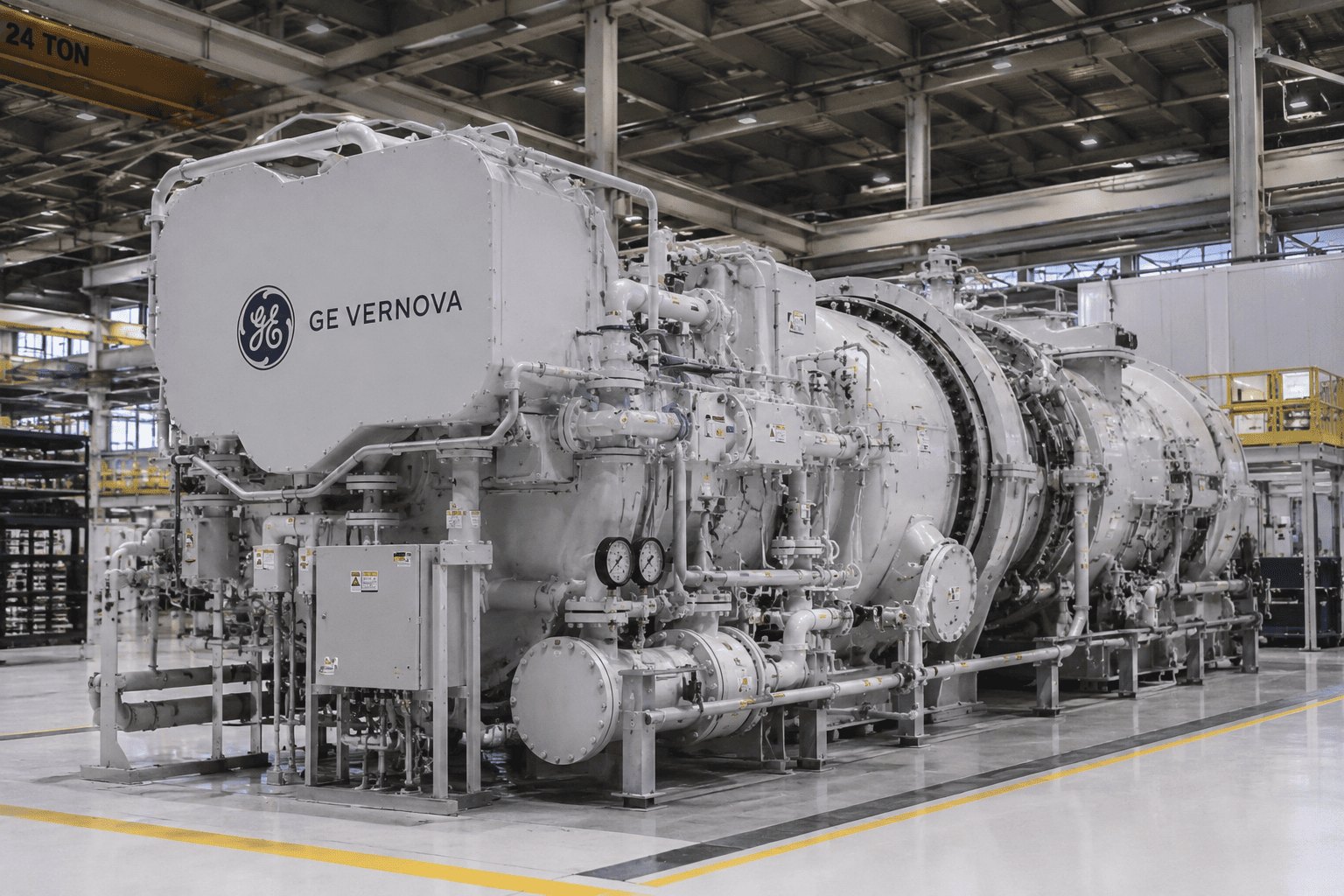
GE Vernova (GEV) shares fell approximately 4% in premarket trading Wednesday, despite the energy equipment maker reporting stronger-than-expected revenue and raising its 2026 financial outlook. The decline was driven by a warning that global tariffs could add up to $200 million in costs next year, overshadowing robust demand from data centers and electrification trends.
Revenue Beats, Profit Misses
For the second quarter, GE Vernova reported revenue of $11.1 billion, up 22% year over year and above the FactSet consensus estimate of $10.8 billion. Net profit rose to $649 million, or $2.47 per share, from $492 million, or $1.86 per share, in the same period last year. However, adjusted earnings per share of $2.47 missed the analyst consensus estimate of $3.04, according to LSEG data. Adjusted core earnings came in at $1.3 billion, slightly below expectations of $1.3 billion.

Tariff Warning Casts Shadow
The company cautioned that global tariffs are expected to increase costs by between $100 million and $200 million in 2026, even after accounting for contractual protections and cost recovery measures. This warning tempered enthusiasm around the company's strong order growth, which was fueled by surging electricity demand linked to data center expansion and broader electrification trends. CEO Scott Strazik noted that GE Vernova continues to benefit from strong global demand, supported by a record backlog worth $176 billion.
Order Surge Highlights Demand
Total orders in the second quarter climbed to $24.2 billion, nearly doubling from $12.4 billion a year earlier. Organic orders rose 88%, driven primarily by the Power and Electrification businesses. The company's Electrification segment generated core profit of $671 million, more than doubling from $314 million a year ago. The Power business also posted strong performance, with core profit rising about 31% to $1 billion.
Wind Remains a Weak Spot
While demand for electricity infrastructure strengthened, GE Vernova's wind division continued to drag on overall performance. Revenue from the Wind segment declined about 10% to $2 billion, as lower onshore turbine deliveries and higher offshore project costs weighed on results. The business reported a core operating loss of about $275 million, extending losses from the previous year. This contrast underscores the company's increasing reliance on conventional power generation and grid infrastructure, areas benefiting from growing investment as utilities prepare for rising electricity demand.
Outlook Raised Despite Tariff Headwinds
GE Vernova raised its financial guidance for the second consecutive quarter. The company now expects 2026 revenue of between $45.5 billion and $46.5 billion, approximately $1 billion higher than its previous forecast. It also sharply raised its free cash flow outlook to between $11.5 billion and $12.5 billion, compared with its earlier projection of $6.5 billion to $7.5 billion. The improved outlook reflects expectations that U.S. electricity consumption will continue rising as artificial intelligence infrastructure, data centers, and broader electrification projects boost demand. Commercial electricity demand is expected to outpace residential consumption over the coming year, creating additional opportunities for equipment suppliers.
Valuation Debate Intensifies
GE Vernova shares have climbed roughly 60% this year and have nearly doubled over the past 12 months, making the stock one of the strongest performers in the industrial sector. Last month, Jefferies raised its price target on the company to $1,210 while maintaining a Buy rating. The shares currently trade around $1,079. However, not all analysts believe the valuation is justified. According to Simply Wall St, a discounted cash flow analysis values GE Vernova at around $874 per share, implying the stock trades at roughly a 23.5% premium to its estimated intrinsic value. At the same time, valuation based on earnings multiples suggests the shares remain attractive relative to peers.
Analysts say the key question for investors will be whether GE Vernova can continue converting the global wave of investment in power generation and grid infrastructure into sustained earnings growth and stronger cash flows while managing rising costs and execution risks. For context, other industrial firms like 3M have also seen strong earnings beats and raised outlooks, while Intel faces its own challenges in the AI era.
This article is for informational purposes only and does not constitute financial advice.