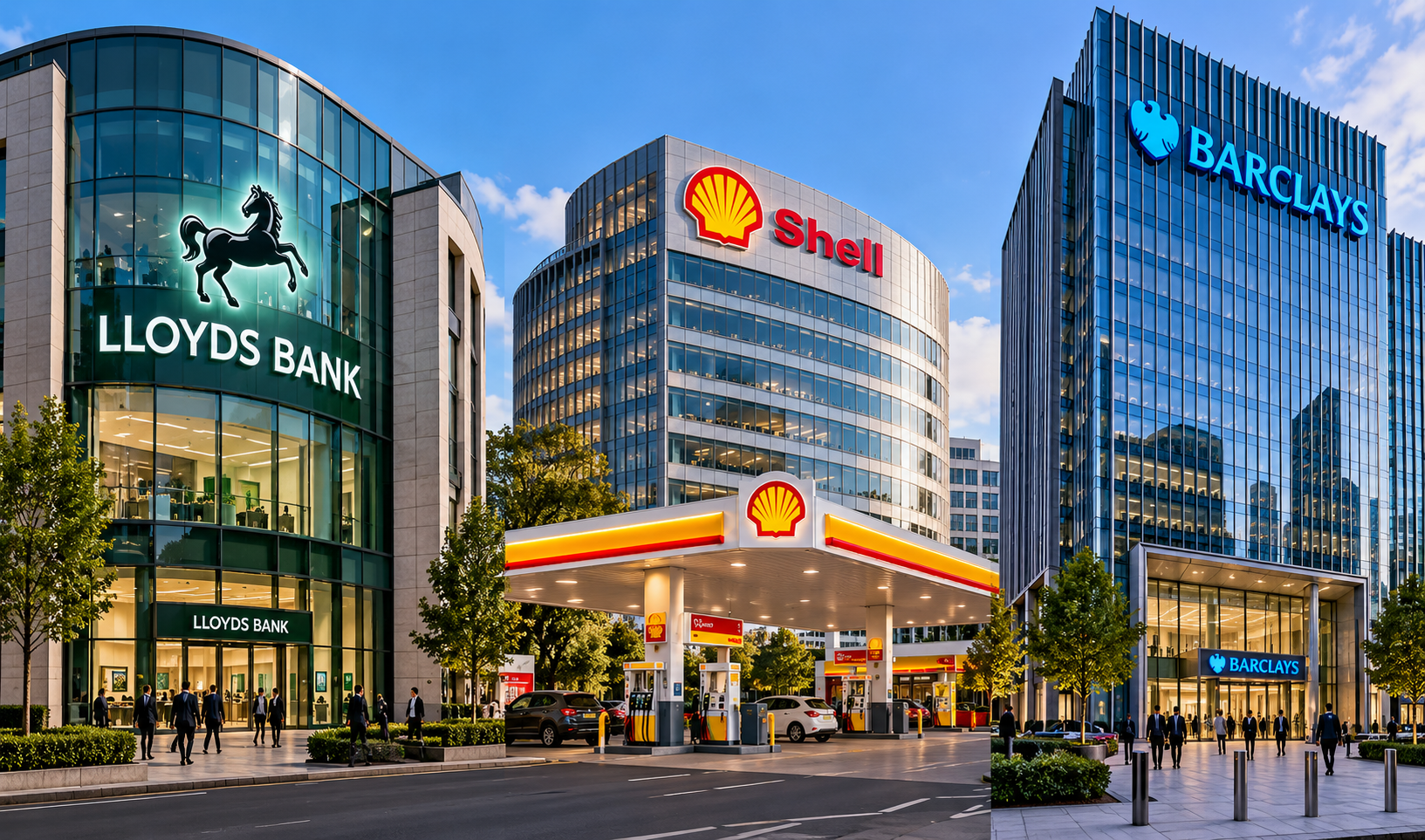
The FTSE 100 has slipped from its July peak of 10,986 to around 10,606, and October's corporate earnings will test whether the pullback deepens or finds support. Three blue-chip names—Lloyds Banking Group, Barclays, and Shell—are set to release results that could move the index.
Lloyds: Mortgage Lender Under Pressure
Lloyds, the UK's largest mortgage lender, has dropped nearly 10% from its 2025 high. Its third-quarter earnings, due on October 29, will be scrutinized for signs of resilience after the launch of its Accelerate 2030 strategy, which focuses on growing core operations, simplifying the business, and boosting innovation.

In the first half, Lloyds reported net income of £9.7 billion, up 9% year-on-year, while profit after tax rose 23% to £3.1 billion. A strong quarterly report could provide a catalyst for a rebound, but technical charts show a rising wedge pattern, suggesting further downside risk in the near term.
Barclays: Trading and Investment Banking in the Spotlight
Barclays shares have fallen from 532p in July to around 457p. Its upcoming results will be closely watched, particularly for its trading and investment banking divisions. The FICC trading unit has benefited from market volatility under President Donald Trump, while investment banking is buoyed by a surge in M&A and IPO activity.
Dealogic data shows Barclays has acted as an equity capital markets bookrunner on deals worth over $30 billion this year, up from $17 billion in 2024. Its debt capital markets business has also grown, with deal value rising to over $337 billion from $304 billion.
Shell: Oil Prices and Geopolitical Risk
Shell shares have slipped over 3% from their 2025 high but remain among the best performers in the FTSE 100, up more than 40% this year. The rally has been driven by rising crude prices, with Brent and West Texas Intermediate both above $90, supported by conflicts involving the US-Iran, Saudi Arabia-Houthi, and Russia-Ukraine.
Higher oil prices boosted Shell's second-quarter adjusted earnings to $9.8 billion, up from $6.9 billion in the first quarter, and prompted a new $3 billion share buyback. The upcoming earnings report and any escalation in the US-Iran conflict—including a potential October surprise—will likely influence the stock.
Investors should note that while these companies have distinct drivers, their earnings will collectively shape sentiment for the UK market in the weeks ahead.
This article is for informational purposes only and does not constitute financial advice.

