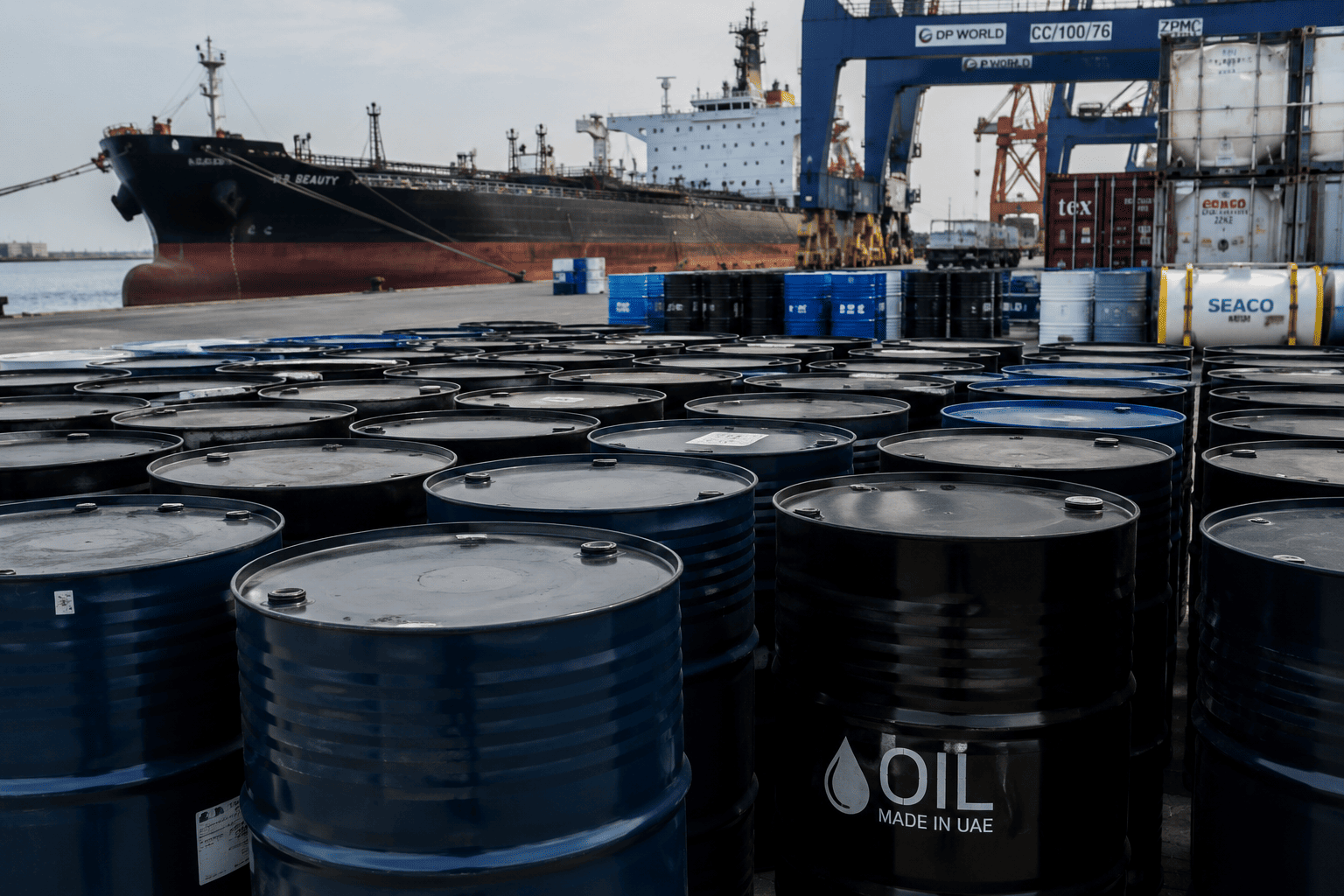
Crude oil prices have retreated over the past two weeks as market participants weighed reports of increased flows through the Strait of Hormuz. Brent crude slipped to $97.7 per barrel, while West Texas Intermediate (WTI) fell to $90, partly due to Saudi Arabia's restart of the East-West pipeline. This pullback comes after a period of heightened geopolitical tension, and the question now is whether October will bring a further decline or a sharp rebound.
October: A Pivotal Month for Oil
The recent price softening is largely attributed to signs that oil traffic through the Strait of Hormuz is returning to pre-war levels. According to a CNN report, tanker movements have been aided by U.S. military escorts, which has diminished Iran's leverage in the region. This development may have influenced President Donald Trump's decision to reject Iran's seven-point proposal, as the U.S. appears to be gaining the upper hand in the standoff.

Additionally, the U.S. has authorized the release of over 40 million barrels of crude oil from the Strategic Petroleum Reserves (SPR), further boosting supply. Saudi Arabia's resumption of the East-West pipeline, which can transport millions of barrels daily, has also contributed to the easing of supply concerns.
The 'October Surprise' Risk
Despite these bearish factors, analysts are closely watching for a potential “October Surprise” — a scenario where Iran escalates tensions to drive oil prices higher and influence the U.S. midterm elections. Iran has several options for escalation, including direct attacks on U.S. warships, bombing the East-West pipeline, or striking energy infrastructure in the region. Any such move could quickly reverse the recent price decline and push Brent toward the $120 mark.
Technical Analysis Points to a Rebound
From a technical perspective, Brent crude has found support along an ascending trendline that has held since July. The price has also bounced off the 50-day exponential moving average (EMA), indicating that buyers are stepping in at these levels. Moreover, a falling wedge pattern appears to be forming, which is often seen as a bullish reversal signal. If this pattern plays out, Brent could rally to the key resistance level of $109.96, and a breakout above that could lead to a test of the year-to-date high of $119.
On the downside, if the current period of relative calm persists and supply continues to flow, prices could break below the trendline and potentially fall to under $80. The outcome will largely depend on geopolitical developments in the coming weeks.
In summary, the oil market is at a crossroads. While near-term supply improvements have pressured prices, the risk of an Iranian escalation remains a wildcard. Investors should brace for volatility as October unfolds.
This article is for informational purposes only and does not constitute financial advice.

