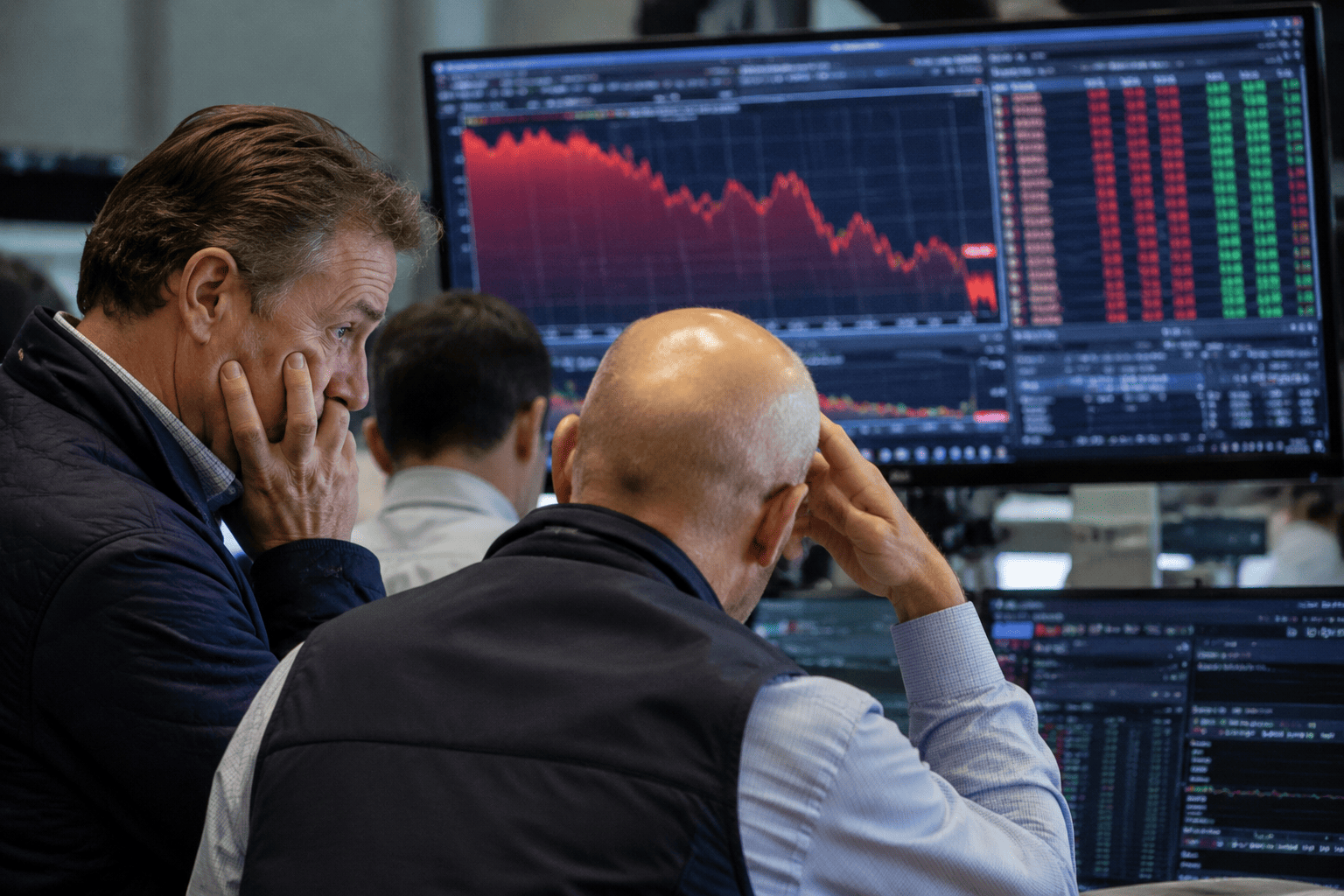
London's equity markets edged lower on Tuesday, as escalating geopolitical tensions between the United States and Iran weighed on investor sentiment, overshadowing gains in the energy sector fueled by rising crude prices.
The blue-chip FTSE 100 index declined 0.3% to 10,461.14 points by mid-morning, while the mid-cap FTSE 250 index dropped 0.7%. Losses in travel and financial stocks more than offset a strong performance from energy companies, which benefited from a 3% jump in Brent crude to around $85 per barrel.
Geopolitical Risks Hit Travel and Financial Stocks
Travel and leisure stocks were the worst performers, falling 2.4% as a sector. InterContinental Hotels Group led the decline, sliding 3.7% to become the biggest loser on the FTSE 100. Investors rotated away from travel-related shares amid heightened uncertainty following a third consecutive night of US strikes against Iran and new trade restrictions, including a 20% fee on cargo transiting the Strait of Hormuz.
Financial stocks also came under pressure, with banks declining ahead of earnings reports from major US banks later in the day. The cautious tone reflected broader concerns about the impact of rising geopolitical risks on global economic growth and corporate profitability.
Energy Sector Outperforms on Oil Price Surge
Energy stocks provided the strongest support to the market, with the sector index gaining 1.8%. BP rose 2.3% after the oil major indicated that stronger oil trading activity and improved refining margins would bolster its second-quarter earnings. The positive update helped offset some of the broader weakness, though it was insufficient to lift the benchmark indexes into positive territory.
Mining stocks also advanced, with Atalaya Mining Copper, Glencore, and Rio Tinto rising between 1.6% and 3.5%. The gains in miners added a layer of support to the market as commodity prices responded to the geopolitical backdrop.
Investors Eye US Inflation Data and Fed Commentary
Market participants turned their attention to upcoming US economic data, including the latest inflation report and remarks from Federal Reserve Chair Kevin Warsh. These releases are expected to provide further clues on the health of the world's largest economy and could influence expectations for monetary policy and financial markets.
For context, recent developments in the tech sector, such as Apple's $600 billion gain from AI caution, highlight how market dynamics are shifting amid broader economic uncertainties.
Individual Stock Movers: Ashmore and Debenhams
Among individual stocks, asset manager Ashmore fell 1.8% despite reporting quarterly net inflows that exceeded expectations. The company noted that investors continued to allocate capital to higher-yielding emerging market assets despite ongoing geopolitical uncertainty, but the positive news failed to lift the stock.
In contrast, Debenhams Group gained 3.1% after the online retailer reported sustained positive trading momentum through June and July, driven by stronger sales margins and lower customer returns. The update made Debenhams one of the session's stronger performers, providing a bright spot amid the broader market weakness.
Meanwhile, the energy sector's resilience echoes trends seen in other markets, such as gold sliding 1.5% despite geopolitical haven demand, as rising yields and oil spikes reshape investor strategies.
As the session progressed, the FTSE indexes remained under pressure, with the energy sector's gains unable to fully counterbalance the drag from travel and financial stocks. The market's focus now shifts to US economic data and further developments in the Middle East, which could dictate near-term direction.
This article is for informational purposes only and does not constitute financial advice.