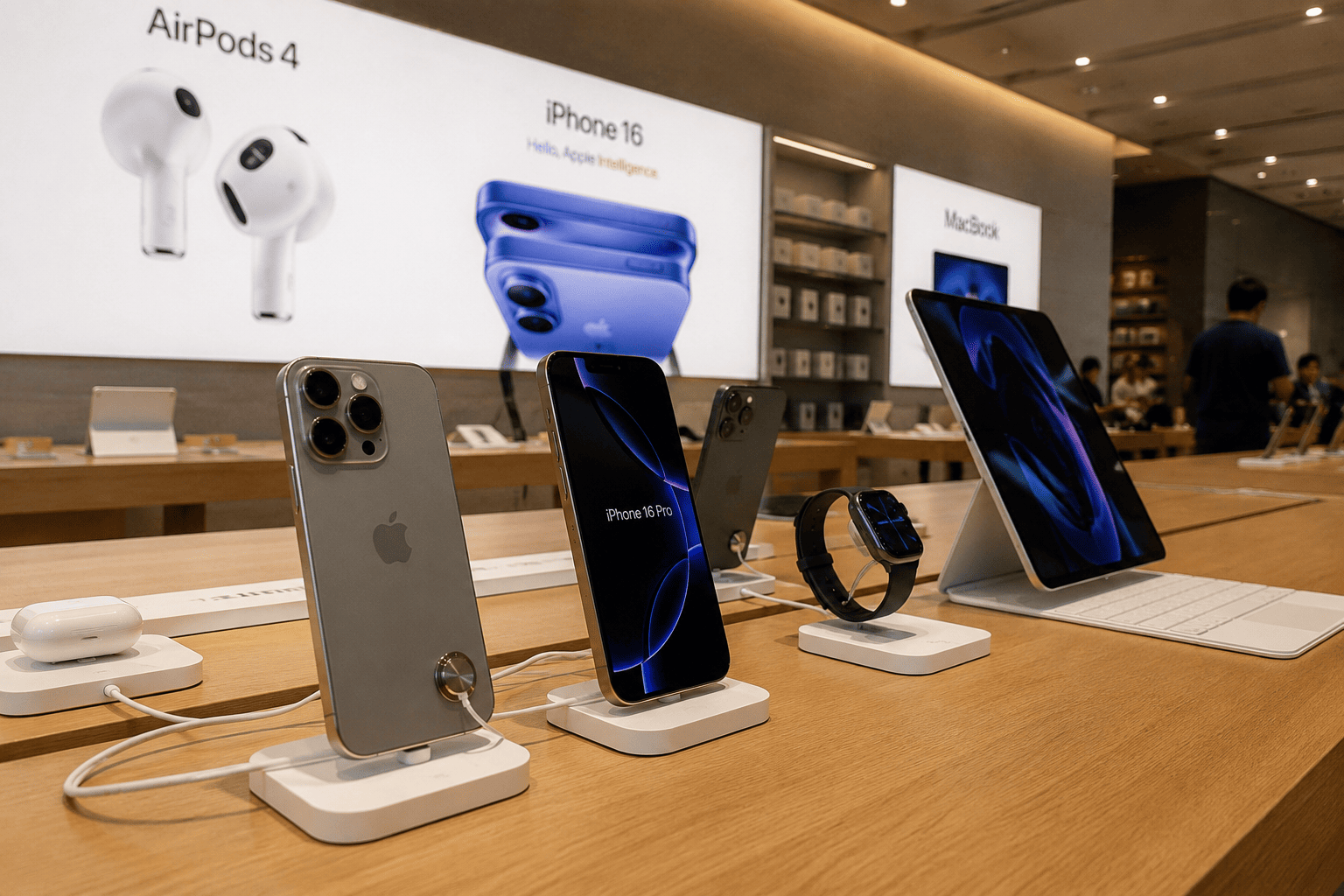
Apple Inc. has emerged as an unexpected beneficiary of Wall Street's growing skepticism over artificial intelligence spending, adding nearly $600 billion in market value since late June. The stock has rebounded sharply after initially disappointing investors with its AI announcements, returning to record highs as chipmakers and cloud-computing companies face mounting pressure.
AI Spending Skepticism Drives Rotation
Apple's limited exposure to the costly AI infrastructure race has become a competitive advantage. While rivals like Microsoft, Alphabet, Amazon, and Meta have poured billions into data centers, Apple has largely avoided that spending, a strategy initially viewed as a weakness but now seen as prudent.

“There's a battle in the market, and right now Apple is benefiting because it isn't in the storm that the rest of the AI trade is in,” said Mark Bronzo, chief investment strategist at Rye Strategic Partners. “People are concerned about what kind of return hyperscalers could get from their AI spending, and there are also arguments that semis have gotten ahead of themselves.”
Apple shares have climbed 15% since late June, while the Philadelphia Semiconductor Index has declined 7% over the same period. The broader S&P 500 gained 3%, and the Nasdaq 100 rose just 1.3%. Apple has become the best-performing member of the Magnificent Seven this year, outperforming Nvidia, Microsoft, Alphabet, Amazon, Meta Platforms, and Tesla.
Pricing Power Offsets Rising Costs
Apple's recovery is notable given rapidly rising memory chip prices, which threaten margins across consumer electronics. The company responded by raising prices on Macs, iPads, and home devices on June 25, triggering its biggest single-day decline since April 2025. iPhone prices have remained unchanged for now, but further increases are possible.
JPMorgan analyst Samik Chatterjee said pricing increases have historically had little impact on long-term demand, raising his price target to $345. “Long-term trends suggest that pricing has limited implications on volume opportunity over a multi-year period,” he wrote in a July 7 note. “Apple has taken meaningful pricing across the portfolio in the past, and volumes have continued to expand despite those price increases.”
Apple is also reportedly negotiating with two Chinese semiconductor manufacturers to diversify memory chip supplies and lower procurement costs. Analysts believe Apple's premium customer base gives it greater flexibility than many rivals to pass on higher component costs.
Citi Bullish Ahead of Earnings
Wall Street has grown increasingly optimistic ahead of Apple's fiscal third-quarter results later this month. Citi reiterated its Buy rating on the stock, raising its price target to $365, implying nearly 14% upside from current levels. The brokerage expects Apple to continue gaining market share even as broader smartphone and PC demand weakens.
Analysts said Apple “continues to outperform the broader smartphone market through share gains, design-driven demand, and strong positioning in the mid-range price segment via promotions and subsidies.” Citi also expects Apple to raise iPhone prices during the September launch cycle, particularly on premium models where demand remains resilient.
The firm believes enhanced Siri capabilities under Apple Intelligence are unlikely to trigger a major device replacement cycle immediately but could improve user engagement and support long-term growth in its high-margin services business.
Foldable iPhone Seen as Next Growth Driver
Growing optimism around Apple's long-rumored foldable iPhone is another reason for the stock's renewed momentum. According to Nikkei, Apple has instructed suppliers to prepare production of around 10 million foldable iPhones this year, up from an earlier estimate of seven to eight million units. The premium pricing expected for the new device has strengthened confidence that Apple can offset higher component costs while boosting revenue growth.
“While Apple is immune from AI weakness, the main reason to not sell it is that it probably has a huge hit coming,” said Louis Navellier, chief investment officer at Navellier & Associates. “Pricing for the folding phone will be so strong that it will offset the memory issue on margins, and I think demand will be so strong that it will really support growth.”
Citi said the September iPhone launch was “an important catalyst that could further strengthen investor sentiment.” For more on Apple's pricing strategy, see JPMorgan: Apple Price Hikes Unlikely to Dampen Demand, PT Raised to $345.
Cash Generation Offers Another Advantage
Although Apple's expected revenue and earnings growth remains slower than many AI-focused technology companies, investors increasingly value its financial discipline. Apple is projected to generate nearly $140 billion in free cash flow, providing a buffer against market volatility and supporting share buybacks and dividends.
For a broader perspective on market trends, see 5 Under-the-Radar Stocks Analysts Favor for Summer 2026 as Market Broadens and TSMC, SK Hynix, Tencent: 3 Asian Stocks Analysts Tip to Lead July 2026 Rally.
This article is for informational purposes only and does not constitute financial advice.