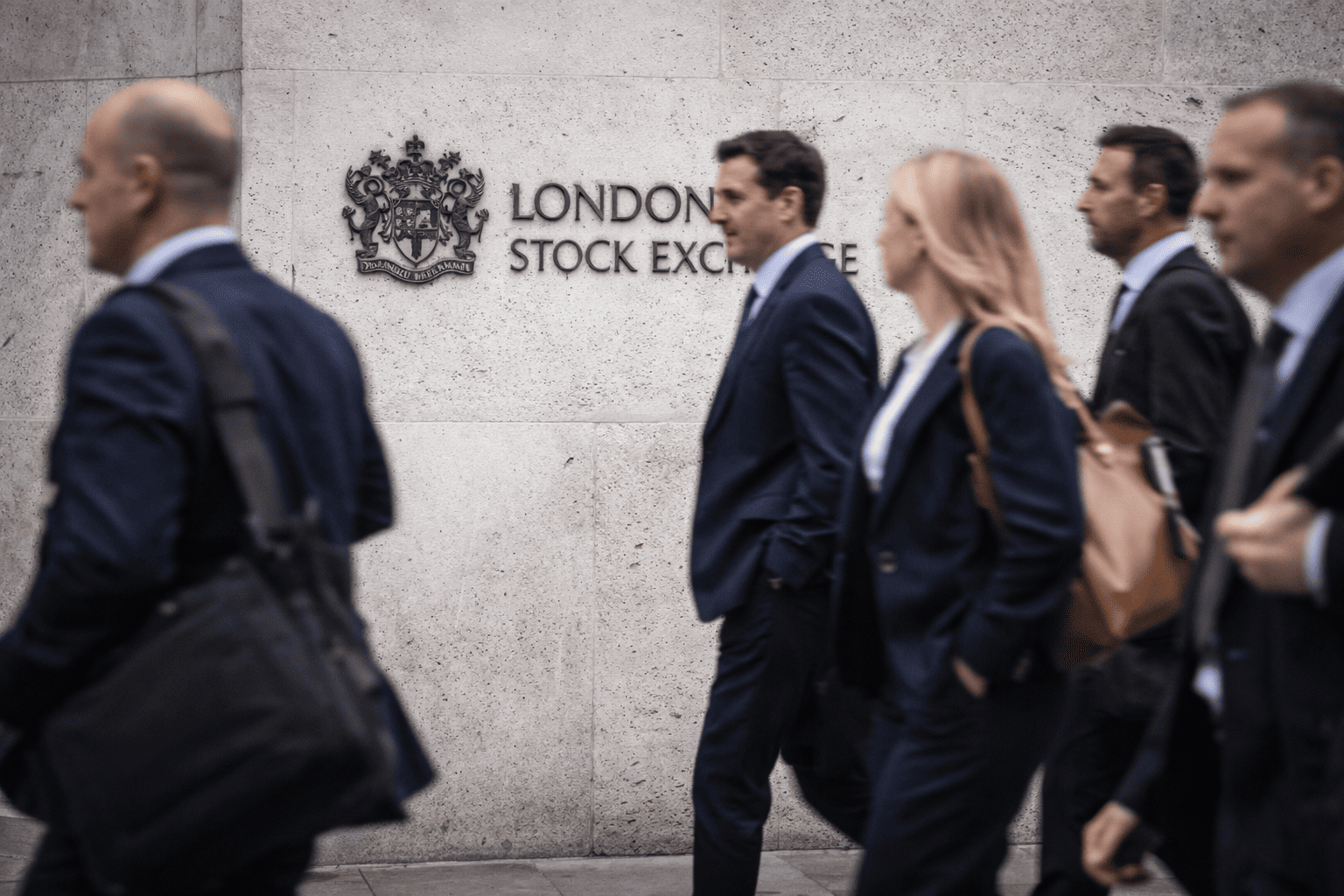
London's FTSE 100 advanced on Monday, climbing 0.77% to 10,732.13, as investors rotated into defensive sectors such as healthcare and consumer staples. The move came amid renewed upward pressure on oil prices and government bond yields, with markets bracing for a busy week of central bank policy announcements.
In contrast, the mid-cap FTSE 250 slipped 0.28% to 23,908.74, after touching its lowest intraday level in over a month earlier in the session. The divergence highlighted a cautious tone among investors, who favored large-cap defensive names over more cyclical mid-caps.

Oil gains lift energy stocks
Oil prices rose roughly 3% following fresh strikes on Saudi Arabian infrastructure and Gulf shipping routes. The supply concerns provided a tailwind for energy majors, with Shell and BP advancing about 1.2% and 1.5%, respectively. The broader energy sector added 1.1%.
Energy stocks had already outperformed the previous week, helping to cushion the FTSE 100's largest weekly decline in over a month. However, the persistent rise in crude prices continues to stoke inflation worries and cloud the global economic outlook.
Disruptions to shipping and infrastructure have added to uncertainty in energy markets, while British government bond yields extended their climb on Monday, reaching fresh multi-year highs across several maturities. Higher yields can raise borrowing costs and weigh on equity valuations, particularly for growth-oriented sectors.
Defensive sectors outperform
Amid the uncertainty over oil, inflation, and interest rates, investors gravitated toward traditionally defensive areas. Pharmaceutical stocks rose 2.7%, with GSK jumping 4.6% after reporting positive trial results for two lung cancer drugs, Jideytro and Ris-Rez.
Consumer-facing sectors also performed well: personal care, drug, and grocery stocks gained 2.6%, while beverage companies advanced 2.8%. On the downside, industrial and precious metal miners were among the biggest decliners as metal prices fell. Technology stocks showed mixed performance, with the FTSE 350 technology sector up 3.9% despite weakness in US tech futures.
Futures linked to the Nasdaq Composite dropped 1.6% after executives from major AI labs, including OpenAI and Anthropic, called for a slower pace of AI development. The comments pressured AI-related stocks globally, though London's tech sector bucked the trend. For more on this, see our coverage of AI stocks facing pressure.
Central bank decisions in focus
Investors are now turning their attention to a slew of central bank meetings and economic data due this week. UK employment and inflation figures are scheduled ahead of the Bank of England's rate decision, with markets widely expecting the central bank to hold rates steady.
The US Federal Reserve will announce its decision on Wednesday, with markets pricing in an 88.5% probability of a 25-basis-point rate hike, according to CME's FedWatch Tool. The prospect of higher US rates has been a key driver of Treasury yields, which in turn influence global borrowing costs. For related analysis, see private credit stocks sliding on rate hike odds.
Domestically, Prime Minister Andy Burnham is meeting business leaders, entrepreneurs, and local mayors at Downing Street to discuss the government's economic growth plans. The gathering includes executives from banks, energy companies, retailers, telecom firms, and industrial businesses. It comes ahead of Chancellor John Healey's first budget on October 28, which is being prepared amid higher borrowing costs and the economic impact of the Iran war.
Elsewhere, GlobalData was the weakest performer on the FTSE 250, falling 21% after the data analytics and consulting firm said its annual revenue growth would be more muted than previously expected.
As markets digest these developments, the interplay between oil prices, yields, and central bank policy will remain a key theme. For insights into how rising yields are affecting other assets, see our piece on gold sliding amid yield surge.
This article is for informational purposes only and does not constitute financial advice.

