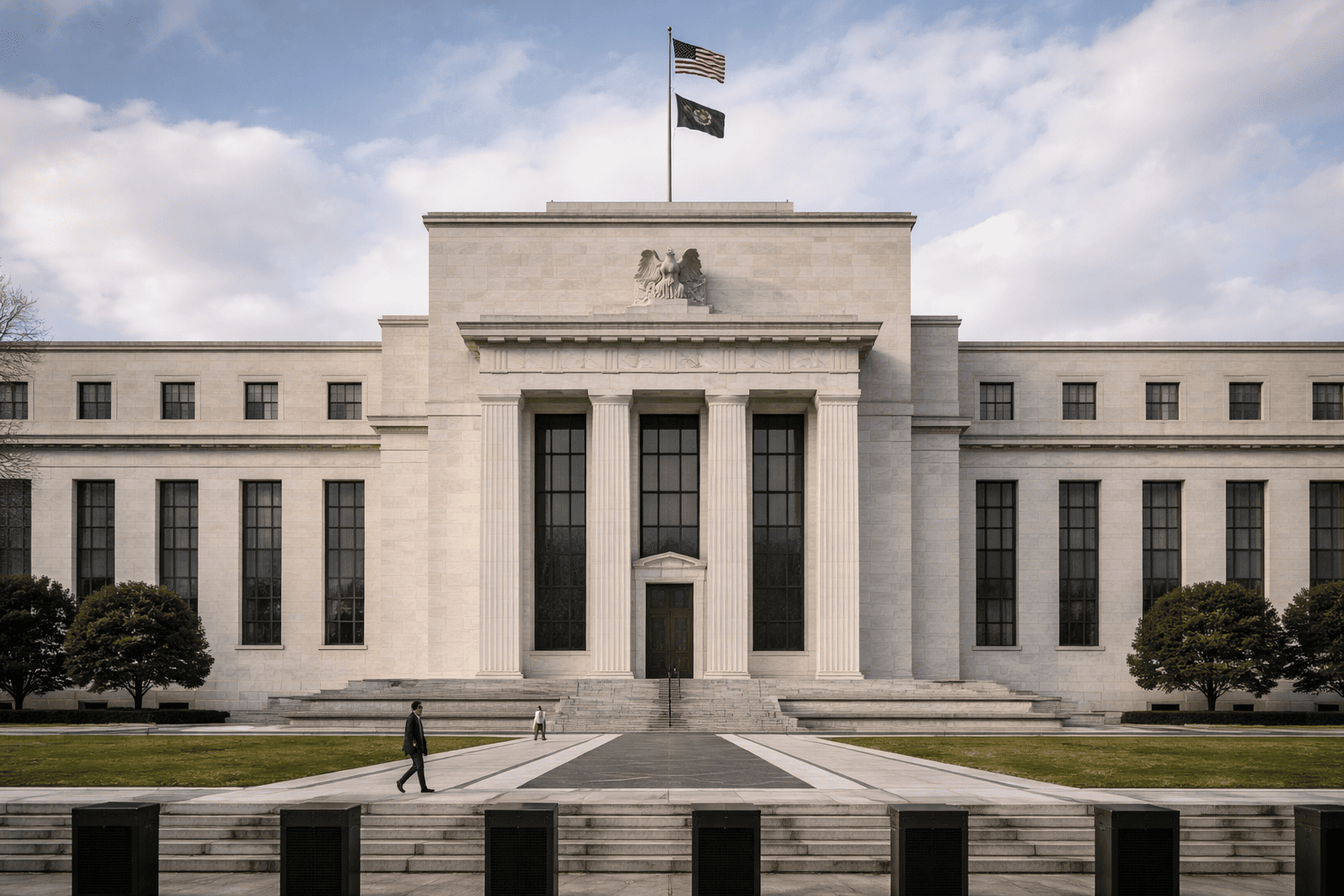
The Federal Reserve held its benchmark interest rate steady at a range of 3.5% to 3.75% following its first policy meeting under new Chair Kevin Warsh, a decision that masked deepening divisions among policymakers over the trajectory of monetary policy. The unanimous vote marked the fourth consecutive meeting without a rate change, but updated projections and a notably abbreviated statement signaled a shift in the central bank's communication approach.
Policymakers Split on Rate Path
The Federal Open Market Committee's latest dot plot revealed a near-even split among officials: nine participants anticipate at least one quarter-point rate increase this year, with six of those expecting two or more hikes. Another nine see either no change or a cut. Notably, only 18 of 19 meeting participants submitted rate projections for end-2026, fueling speculation that Warsh—who has previously criticized the Fed's forecasting tools—declined to provide his own outlook.

The post-meeting statement was pared down to just 130 words, compared with 341 words in April, and removed language that had previously signaled an easing bias. "Economic activity is expanding at a solid pace despite elevated uncertainty that owes, in part, to the conflict in the Middle East," the statement read. "Productivity growth and capital investment are strong."
Inflation Outlook Rises, Growth Forecasts Trimmed
The Fed's median inflation forecast for 2026 jumped to 3.6% from 2.7% in March, while core inflation expectations rose to 3.3% from 2.7%. At the same time, GDP growth projections were trimmed to 2.2% from 2.4%. The unemployment rate forecast improved slightly to 4.3% from 4.4%. The revisions come as the Fed's preferred inflation gauge accelerated to 3.8% in April, and separate consumer and producer price indexes posted their fastest gains in over three years.
Rising energy costs linked to the conflict involving Iran have added to inflation pressures, though recent progress toward a preliminary peace agreement between the United States and Iran has pushed oil prices lower. For more on how energy markets are affecting inflation dynamics, see Gold Retreats From 2% Rally as Oil Spike Threatens to Undermine Inflation Relief.
Strong Labor Market Complicates Policy Decisions
The economic backdrop has shifted considerably since the start of the year. Earlier expectations that slowing hiring and moderating inflation would create room for rate cuts have faded as the labor market remains resilient. Nonfarm payrolls increased by 172,000 in May, while the unemployment rate held steady at 4.3%. The robust jobs data, combined with re-emerging inflation pressures, leaves the Fed in a cautious stance.
Financial markets reacted negatively to the announcement, with Treasury prices falling, the U.S. dollar strengthening, and stocks moving lower. The dollar's strength has implications for currency markets, as detailed in Dollar Holds Steady as CPI Looms; Oil Rally Pressures Rupee, Kiwi Gains.
Outlook and Market Implications
With the Fed now signaling a higher-for-longer rate environment, investors are recalibrating expectations across asset classes. The split among officials suggests that any future rate moves will be data-dependent and subject to intense debate. The shortened statement and missing dot plot entry from Warsh have also raised questions about broader changes to the Fed's communication strategy.
For investors, the key takeaway is that the path of least resistance for rates remains upward, at least for now. The combination of sticky inflation, a strong labor market, and geopolitical risks means the Fed is unlikely to cut rates anytime soon. As always, market participants should monitor incoming data closely. For context on how other markets are reacting, see Bitcoin Holds $62K Support: Is a Breakout to $64K Next?.
This article is for informational purposes only and does not constitute financial advice.