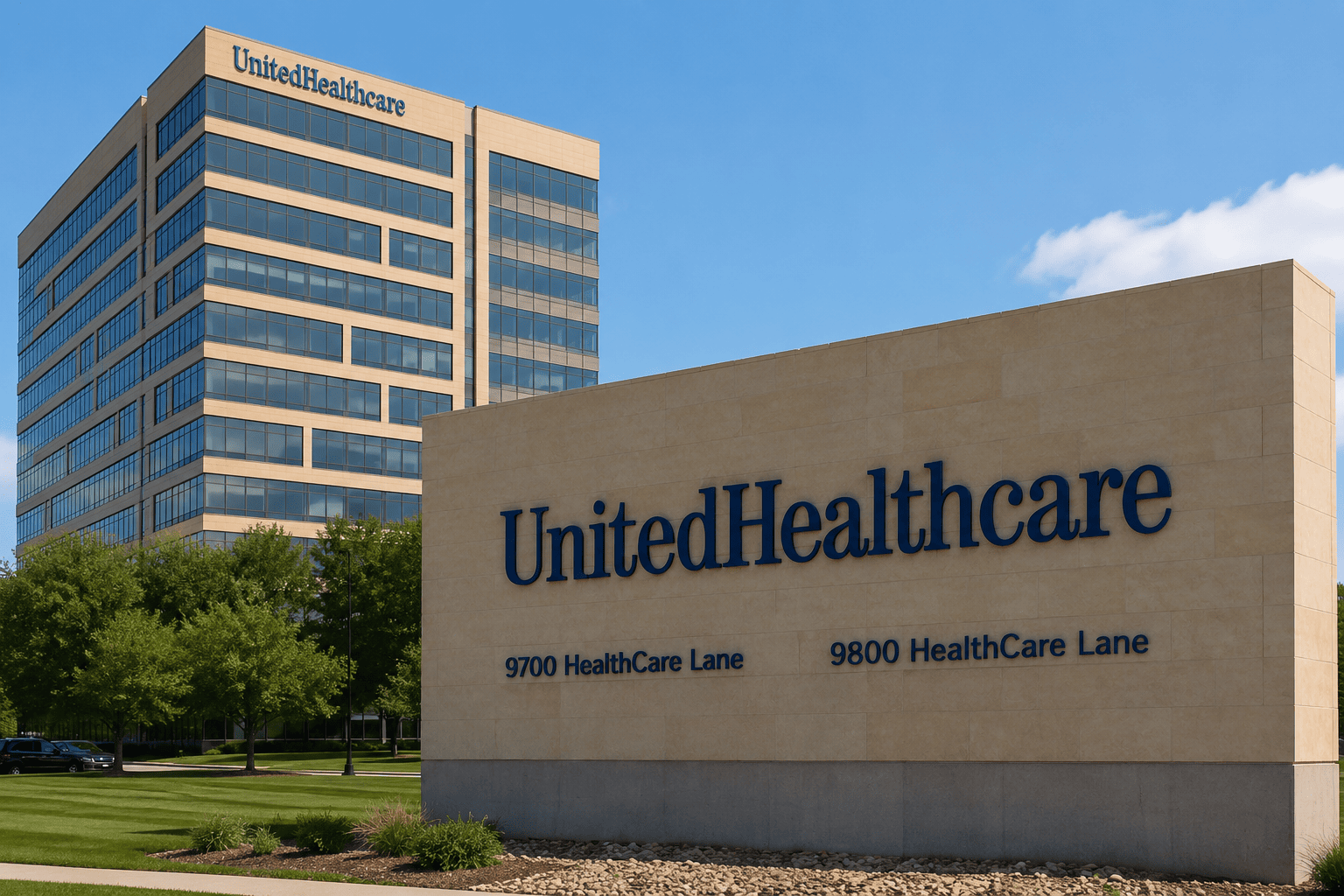
UnitedHealth Group (UNH) shares surged more than 6% in premarket trading Thursday after the health insurance giant reported second-quarter earnings that topped Wall Street expectations and raised its full-year 2026 profit outlook. The results signal that the company's turnaround initiatives are gaining traction, even as the broader industry continues to grapple with elevated medical costs.
The company now expects adjusted earnings of $19.50 to $20 per share in 2026, up from its prior guidance of more than $18.25 per share. UnitedHealth maintained its revenue outlook of more than $439 billion, but CFO Wayne DeVeydt indicated the company expects to exceed that target following the stronger-than-expected second-quarter performance.
Q2 Earnings Beat Estimates
For the quarter ended June, UnitedHealth reported adjusted earnings of $6.38 per share on revenue of $112.03 billion. Analysts surveyed by LSEG had forecast earnings of $4.90 per share on revenue of $110.85 billion. Net income rose to $5.48 billion, or $6.04 per share, compared with $3.41 billion, or $3.74 per share, in the same period last year.
Excluding restructuring costs, business divestitures, and reserve adjustments related to unprofitable contracts, adjusted earnings came in at $6.38 per share. A key metric closely watched by investors also improved significantly: the medical cost ratio, which measures the percentage of premium revenue spent on healthcare claims, declined to 86.7% from 89.4% a year earlier, well below the analyst estimate of 88.47%.
AI Investments and Cost Controls Drive Margin Improvement
DeVeydt attributed the improvement to tighter cost controls within the Medicare Advantage business and higher reimbursement rates for Medicaid plans covering lower-income Americans. However, he cautioned that healthcare costs remain historically elevated. "These results are not a reflection of trend bending or coming under control, but rather our efforts to start pushing down what is already an elevated number," DeVeydt said.
Artificial intelligence is playing an increasingly important role in UnitedHealth's multi-year turnaround strategy. The company has committed roughly $1.5 billion toward AI initiatives designed to improve efficiency, strengthen payment accuracy, and reduce fraud, waste, and abuse. According to DeVeydt, AI is also accelerating administrative processes such as prior authorizations while improving patient care quality. He stressed that AI tools are not being used to decide whether patient treatments are approved or denied.
"I would say the turnaround, and I would emphasize that on our culture, it's really happening … that turnaround is translating to strong, strong earnings," DeVeydt told reporters. "So it shows that when we can do things the way we think they should be done, that we can be both a solution and be profitable." Even so, he described the recovery as "a multi-year journey."
Membership Pressure Continues
Despite the stronger earnings, UnitedHealth acknowledged that rising healthcare costs continue to create affordability challenges for consumers. The company served 48.5 million members during the quarter, down about 525,000 from the previous three months. DeVeydt said higher insurance premiums and benefit changes have contributed to declining enrollment in both Affordable Care Act exchange plans and Medicare Advantage products. He expects the company to lose approximately 500,000 exchange members and 1.1 million Medicare Advantage members during 2026.
While pricing increases have largely offset the decline in membership and kept revenue stable, DeVeydt warned the trend is not sustainable. "But that dynamic is not a good thing for the system in the long term," he said. The broader health insurance industry continues to face higher healthcare utilization as patients seek treatments delayed during the pandemic, along with rising costs associated with specialty medicines such as GLP-1 weight-loss drugs.
Analysts Remain Bullish
Despite industry headwinds, Wall Street has grown increasingly optimistic on UnitedHealth's prospects. The stock has gained roughly 25% this year after the company exceeded first-quarter expectations and outlined plans to restore profitability. Piper Sandler recently raised its price target to $475 from $420 while maintaining an Overweight rating, implying 13.5% upside from current levels. The brokerage expects UnitedHealth to return to its historical long-term adjusted earnings growth rate of 13% to 16% by 2027.
Bank of America upgraded the stock to Buy last month and increased its price target to $450 from $420, citing improving insurance utilization trends. Morgan Stanley lifted its target price to $468 from $453, saying UnitedHealth's results should "set a positive tone" for the healthcare sector and that the company's AI investments could deliver meaningful cost savings over time. According to Visible Alpha, eight of the nine analysts covering the company currently recommend buying the stock, although its recent rally has already pushed the shares above the consensus price target of about $427.
For broader market context, see our coverage of Dow Futures Rise 130 Points as Markets Weigh Earnings, Chip Weakness, and Key Data and BlackRock Stock Surges 5% on Q2 Earnings Beat, Record $15.3T AUM.
This article is for informational purposes only and does not constitute financial advice.