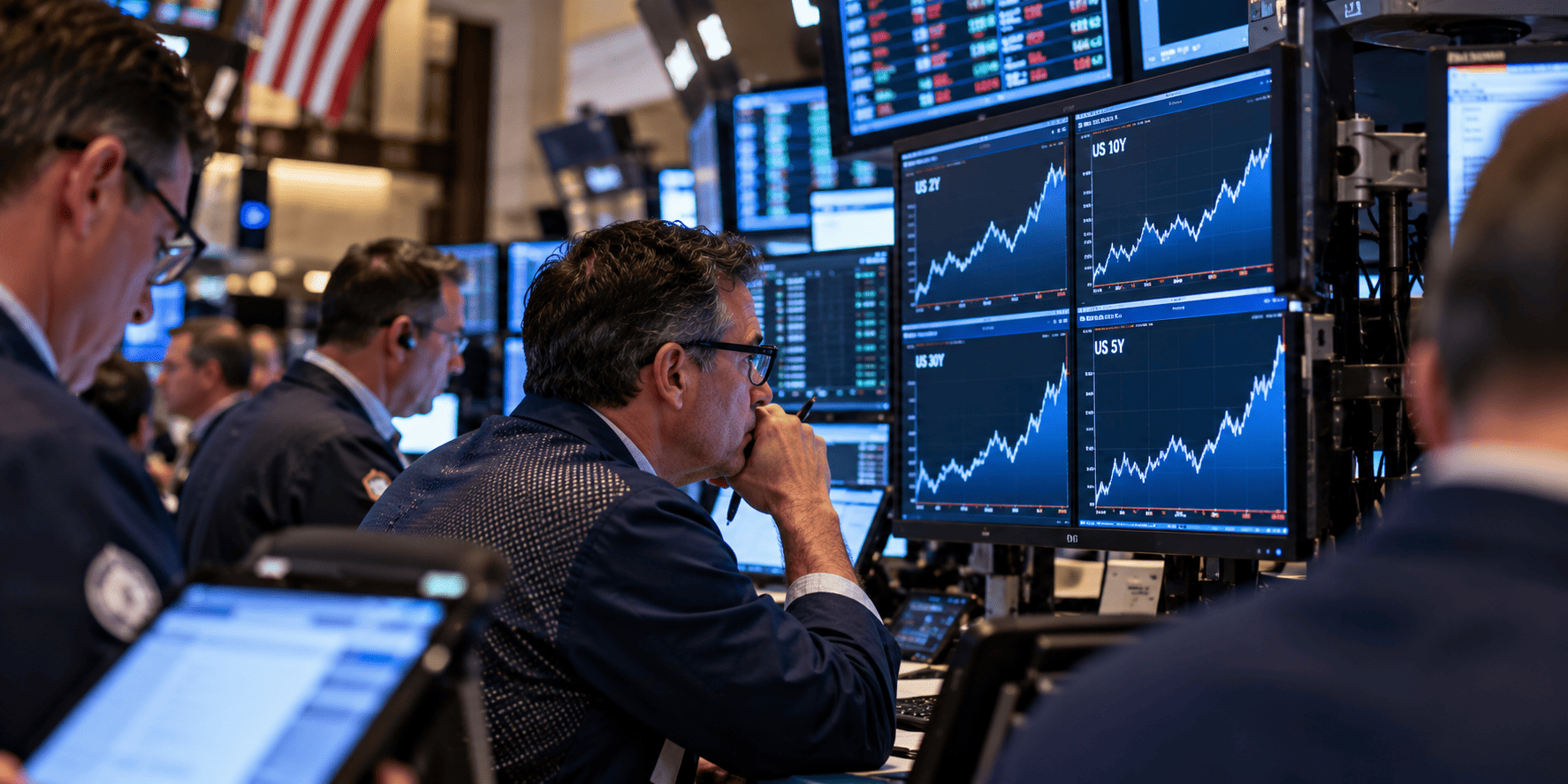
US Treasury yields have climbed to multi-year highs, with the 30-year yield surpassing 5.65% on September 30—its highest level since 2002—while the 10-year yield rose above 5.30%. The bond-market selloff reflects persistent inflation, robust economic activity, and expectations for further Federal Reserve rate hikes.
In an interview with Invezz, Tom Graff, Chief Investment Officer at financial advisory firm Facet, discussed the possibility of the 10-year Treasury yield reaching 6%, the impact of higher borrowing costs on housing and consumer spending, and the risks rising yields pose to AI infrastructure and highly leveraged companies.

High yields could become the norm
Graff noted that as long as inflation remains elevated and economic growth is solid, the Fed is likely to stay in hiking mode. He expects Treasury yields to remain high or even rise further until the macro environment shifts. In such a scenario, the focus shifts from sector performance to companies' financial flexibility.
“Since high rates are being driven primarily by inflation, companies with more pricing power and manageable debt loads should be better positioned,” Graff said. He identified real estate, consumer discretionary, and possibly tech as sectors that could struggle, with tech facing valuation compression rather than direct rate impacts.
Impact on equity markets and AI
Graff acknowledged that high interest rates are negative for stocks all else being equal, but if profit growth from AI continues to boom, high rates may not matter. However, he warned that rising rates could hamper the profitability of data center projects, weighing on earnings for hyperscalers.
“The biggest worry is that high rates hamper the profitability of data center projects,” he said, which could weigh on the stocks of major AI companies.
Path to 6% yields
Graff believes reaching 6% on the 10-year Treasury is plausible. The market currently prices in a benign Fed hiking cycle—perhaps two to three more hikes followed by cuts in 2027. If that outlook shifts to four to five hikes without near-term cuts, the 10-year could approach 6%.
“We'll know if the first couple of rate hikes are impacting inflation relatively quickly, certainly within 6 months,” he said. If more hikes are needed, the 10-year will rise rapidly.
Housing and consumer stress
Rising rates pose a significant risk to housing. Home affordability is already challenged, and every 0.25% increase in mortgage rates makes it harder. Graff noted that if mortgage rates reach 7% to 7.5%, there is a non-zero risk of home prices starting to decline.
Higher borrowing costs could also lead to weaker consumer spending, as the Fed's rate hikes are designed to slow spending and curb inflation. However, hiking too quickly could trigger a recession, a concern that may have influenced Fed Chair Kevin Warsh's earlier hesitation.
Leveraged companies and emerging markets
While corporate balance sheets are generally healthy, Graff highlighted pockets of risk, particularly in the software sector. Many highly leveraged software companies face refinancing needs from the 2019-2022 period at dramatically higher rates, while AI challenges their core business models.
For emerging markets, continued Fed hikes could strengthen the dollar, creating headwinds. Graff also expressed skepticism about crypto's performance in a high-yield environment, citing its historical correlation with interest rates and the dollar.
This article is for informational purposes only and does not constitute financial advice.

