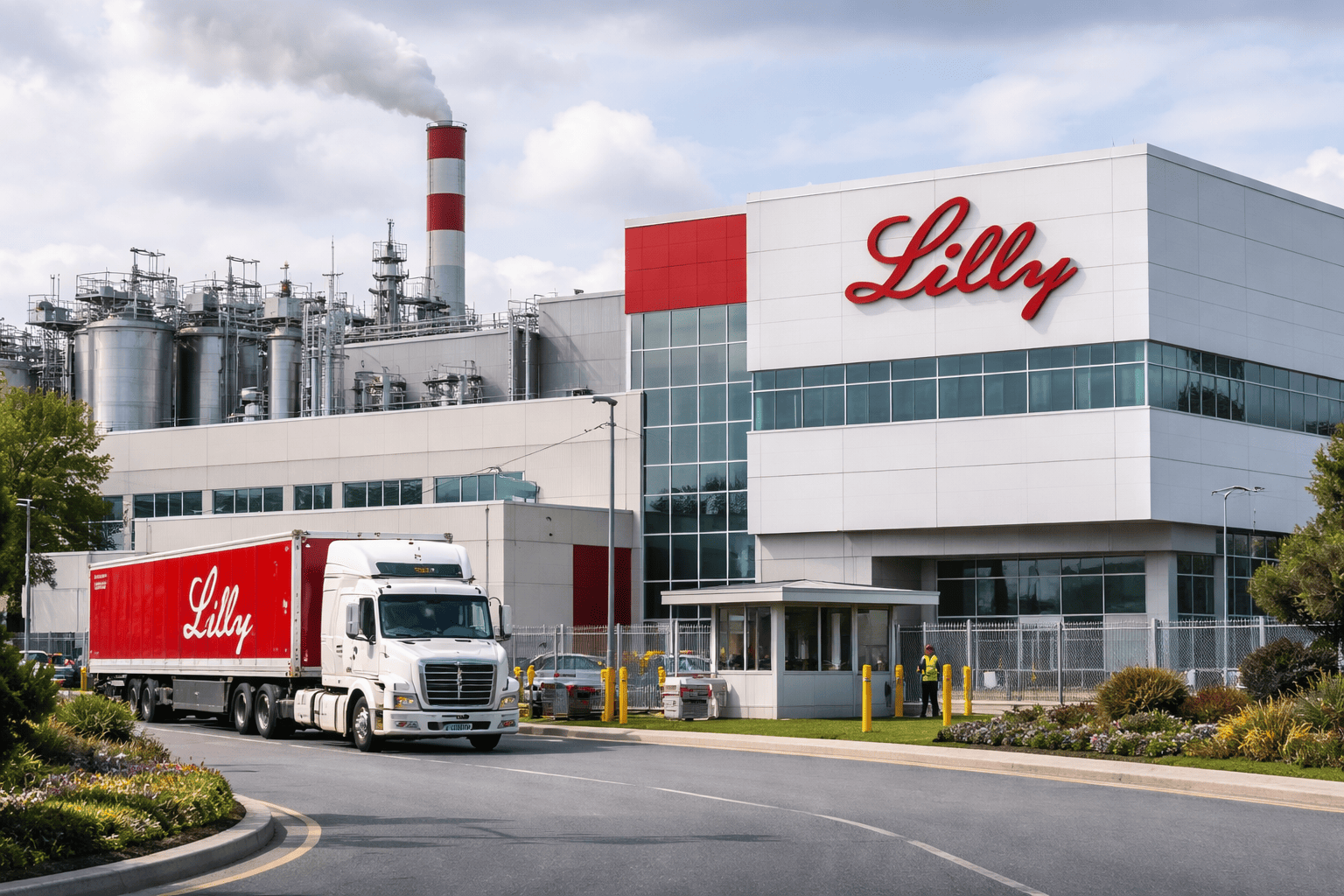
Eli Lilly (NYSE: LLY) saw its shares climb approximately 6% in Wednesday trading after the pharmaceutical giant reported second-quarter results that comfortably exceeded Wall Street expectations. The outperformance was fueled by continued robust demand for its blockbuster GLP-1 medications, Mounjaro and Zepbound, prompting the company to lift its full-year revenue outlook.
The Indianapolis-based drugmaker posted adjusted earnings per share of $8.38, well above the FactSet consensus estimate of $6.01. Revenue surged 48% year-over-year to nearly $23 billion, surpassing the $20.7 billion analysts had projected. The company now anticipates full-year revenue in the range of $85 billion to $87 billion, up from its prior guidance of $82 billion to $85 billion. Analysts had been modeling approximately $85.3 billion.

While Lilly narrowed the upper end of its adjusted earnings guidance by 50 cents, it maintained its full-year forecast of $35.50 to $36.50 per share, which remains above consensus at the midpoint. The company's performance stands in stark contrast to rival Novo Nordisk, whose latest quarterly results disappointed investors despite an improved annual outlook.
Mounjaro and Zepbound continue to power growth
Lilly's diabetes and obesity treatments remained the primary growth engines during the quarter. Mounjaro, the injectable therapy for type 2 diabetes, generated $9.9 billion in revenue, exceeding the roughly $8.8 billion to $8.9 billion analysts had expected. Sales of the drug nearly doubled compared with the same period last year, reinforcing its status as the world's best-selling medicine.
Zepbound, which shares the same active ingredient (tirzepatide) but is approved for chronic weight management, recorded $4.9 billion in sales, topping estimates of approximately $4.6 billion to $4.7 billion and representing a 46% increase from a year earlier. Together, Lilly's GLP-1 portfolio—including Mounjaro, Zepbound, and the oral obesity treatment Foundayo—now accounts for about 65% of total company revenue.
Foundayo, launched in April, generated $98 million in its first full quarter on the market, slightly below the FactSet consensus of $103 million. The product marks Lilly's entry into the growing oral GLP-1 segment, where it competes directly with Novo Nordisk. RBC Capital Markets analyst Trung Huynh described the quarter as "LLY crushes expectations" in a note to investors.
Acquisitions expand pipeline beyond obesity drugs
Beyond strong commercial execution, Lilly continued to broaden its pipeline through strategic acquisitions. During the quarter, the company completed its acquisition of in vivo cell therapy developer Kelonia Therapeutics and finalized the purchase of Centessa Therapeutics in a deal valued at up to $7.8 billion—Lilly's largest completed acquisition to date. After the quarter ended, Lilly also agreed to acquire psychedelic drug developer AtaiBeckley to expand its presence in mental health treatments.
The company additionally completed three acquisitions aimed at building an infectious disease portfolio and disclosed an investment in Oura, the maker of health-tracking smart rings that has filed to go public. These moves underscore Lilly's ambition to diversify beyond its core metabolic franchise.
Manufacturing investment and outlook remain in focus
Lilly continues to invest heavily in manufacturing capacity to support growing demand for its medicines. In May, the company announced an additional $4.5 billion investment to expand manufacturing facilities across Indiana, bringing its total commitment in the state to more than $21 billion. The company also revamped its commercial partnership with CVS Health to improve patient access to Zepbound and Foundayo.
Looking ahead, Lilly plans to submit its next-generation weight-loss drug retatrutide to U.S. regulators during the first quarter of 2027, targeting approval later that year or in early 2028. The company expects continued demand for its existing portfolio to support further revenue growth, noting that sales have more than doubled since the second quarter of 2024. For context, the broader market has seen AI-driven rallies, such as Palantir and Caterpillar fueling a Dow surge, but Lilly's performance highlights the strength in the healthcare sector.
Investors will be watching whether Lilly can sustain this momentum, especially as competition in the obesity space intensifies. The company's raised guidance and robust pipeline suggest confidence, but valuation and execution risks remain. As always, earnings beats can sometimes lead to pullbacks, but Lilly's stock reaction suggests the market is rewarding the results.
This article is for informational purposes only and does not constitute financial advice.

