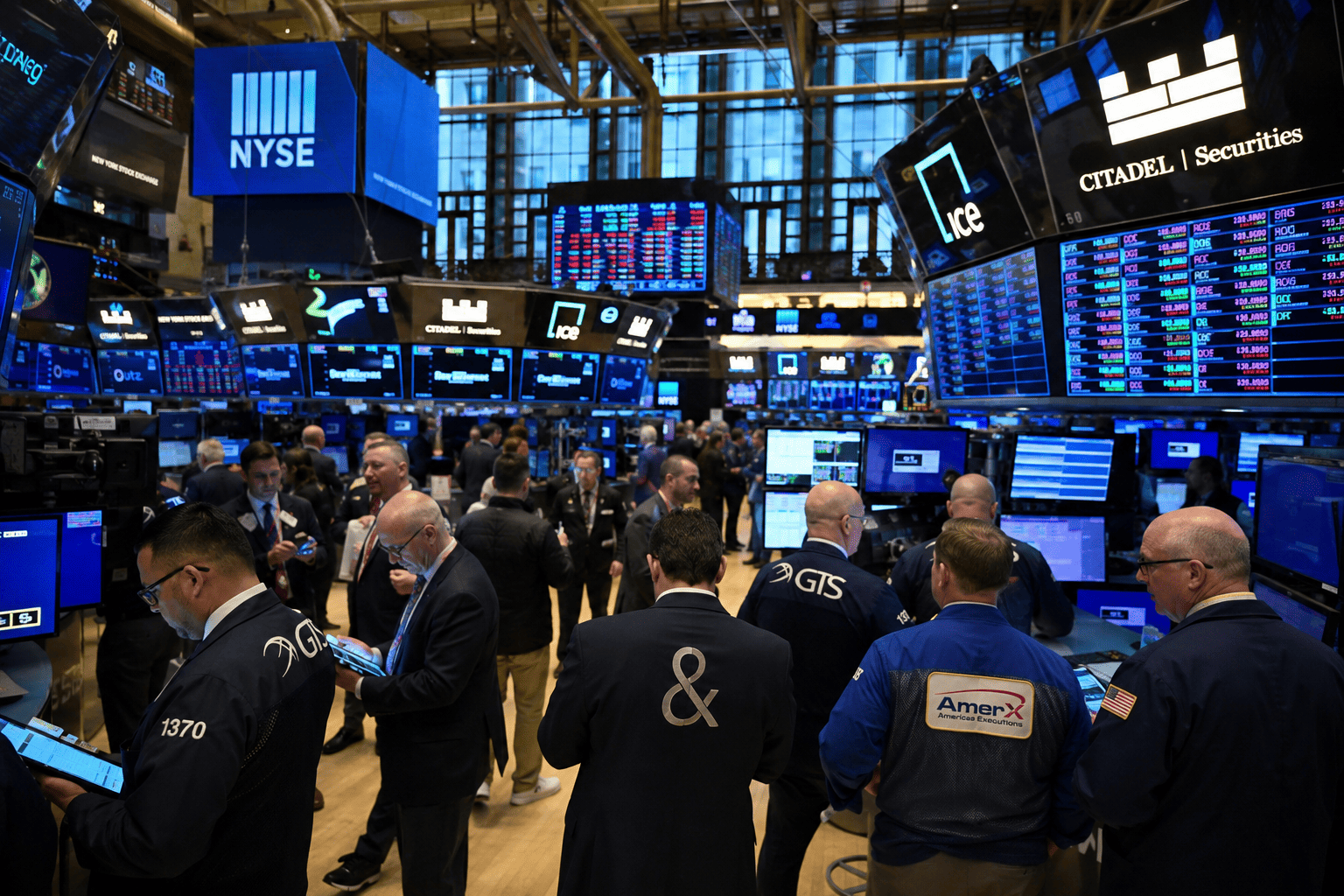
US stocks have shown notable resilience even as Treasury yields resume their upward climb, with investors looking past higher borrowing costs to a strong corporate earnings season. The 10-year Treasury yield hovered around 4.7% on Friday, after jumping five basis points to 4.69% on Thursday, reversing the brief decline that followed the Treasury Department's surprise announcement to increase purchases of longer-dated bonds.
The 30-year Treasury yield also edged up to about 5.25%, remaining close to the 5.327% level reached earlier this week—its highest in 19 years. Typically, such elevated long-term yields pressure equities by raising discount rates and borrowing costs, but stock futures pointed higher on Friday, with S&P 500 futures up about 0.5%, Dow futures gaining 0.4%, and Nasdaq futures rising 0.7%. At the open, the S&P 500 was up 0.4%, the Dow 0.6%, and the Nasdaq 0.3%, though indices remain down for the week—the S&P 500 off 2% and the Nasdaq down 2%.

Why the Treasury buyback relief was short-lived
The Treasury's announcement on Wednesday to double planned buybacks of 10- to 30-year securities to at least $4 billion per operation initially calmed the long end of the market. The purchases, scheduled from Sept. 9 through Nov. 4, were intended to improve liquidity and support longer-dated Treasuries, where yields had been climbing sharply. Yields retreated Wednesday, but the relief lasted only a day.
Treasury Secretary Scott Bessent told CNBC on Thursday that the department could increase the size of purchases beyond $4 billion per issue, saying Treasury would “make a market” in longer-dated securities. Despite this, the market resumed selling bonds. The problem is that the planned buying is relatively small compared with the size of the government bond market and the debt issuance needed.
John Briggs, head of US rates strategy at Natixis, noted that the planned purchases represent less than 3% of outstanding long-term Treasury debt and less than 30% of expected issuance this year. “The more important part is the signaling from it. If yields go too far, Treasury will try and fight it, and now we know where some pain points are,” he said. “That said, the longer-term structural headwinds are unchanged and will continue to weigh on yields.”
Deeper structural pressures persist
The Treasury can influence sentiment but cannot easily eliminate the forces pushing yields higher. The US national debt has crossed $40 trillion, raising concerns that investors will demand higher yields to absorb the growing supply of government debt. Additionally, the economy faces an energy shock from the Iran war, which has pushed oil prices higher and complicated the inflation outlook. Higher oil prices can feed into consumer prices, making investors less confident that inflation will continue moving toward the Federal Reserve's target.
Arun Sundaram, senior vice president at CFRA Research, said Thursday's yield increase reflects the market's view that the bond purchases “are more bandaids for deeper problems going on in the economy.” Analysts at Vital Knowledge similarly argued that Bessent's comments failed to provide lasting reassurance, describing them as potentially “counterproductive by conveying both panic and powerlessness.”
AI investment adds to capital demand
Another factor is the extraordinary capital being deployed into artificial intelligence infrastructure. Technology companies and cloud providers are spending heavily on data centers, chips, and networking equipment to support AI workloads. This investment requires enormous financing at a time when the US government is also competing for capital. BlackRock noted that governments, AI hyperscalers, and companies across the economy are competing increasingly intensely for capital, keeping upward pressure on long-term yields even under a scenario where AI boosts productivity.
The result is an unusual environment where the same AI boom supporting corporate earnings is also contributing to higher borrowing costs. As AI memory bets continue to drive market narratives, the capital demands remain significant.
Earnings strength offsets rate headwinds
Ordinarily, a 10-year yield near 4.7% and a 30-year above 5% would be a significant headwind for stocks. But investors are currently looking beyond interest rates to corporate earnings. The S&P 500 is coming off a strong earnings season, with aggregate second-quarter earnings on track to rise 52% from a year earlier, according to data provided. Technology-sector profits are expected to have increased 74%.
That growth gives investors more room to tolerate higher interest rates. In other words, stocks do not necessarily need Treasury yields to fall as long as earnings continue to deliver. As seen in Friday's rebound, the market's focus remains on fundamentals rather than the bond market's gyrations.
However, the divergence between bond and stock markets cannot persist indefinitely. If yields continue to climb, they may eventually weigh on valuations, especially for growth stocks that are more sensitive to discount rates. For now, the earnings momentum is providing a buffer, but the structural pressures on yields—fiscal deficits, energy shocks, and AI investment—remain unresolved.
This article is for informational purposes only and does not constitute financial advice.