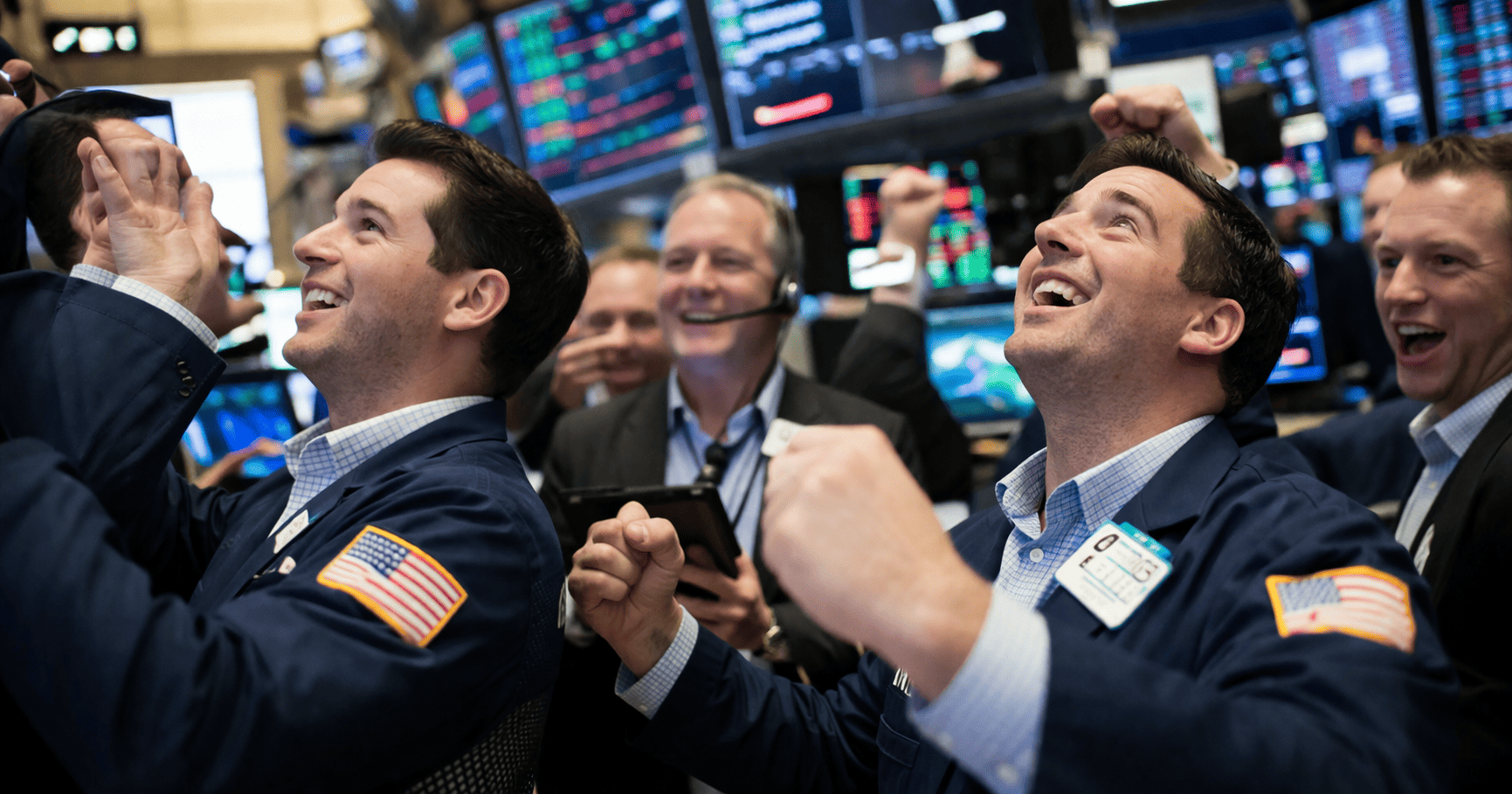
US equities finished Monday's session with solid gains, as a broad rally in semiconductor and artificial intelligence shares lifted the major averages while a steep drop in crude oil and a pullback in government bond yields provided additional support.
The Dow Jones Industrial Average added 366.19 points, or 0.71%, to close at 52,048.83. The S&P 500 rose 1.49% to 7,764.75, and the Nasdaq Composite climbed 2.26% to a record close of 27,122.09.

AI chipmakers power the advance
Technology shares did the heavy lifting, with chipmakers posting some of the session's largest moves. Intel jumped 12%, Advanced Micro Devices gained nearly 10% and crossed a $1 trillion market capitalisation for the first time, Qualcomm added 9%, and Arm Holdings also finished higher.
The strength in semiconductors came as investors reassessed the outlook for AI-related capital spending following a recent sell-off in the sector. The S&P 500 had ended the prior week down about 0.1%, while the Nasdaq had gained 0.7%. The Dow had fallen 1.7% last week, its weakest weekly showing since March.
Meta Platforms also moved higher after Wells Fargo lifted its price target on the stock, citing the recent rollout of the company's Muse AI assistant. Bitcoin climbed to a more than seven-month high, which in turn supported shares of crypto-exposed companies such as Coinbase and Strategy.
Oil retreat eases inflation pressure
Crude prices fell sharply, offering relief to investors worried about elevated energy costs feeding into inflation. US crude dropped 4.5% to $95.78 a barrel, while Brent crude declined 3.4% to $100.34. Brent briefly traded below $100 for the first time since September 9.
The move followed signals of possible diplomatic progress between Washington and Tehran during this week's United Nations General Assembly. President Donald Trump indicated he would be open to meeting Iranian President Masoud Pezeshkian, who is expected to attend the gathering.
Treasury yields moved lower alongside oil. The 10-year note's yield fell more than four basis points to 4.949%, and the 30-year yield slipped to 5.282%.
Fed outlook and geopolitical risks in focus
Attention remains fixed on the Federal Reserve's rate path after the central bank raised rates last week for the first time in three years. Traders were pricing roughly a 50% probability of another increase next month, according to CME FedWatch.
Even with Monday's rally, investors continued to track geopolitical and policy risks. The US and Iran exchanged threats over the weekend after attacks by Iran-backed Houthis on Saudi Arabia, and the State Department urged Americans to reconsider travel to the Middle East.
Separately, President Trump and Chinese President Xi Jinping are scheduled to meet on Thursday, with discussions expected to cover trade, the Iran conflict, artificial intelligence and critical minerals. The US has reportedly proposed extending the current trade truce by six months, while China has pushed for a longer extension.
Shares of companies with exposure to Greenland also surged after diplomatic progress between the US and Denmark. Greenland Mines tripled in value, and Greenland Energy more than doubled.
Investors will also parse comments from at least 10 central bank officials due this week as markets weigh the inflation and interest-rate outlook.
This article is for informational purposes only and does not constitute financial advice.

