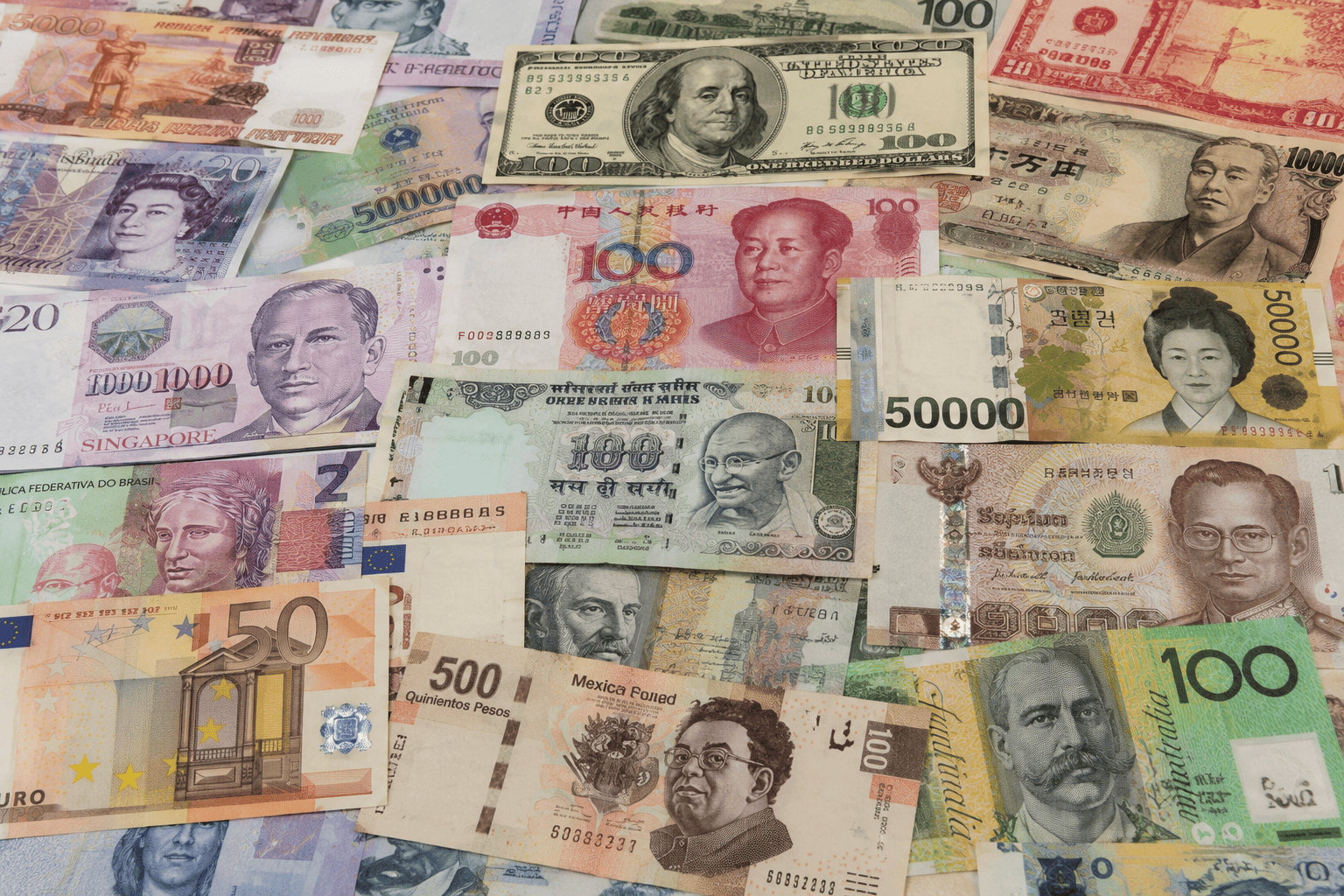
The foreign exchange market began the week on a cautious footing, with the US dollar maintaining its strength against major peers as renewed geopolitical tensions in the Middle East fueled safe-haven flows. Investors are closely watching developments between the United States and Iran, while also positioning for key macroeconomic events, including the European Central Bank's annual forum and the upcoming US labor market report.
Geopolitical Developments Remain in Focus
Over the weekend, the United States and Iran exchanged fire near the strategic Strait of Hormuz, raising concerns about regional stability and global market implications. Iran's Islamic Revolutionary Guard Corps (IRGC) claimed to have targeted US military sites in neighboring countries, including Kuwait and Bahrain, in response to US strikes on Iranian positions. Iran also demanded a full withdrawal of Israeli forces from Lebanon as part of any final agreement with the US. However, tensions appeared to ease later in the day, providing some relief to risk-sensitive assets.

These developments have kept investors on edge, with many turning to the dollar as a safe haven. For a broader perspective on how geopolitical risks are influencing global markets, see our analysis in Geopolitical Risk and Fed Minutes Keep Global Markets on Edge.
Dollar Stays Resilient
The US Dollar Index held steady above the 101.00 mark during Monday's European session, following a positive close last week. US stock index futures also traded with modest gains. The index was near 101.36, on track for a monthly gain of approximately 2.5%—its strongest monthly advance since July of the previous year.
The dollar's strength is underpinned by a combination of safe-haven demand and shifting interest rate expectations. Higher oil prices, driven by disruptions to shipping through the Strait of Hormuz, have added to inflation concerns. This has reduced expectations of easier monetary policy and reinforced the view that the Federal Reserve may keep interest rates higher for longer.
Market participants are now focused on this week's US employment report. Payroll and unemployment figures are expected to provide further insight into the strength of the labor market and the outlook for monetary policy.
Major Currencies Trade in Narrow Ranges
The euro traded marginally higher near 1.1400 during the European morning, remaining close to levels seen after touching a 13-month low last week. The common currency is on track for a monthly decline of about 2.3%.
The British pound recovered modestly and held above 1.3200 ahead of the Bank of England's May Consumer Credit data. Sterling remains down roughly 2% for the month.
The Japanese yen traded near 161.80 against the dollar despite stronger-than-expected domestic retail trade data. The yen remained close to its weakest level in four decades and continued to trade above the 160 level, which many market participants view as a possible trigger for official intervention.
Risk-sensitive currencies also remained under pressure. The Australian dollar traded around 0.6900 after Reserve Bank of Australia Assistant Governor Chris Kent stated that the central bank would be better prepared to respond to future crises while maintaining that "the cash rate target remains our primary and preferred instrument." His remarks had little immediate impact on markets. The New Zealand dollar also remained weak, leaving both currencies on track for notable monthly declines.
ECB Forum and Jobs Data in Focus
Attention now shifts to the ECB's annual forum, where President Christine Lagarde will open proceedings on Monday. Investors will also watch a policy panel later in the week featuring Warsh for further signals on inflation, oil prices, and financial market volatility.
For now, the dollar continues to retain its advantage. While day-to-day price movements may remain volatile, geopolitical uncertainty in the Gulf and ongoing questions surrounding US monetary policy are keeping demand for the greenback well supported. For more on how these dynamics are affecting other asset classes, see our coverage of Gold Slips Below $4,110 as Rising Yields Counter Geopolitical Safe-Haven Demand and FTSE 100 Gains 0.08% as Vodafone, easyJet Deals Counter Middle East Risks.
This article is for informational purposes only and does not constitute financial advice.