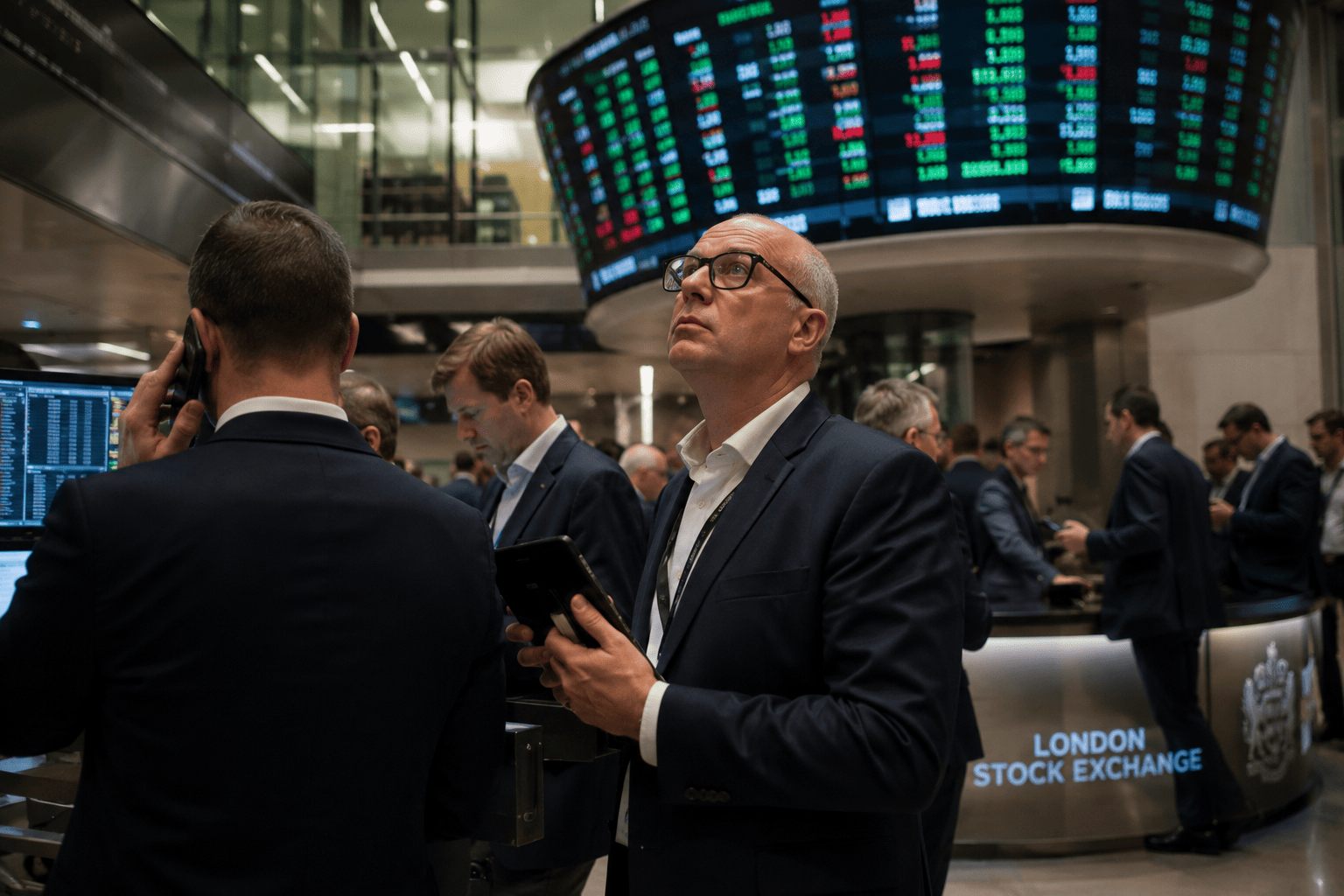
The DAX index has rebounded to the 25,000 level, its highest since early June, as a retreat in crude oil prices following the US-Iran deal provided a tailwind. However, beneath the surface, a significant risk looms: hedge funds are piling into short positions against German automakers, signaling deep skepticism about the sector's future.
Hedge Funds Target German Auto Bonds and Stocks
Top hedge funds, including Marshall Wace and Two Sigma, are aggressively shorting bonds and equities of German automakers. Data reveals that bonds issued by Volkswagen, Mercedes-Benz, and BMW rank among the most shorted in Europe. Volkswagen's €750 million perpetual bond has seen a sharp rise in short interest this year, while BMW's €750 million 2035 bond and two €500 million bonds due in 2032 and 2033 are also heavily targeted. Stellantis, the parent of Jeep and Fiat, holds the top spot as the most shorted investment-grade bond in Europe.

The bearish sentiment stems from mounting competition from Chinese electric vehicle (EV) manufacturers such as BYD, Nio, and XPeng. As one analyst noted, "China has become a source of competition rather than profits. Investors are increasingly questioning whether the industry’s earnings power can ever return to pre-China-slowdown levels."
German Automakers Face Headwinds
German automakers, key components of the DAX index, have struggled significantly this year. BMW shares have dropped 26%, making it one of the worst performers in the index. Porsche Automobil, Mercedes-Benz, and Volkswagen Group have fallen 21%, 17%, and 12%, respectively. The sector is grappling with fears that Chinese EV makers, which are opening plants in Europe to bypass tariffs, will further erode market share. BYD alone is investing €2 billion in charging infrastructure across the bloc.
In response, Stellantis, Volkswagen, and Renault have called for a "Made in EU" policy to reward local production. Yet, the challenge remains acute. A Federated Hermes analyst warned, "If they [Chinese manufacturers] continue combining rapid innovation cycles with lower price points, that creates a difficult backdrop for the established European carmakers."
DAX Index Lags on AI Exposure
The DAX index has also underperformed global peers due to its limited exposure to the artificial intelligence (AI) boom. While the index's top gainers this year include Infineon Technologies (up 114%) and Siemens Energy (up 18%), these are exceptions. The broader index lacks the AI-driven momentum seen in US markets. For context, the Kospi Index has surged 15% from lows, led by tech giants like Samsung and SK Hynix, highlighting the divergence.
Technical Outlook: Bullish Pattern Emerges
Despite these headwinds, the DAX index's technical setup suggests potential for further gains. The index has formed an inverted head-and-shoulders pattern, a classic bullish reversal signal, with a neckline at 25,460. It has also climbed above its 50-day and 100-day exponential moving averages (EMAs), indicating that bulls are in control. A decisive break above the 25,460 resistance level would confirm the breakout and open the door to new highs.
Investors should note that short squeezes can amplify moves in heavily shorted names, as seen in recent episodes like SpaceX's short interest surge. However, the fundamental challenges facing German automakers remain substantial, and the DAX's AI deficit could cap upside relative to other indices.
This article is for informational purposes only and does not constitute financial advice.