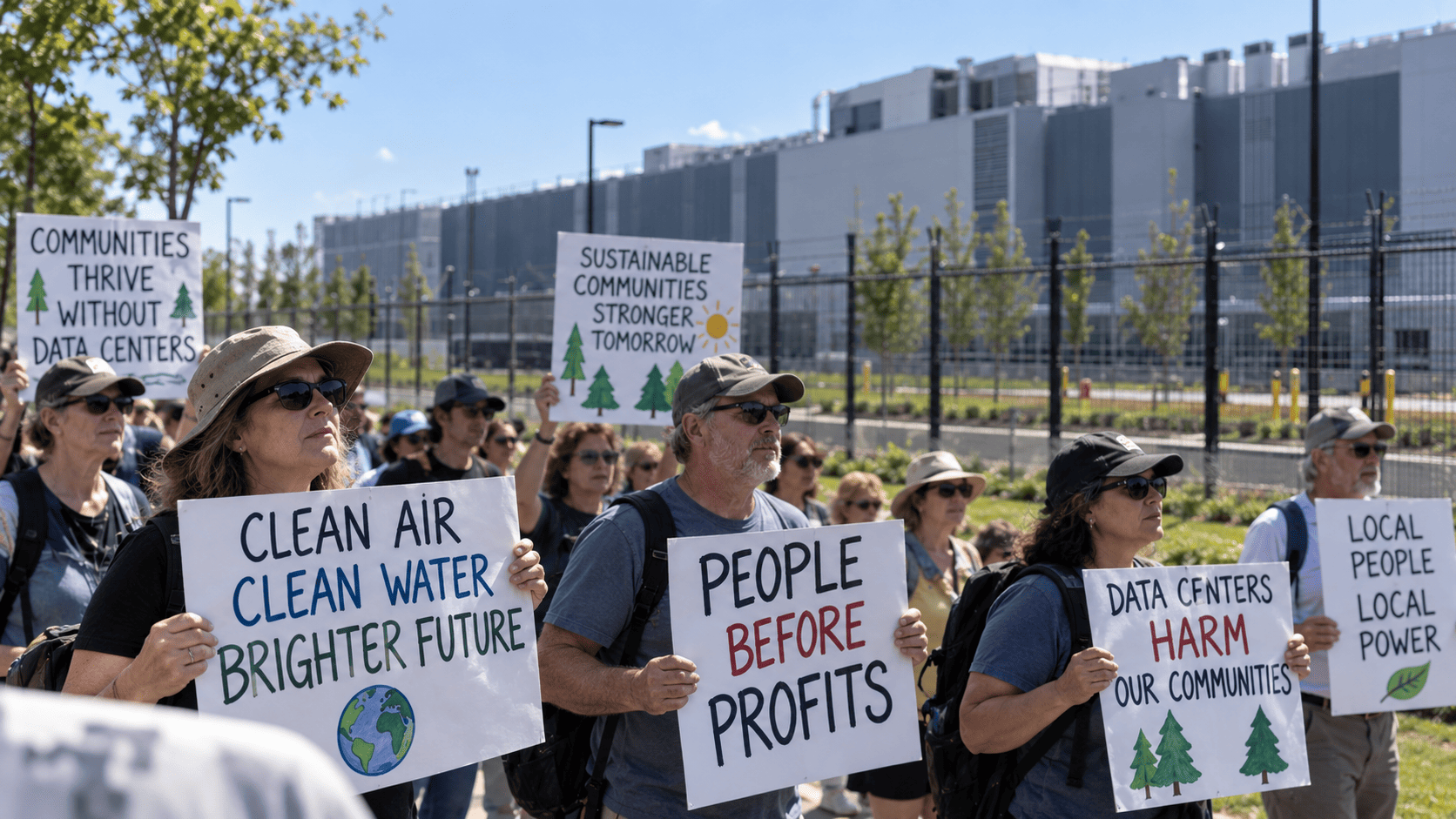
With the November midterms less than two months away, data centers have unexpectedly become a political battleground, uniting Democrats and Republicans around concerns that were barely on the national agenda two years ago. The facilities powering the artificial intelligence boom are now frequent campaign targets as voters worry about electricity costs, water consumption, land use, tax incentives, and the disruption of large industrial projects.
The shift is visible in campaign advertising. According to AdImpact data reported by CNN, more than $31 million has been spent this year on political ads mentioning data centers. In August, over 8% of all broadcast TV campaign spending went toward ads involving data centers or AI infrastructure, up from less than 1% a year earlier. More than 99% of that spending opposed AI infrastructure projects.

This puts an unusual spotlight on an industry central to the generative AI boom. Tech giants like Microsoft, Amazon, Meta, Google, and Oracle are committing hundreds of billions of dollars to new computing capacity, with developers and utilities racing to meet demand. But the physical infrastructure—land, power, water, and permits—requires community approval, and that is where the political friction has intensified.
Voter opposition crosses party lines
A nationally representative survey by the University of Pennsylvania's Annenberg Public Policy Center, conducted June 16–July 19, found that 61% of US adults somewhat or strongly oppose new data centers in their area, up from 49% four months earlier. Opposition was bipartisan: 69% of Democrats, 54% of Republicans, and 53% of independents opposed local projects.
Data centers consume enormous amounts of electricity, raising concerns about grid upgrades and rate hikes. Water use is another flashpoint, especially in drought-prone regions. Residents also cite noise, land use, property values, and the relatively few permanent jobs compared to the size of the facilities.
For many voters, opposing a data center offers a tangible way to push back against AI's rapid, often opaque development. While AI models are controlled by a few tech companies, data centers require local approvals, environmental reviews, and utility connections—making them easier to challenge.
Brookings researchers Nicol Turner Lee and Darrell M. West describe a dramatic shift in public opinion, from a "cautiously optimistic view of data centers to outright opposition." They note that this rising negativity poses challenges for tech firms, the digital economy, and policy debates over moratoriums and business investments.
Republicans join the rhetoric
The change is especially striking among Republicans. A Washington Post analysis of 4,300 social media posts and newsletters from politicians between July 2024 and mid-August 2026 found that Republican politicians had shifted sharply toward negative comments about data centers in the previous six months. Democrats had made a similar shift earlier, becoming mostly negative by June 2025.
In early 2024, both parties often celebrated new facilities for the jobs and investment they promised. Now, the emphasis has moved to electricity costs, subsidies, tax breaks, and impacts on rural communities.
Candidates flip positions
In Wisconsin, Republican Rep. Tom Tiffany initially supported speeding up data center construction at the federal level, calling the technology exciting. By May, as he campaigned for governor, he promised to repeal state tax breaks for data centers. He now refers to his Democratic opponent, David Crowley, as "data center David Crowley" in ads. Crowley had previously touted Wisconsin as a potential AI hub. Democratic candidate Francesca Hong has called for a moratorium on data centers.
Ohio has become a closely watched example. Republican Sen. Jon Husted is facing relentless attacks from former Democratic Rep. Tim Ryan over data center issues, highlighting the issue's potency in competitive races.
The political backlash is creating risks for AI infrastructure firms. Delays in permitting and approvals could slow the buildout of data centers, affecting companies like Arm and Qualcomm, which are betting on data center demand. As the midterms approach, the industry faces a new reality: community opposition is now a key variable in the AI infrastructure equation.
This article is for informational purposes only and does not constitute financial advice.

