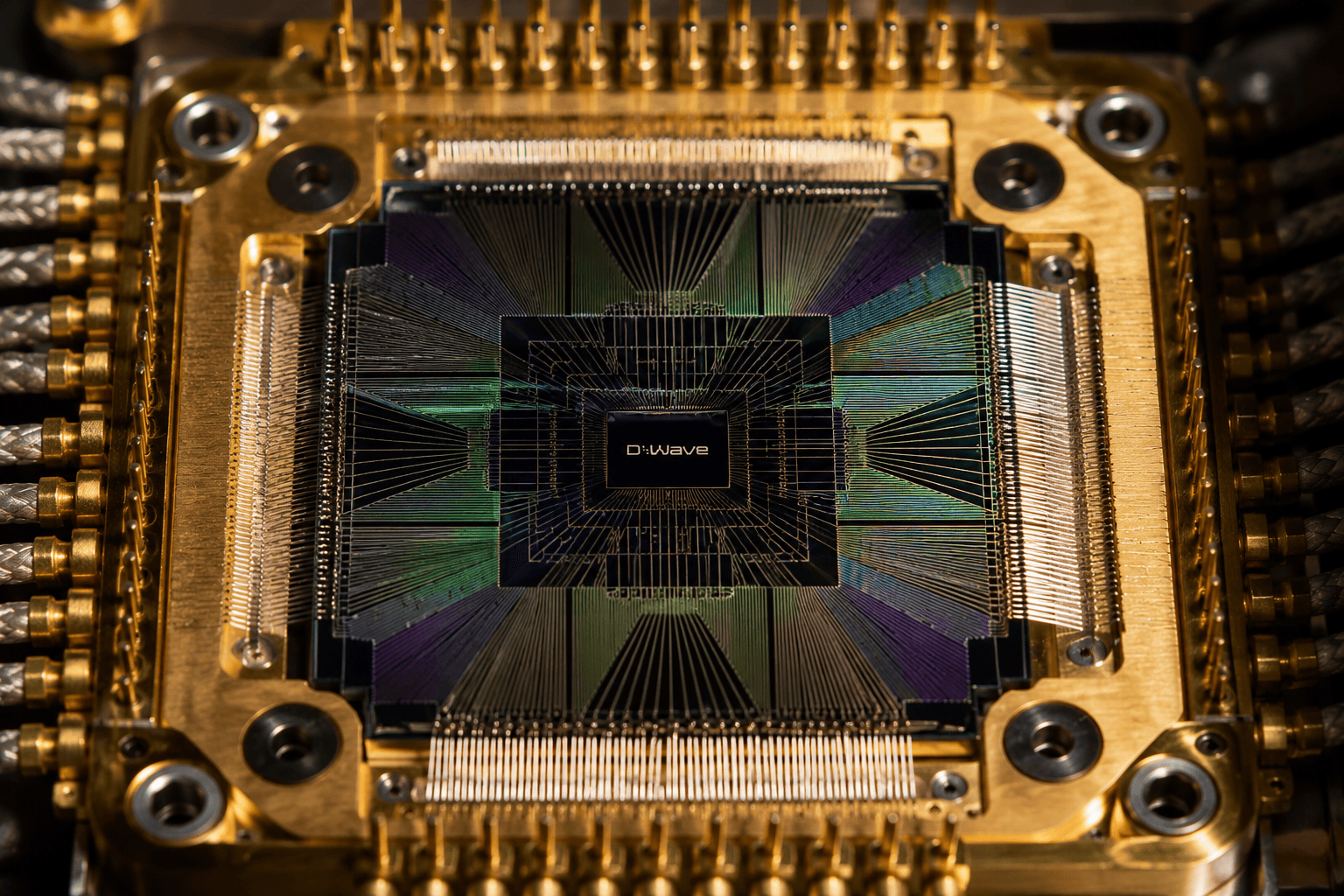
D-Wave Quantum (QBTS) saw its shares decline approximately 5% in Thursday trading after the company's second-quarter financial results came in below Wall Street expectations. The revenue and earnings miss overshadowed a dramatic surge in customer bookings, which the company highlighted as a sign of growing commercial traction.
Q2 financial performance
The Florida-based quantum computing firm reported revenue of $3.08 million for the quarter, falling short of the roughly $4.08 million analysts had projected. On an adjusted basis, the company's loss per share narrowed to 13 cents from 42 cents in the same period last year, but still missed the consensus estimate of an 8-cent loss.

Net loss improved significantly to $48 million from $167 million in the prior-year quarter. However, operating loss widened to $53.3 million from $26.5 million, reflecting increased spending on product development and commercial expansion initiatives. Management noted that higher operating expenses were tied to investments in "accelerated product development and go-to-market initiatives."
The stock's decline puts it on track for its largest single-day drop since June, as investors focused on the current revenue shortfall rather than the company's forward-looking metrics.
Bookings momentum remains strong
Despite the revenue disappointment, D-Wave's bookings—defined as customer orders expected to generate future revenue—continued to show robust growth. First-half bookings reached $35.5 million, a year-over-year increase of more than 1,120%. The company's bookings backlog also grew sequentially, rising to $35.5 million as of June 30 from $33.4 million at the end of March.
Analysts anticipate a significant revenue pickup in the third quarter, with current estimates pointing to approximately $14.1 million, representing year-over-year growth of about 277%. The strong bookings pipeline suggests that revenue recognition is likely to accelerate as projects move through the commercialization cycle, which remains uneven across the quantum computing industry.
Strategic investments and expansion
D-Wave attributed part of its higher operating costs to investments supporting product development, as well as non-recurring expenses related to its acquisition of Quantum Circuits earlier this year. The company completed the $550 million acquisition in January, including $250 million in cash, to expand into gate-based quantum computing while continuing to develop its existing quantum annealing platform.
Founded in 1999, D-Wave is one of the earliest pure-play quantum computing companies and is widely recognized for pioneering commercial quantum annealing technology. The company sold its first commercial quantum system to Lockheed Martin in 2011. In recent years, it has broadened its portfolio to include general-purpose gate-model quantum computers capable of running a wider range of algorithms.
Enterprise and government partnerships
D-Wave continues to expand its commercial and government relationships as it seeks broader adoption of quantum technology. Its customer and partner roster includes defense contractor Anduril Industries, and the company recently expanded its collaboration with AT&T to deploy its optimization-focused quantum technology.
The company has also strengthened ties with the U.S. government. It was among a group of publicly traded quantum companies that reached tentative agreements with the Commerce Department involving federal funding in exchange for minority equity stakes.
While investors reacted negatively to the latest quarterly report, the strong growth in bookings and continued investment in technology development underscore D-Wave's focus on expanding its position in the emerging quantum computing market. As the industry matures, revenue is expected to remain uneven, but the company's pipeline suggests potential for meaningful growth in the coming quarters.
This article is for informational purposes only and does not constitute financial advice.

