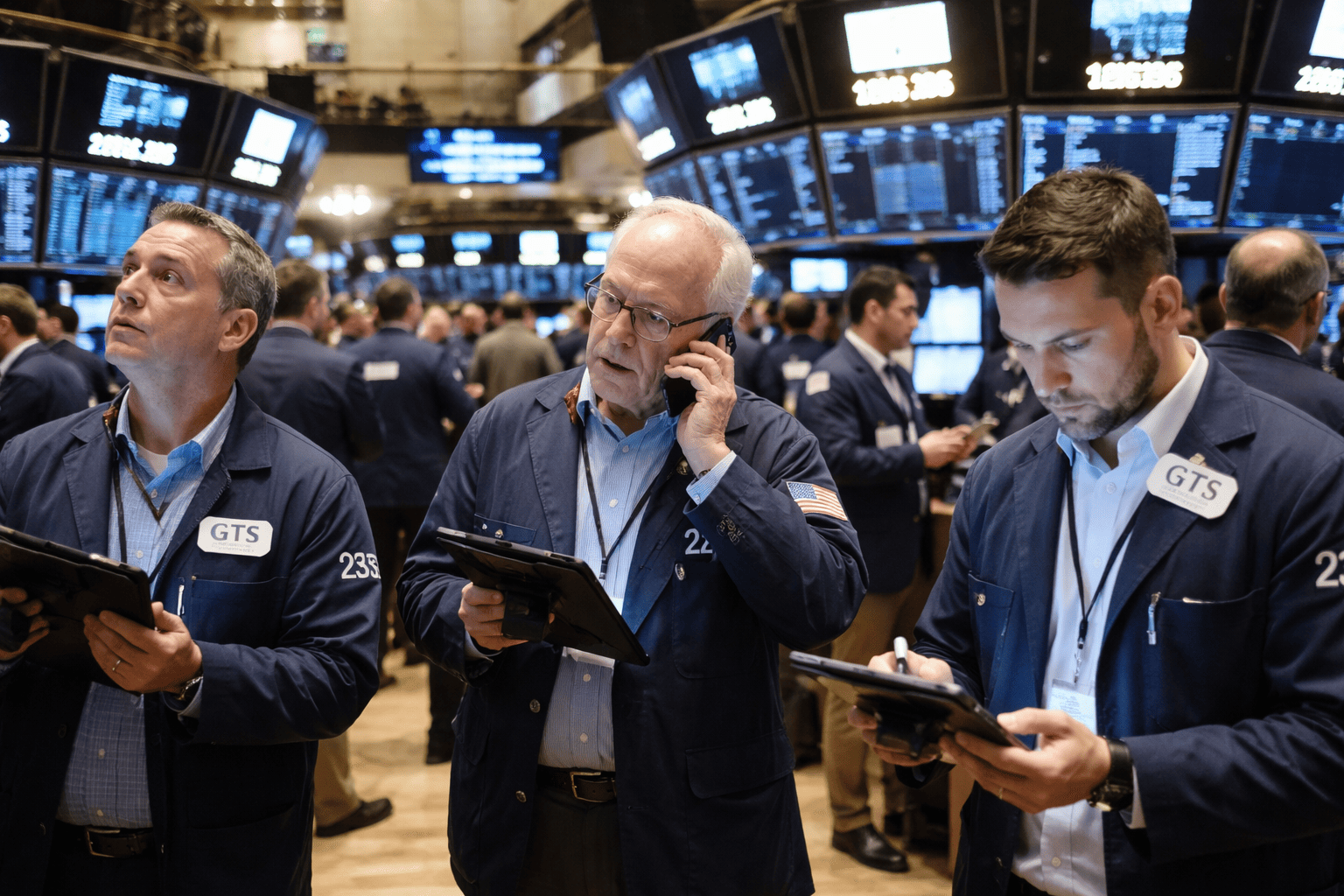
Semiconductor heavyweights Nvidia, AMD, and Intel traded higher before Thursday's opening bell, even after the Federal Reserve raised its benchmark rate by 25 basis points to a range of 3.75%–4.00% and signaled further tightening. The move, the first hike in three years, was accompanied by projections from 16 of 18 policymakers for at least one more increase this year.
Typically, such a hawkish stance would weigh on richly valued tech stocks, but the sector is showing resilience. Treasury yields eased and oil prices fell for a second session, reducing some valuation pressure. More importantly, investors are focusing on company-specific demand that remains robust despite the macro headwinds.

Higher rates don't create more AI chips
Higher risk-free rates reduce the present value of future earnings, making growth stocks less attractive relative to bonds. That pressure hasn't vanished, but the 10-year Treasury yield slipped back below 5% on Thursday, offering some relief.
For Nvidia, the key question is whether higher rates actually curb demand for compute. Max Kan of SemiAnalysis told Benzinga that “demand will continue to outstrip supply,” suggesting investors may underestimate the computing power needed for AI safety, alignment, and monitoring. Even if frontier-model development slows, spending on inference, enterprise AI, and safety workloads is unlikely to disappear. The Fed can raise the cost of capital, but it cannot instantly manufacture more accelerators or data-center capacity.
AMD's earnings momentum overrides macro trade
AMD provides a clear counterexample to the simple “rates equal selloff” narrative. The stock gained more than 4% on Wednesday after Piper Sandler reiterated an Overweight rating and a $600 price target, following AMD's pre-quiet-period update. Analyst David O'Connor noted that management's message was reassuring, with CPU and GPU ramps on track. Demand remains well ahead of supply, and AMD appears to have enough capacity to meet or exceed guidance.
Piper Sandler has called AMD an “Agentic AI Sweetspot,” citing server CPU share gains and the ramp of its Helios platform. While higher yields can compress the multiple investors pay for future profits, revenue expectations can keep rising if supply-constrained demand stays strong and AMD continues taking market share. That's why a 25-basis-point hike doesn't automatically derail the earnings story.
Intel's foundry story offers a different catalyst
Intel's rebound is built on a different foundation. Its rerating is increasingly tied to manufacturing assets rather than just AI accelerator demand. As the U.S. pushes for greater domestic semiconductor capacity, investors are paying more attention to Intel's foundry footprint and efforts to improve utilization of expensive fabs.
Melius Research analyst Ben Reitzes said “the AI 'puck' has skated toward Intel's foundry asset” and that “even $200 over 2 years is on the table,” according to Yahoo Finance. Melius maintains a $165 target, arguing that Intel's product and foundry businesses could support a higher sum-of-the-parts valuation. The thesis isn't risk-free—Intel still needs external customers, better utilization, and stronger foundry economics to justify the rerating—but it gives the stock a catalyst distinct from the pure AI-demand trade driving Nvidia and AMD.
Investors are also watching broader chip sector dynamics. Recent reports of SK Hynix talks and bullish forecasts have lifted sentiment, while chip stocks rebound as investors question AI slowdown fears. The Fed's move, meanwhile, has been a key driver of valuation squeezes in high-multiple stocks, but semiconductor names are proving resilient.
As the market digests the Fed's path, the divergence between macro pressure and micro fundamentals remains the central theme. For now, AI demand and supply constraints are proving more powerful than the bearish case tied to higher rates.
This article is for informational purposes only and does not constitute financial advice.

