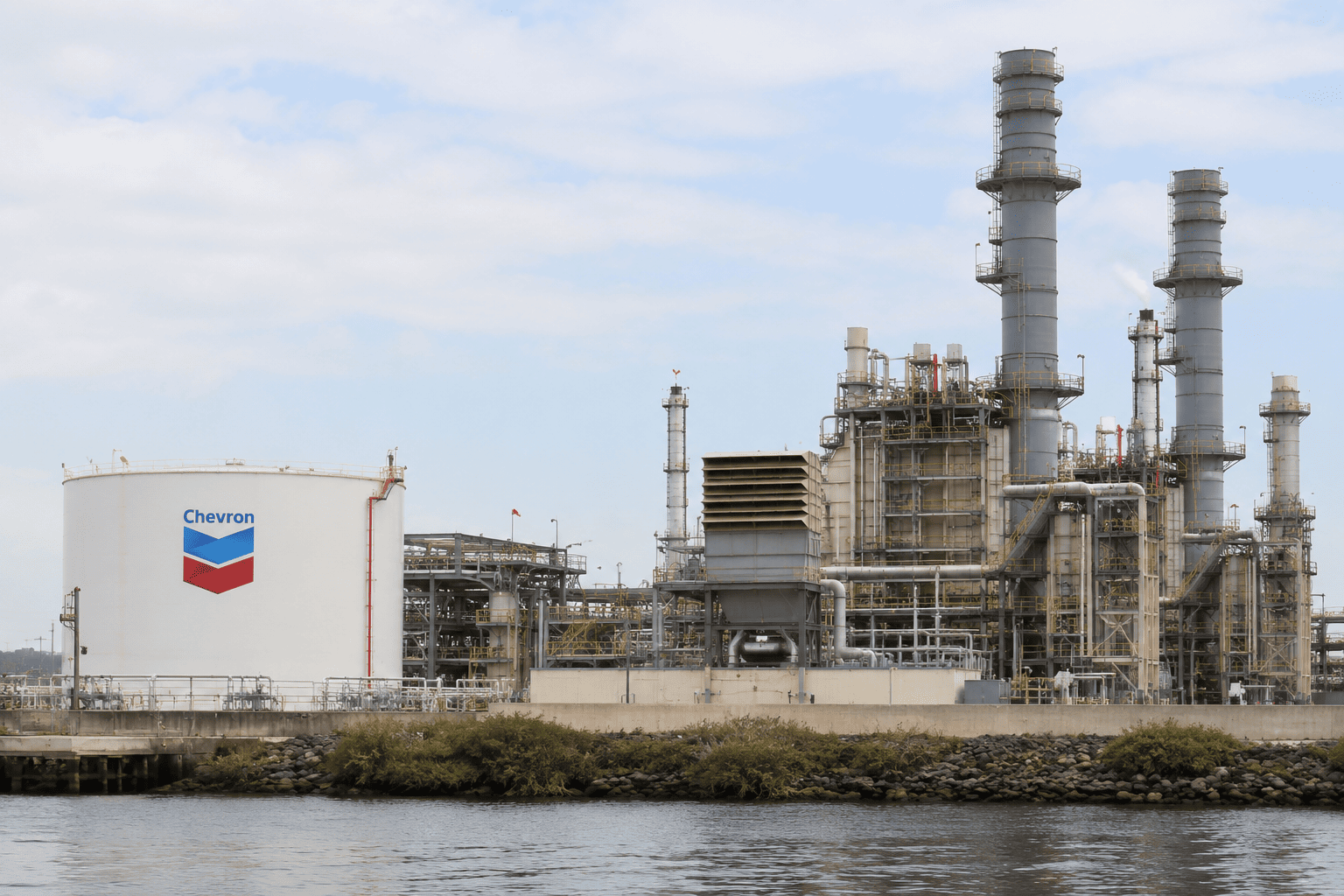
Shares of Chevron Corporation (CVX) edged lower on Wednesday, even as the oil major unveiled a landmark 20-year power supply agreement with Microsoft Corporation to fuel a massive artificial intelligence data center in West Texas. The deal, structured under Project Kilby, underscores the growing intersection of traditional energy and AI infrastructure, but investors appeared focused on near-term headwinds.
Project Kilby: A 2.67 GW Gas-Powered AI Campus
Chevron's subsidiary, Energy Forge One LLC, will construct a 2.67-gigawatt natural gas power plant in Reeves County, located in the heart of the Permian Basin. The facility will deliver electricity directly to a Microsoft-operated data center under a 20-year contract, with first power deliveries expected in 2028 and a final investment decision anticipated by the end of 2026. The project spans over 2,000 acres and will be powered by natural gas from Chevron's nearby operations.

Most of the electricity will come from large turbines supplied by GE Vernova, with additional capacity from Solar Turbines, a subsidiary of Caterpillar Inc., which recently hit $1,000 amid AI power demand. The project is expected to create about 2,000 jobs and generate over $10 billion in state and local tax revenue. It will use non-potable, brackish groundwater and include emissions control technology.
AI-Driven Power Demand Fuels 'Bring Your Own Power' Trend
Project Kilby highlights a growing industry shift where data center operators secure dedicated on-site power generation to bypass strained electrical grids. AI training requires massive, continuous electricity loads, while grid upgrades and transmission projects often take years. As a result, developers are increasingly adopting a 'Bring Your Own Power' strategy.
According to data provider Cleanview, about one-quarter of all planned data center capacity—representing roughly 90 gigawatts—intends to build on-site power generation. Project Kilby will initially operate with its own power plant and connect to the Texas grid later, with excess generation sold into the state's power market. 'The ability to have a firm power resource for the Texas grid is something I think everyone would welcome,' said Chris James, founder and CEO of Engine No. 1 and Joulent, Chevron's partner on the project.
Chevron Expands Beyond Traditional Energy Markets
The agreement strengthens Chevron's position in the emerging market for AI-related power infrastructure, a space where rivals like Exxon Mobil are also active. Exxon recently partnered with NextEra Energy to develop a gas-fired plant for data center customers. Project Kilby is expected to deliver mid-teen returns and generate cash flows independent of oil and gas price cycles. The site could eventually incorporate solar generation and large-scale battery storage as development continues into the 2030s.
'AI and cloud are advancing at a pace that requires a new level of coordination between energy and infrastructure,' said Noelle Walsh, Microsoft's president of cloud operations and innovation. Jeff Gustavson, president of Chevron's New Energies unit, added, 'Our agreement with Microsoft through Project Kilby represents Chevron's unique ability to deliver power to AI customers with certainty, speed, and at a competitive cost.'
Despite the strategic move, Chevron's stock slipped, reflecting broader market caution. The dip comes amid a volatile period for energy stocks, as investors weigh the long-term potential of AI-driven power demand against near-term uncertainties. For context, SpaceX stock also slipped 3% recently amid broader market routs, highlighting the current risk-off sentiment.
As AI infrastructure continues to expand, the intersection of energy and technology will remain a key theme. Project Kilby represents a significant step, but its success will depend on execution and the evolving regulatory landscape.
This article is for informational purposes only and does not constitute financial advice.