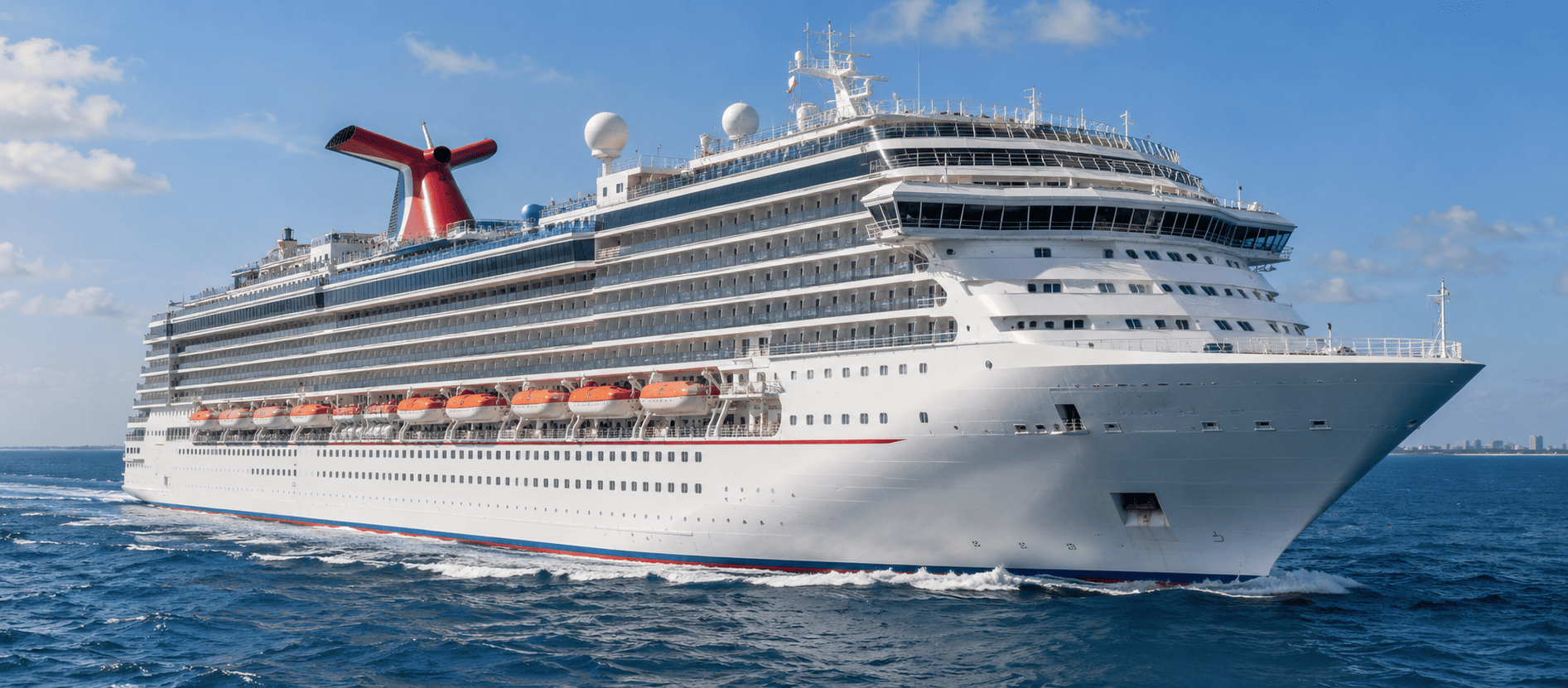
Carnival Corp. reported fiscal third-quarter results that beat its own guidance, posting all-time-high net income of $1.9 billion on record revenue of $8.44 billion. The cruise operator's shares, however, remain down roughly 15% so far this year, a gap that underscores how much of the investment case now rests on the balance sheet rather than the income statement.
For Chief Financial Officer David Bernstein, the priority is using the company's operating momentum to retire a heavy load of debt taken on during the industry-wide shutdown. Every dollar of free cash flow generated today is a dollar that can be applied to higher-interest maturities before they require refinancing at prevailing market rates.

Why the debt overhang still matters
When global cruising halted, Carnival was forced to raise expensive high-yield capital to keep its fleet in service. The latest quarter shows the company converting record passenger yields and strong onboard spending into balance sheet repair. Net interest expense came in at $260 million for the period, and management's longer-term objective is to reduce debt aggressively.
As legacy low-rate tranches mature in the coming quarters, Carnival aims to repay principal with organic cash instead of refinancing at today's yields. Shrinking net debt now would insulate future net income margins from persistent interest rate pressure, a dynamic that could support the equity over time.
Free cash flow versus fleet spending
Even with $2 billion in adjusted net income for the quarter, cash conversion faces a constant tug-of-war with capital requirements. Cruise operations demand continuous reinvestment: fourth-quarter capital expenditures alone are projected at $1.2 billion for newbuilds and fleet upgrades.
External pressures add to the strain. Volatile fuel prices and elevated voyage costs continue to erode liquid margins. Generating enough free cash flow requires Carnival to sustain peak occupancy and firm ticket pricing while absorbing heavy maintenance outlays. If booking momentum cools or cost inflation accelerates, the pace of debt reduction could slow, leaving the shares exposed to more expensive rollovers later.
The de-risking horizon
Carnival's full-year 2026 adjusted EBITDA projection of approximately $7.14 billion points to a structural shift from survival mode to sustained cash generation. Advance bookings stretching into 2027 provide cash visibility, giving management room to prepay debt notes methodically and improve the company's credit profile.
If that trajectory holds, Carnival could clear its debt wall without diluting shareholders or cutting fleet modernization. For Wall Street, the recent rally reflects less about a single earnings beat and more about whether the stock can permanently de-risk its enterprise value. In the post-crisis cruise sector, cash flow is no longer just funding growth; it is buying financial freedom.
This article is for informational purposes only and does not constitute financial advice.

